Category: Arctic Foxtrot

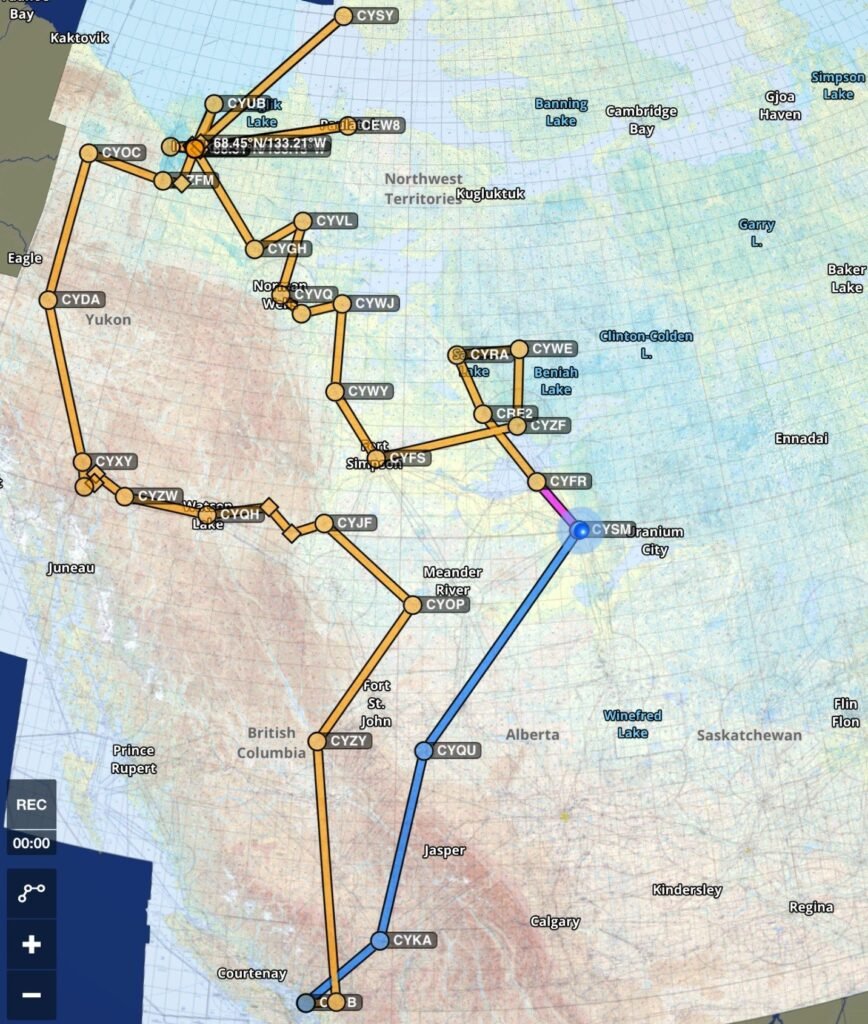
  • Days 19 and 20. On the way home

    Days 19 and 20. On the way home

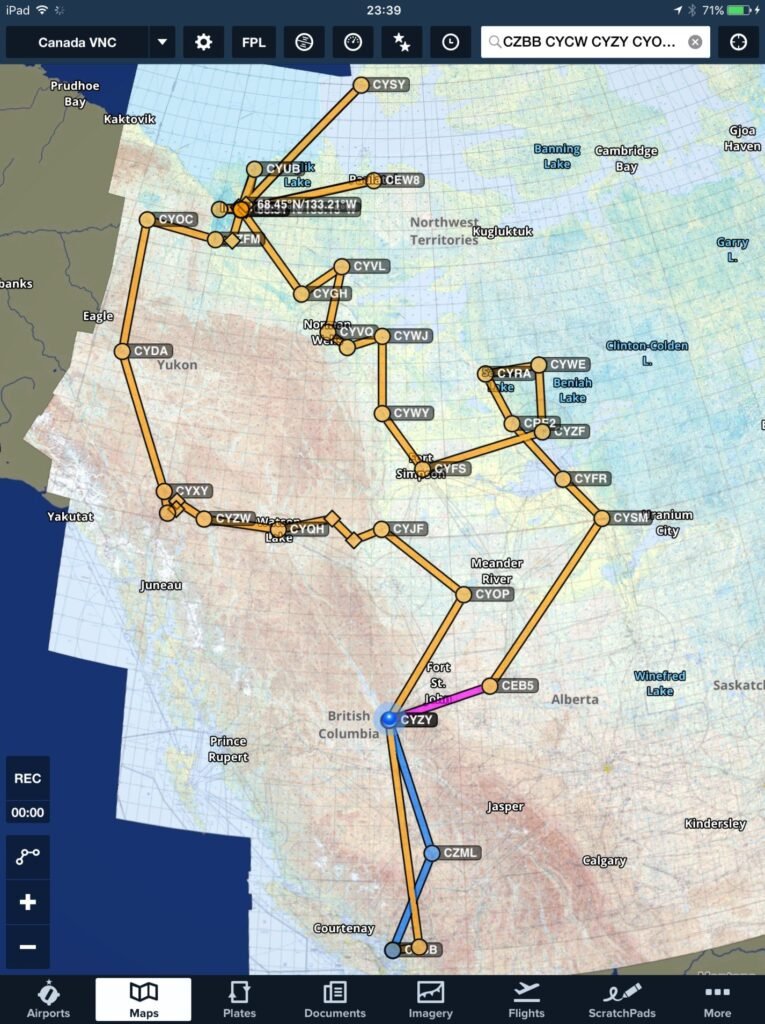
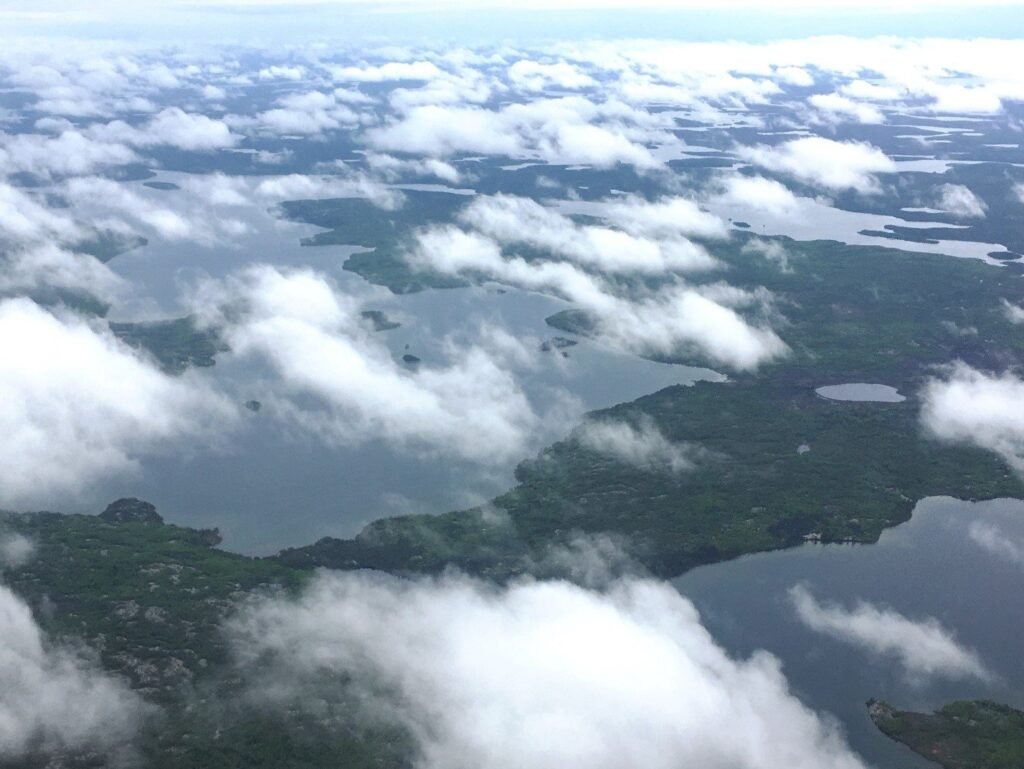
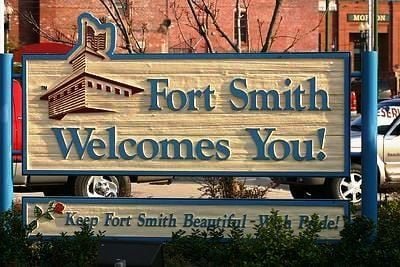
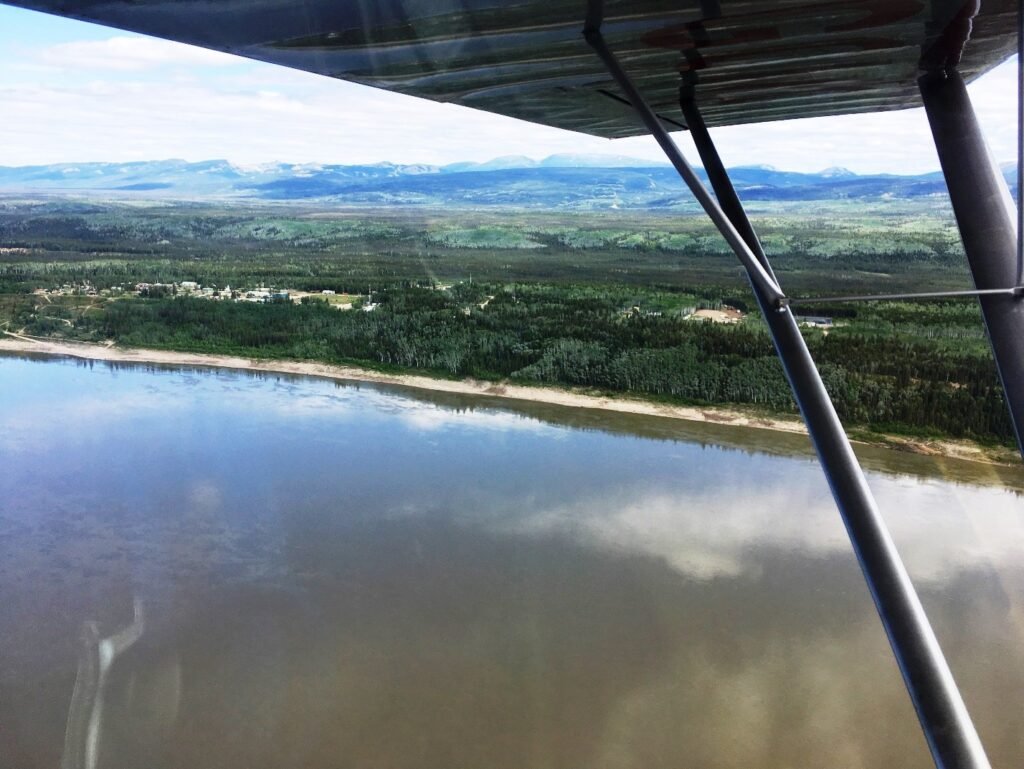
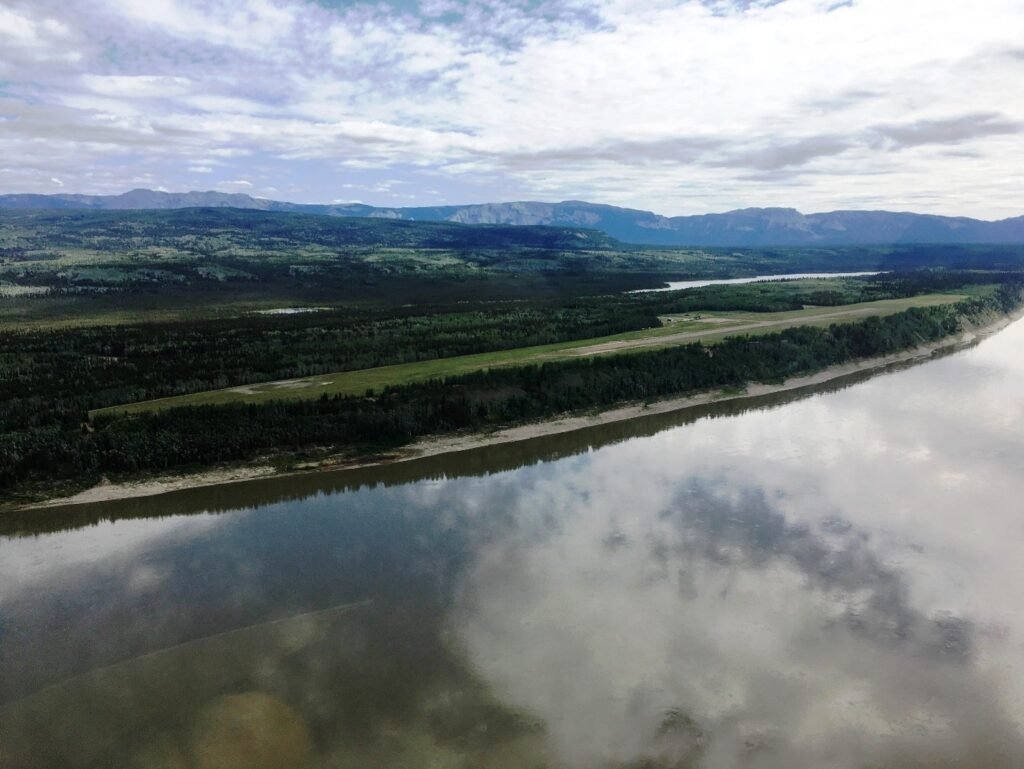
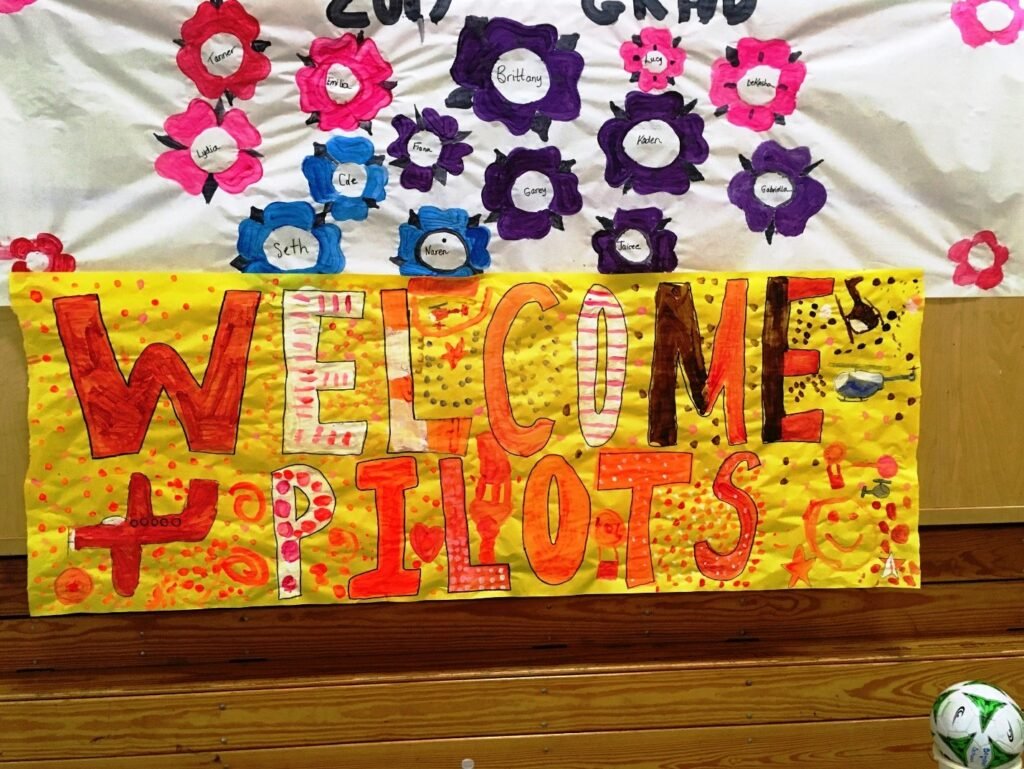
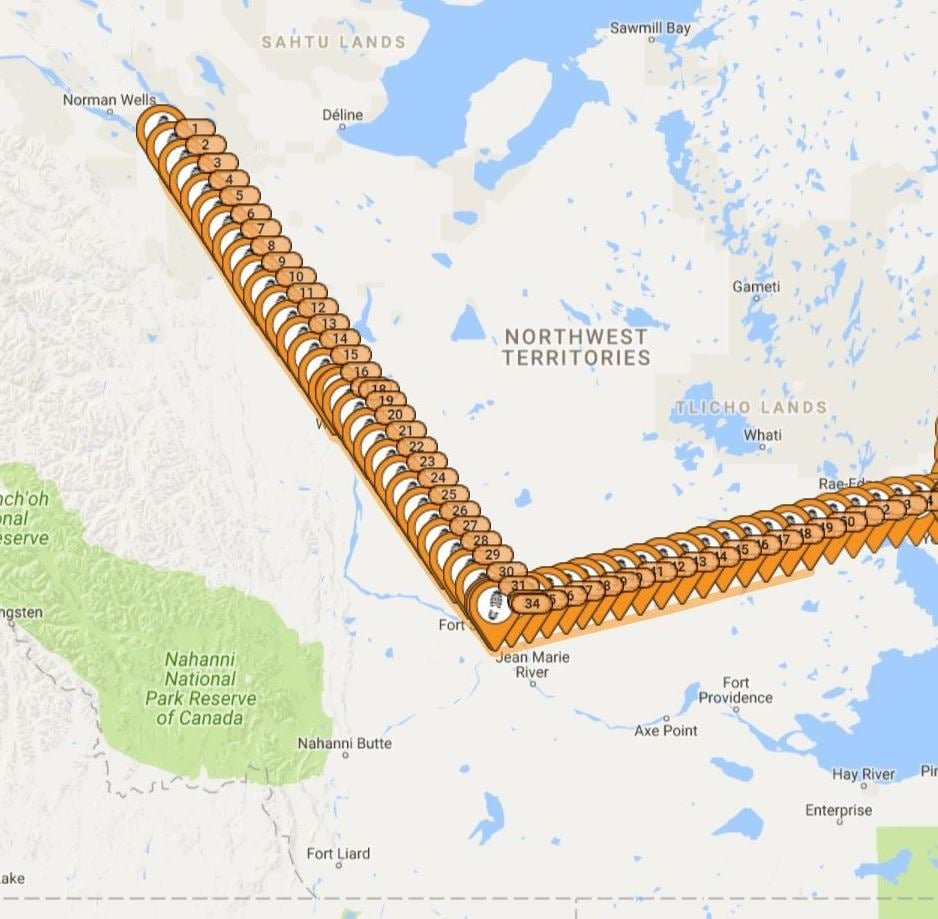
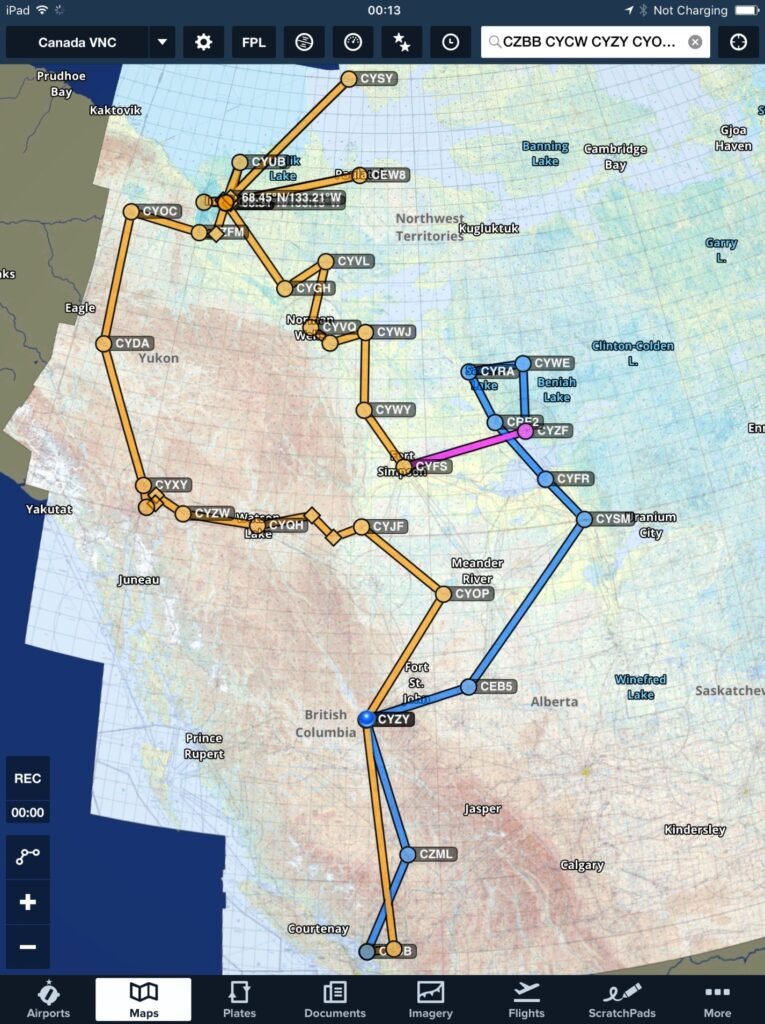
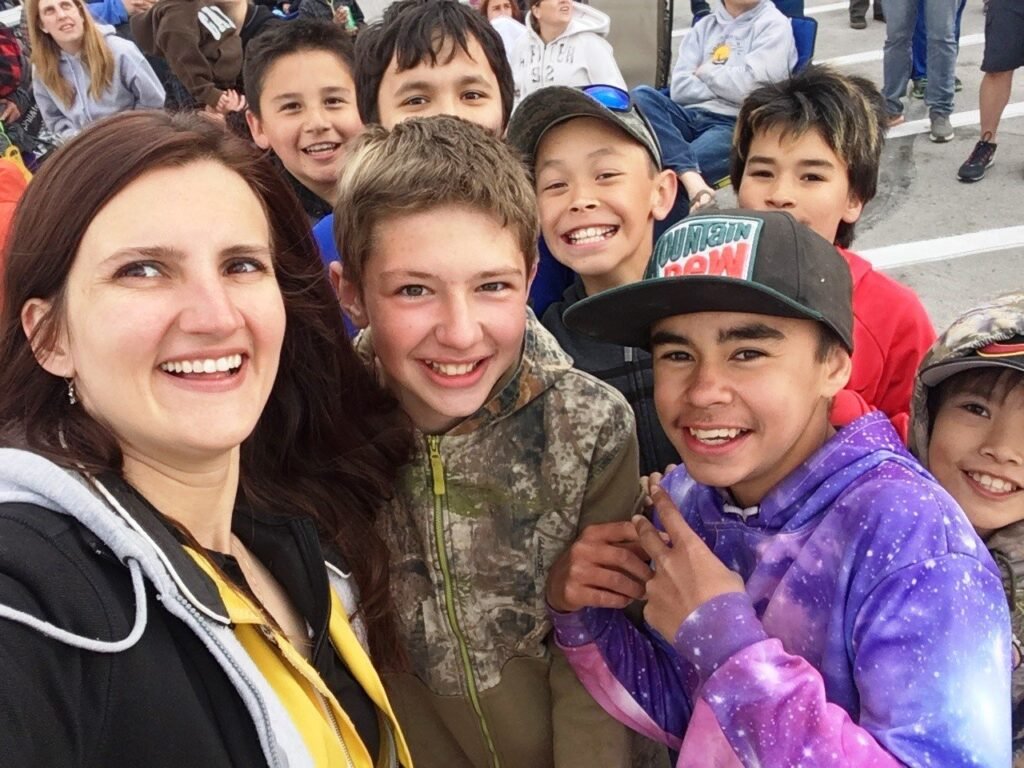
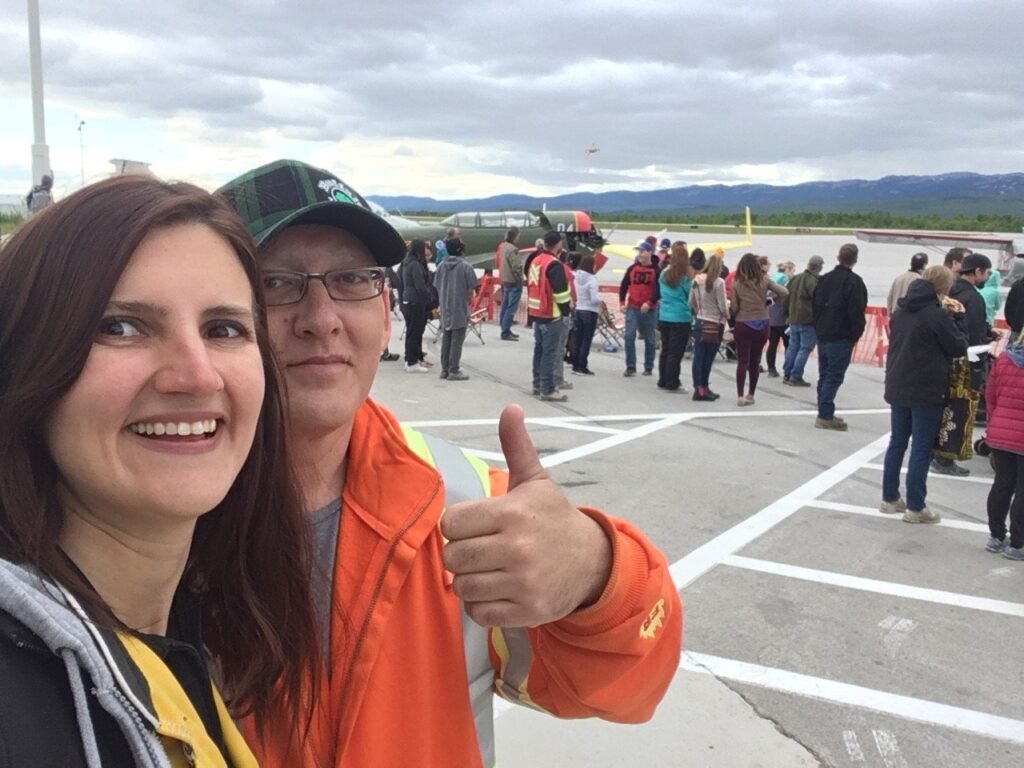
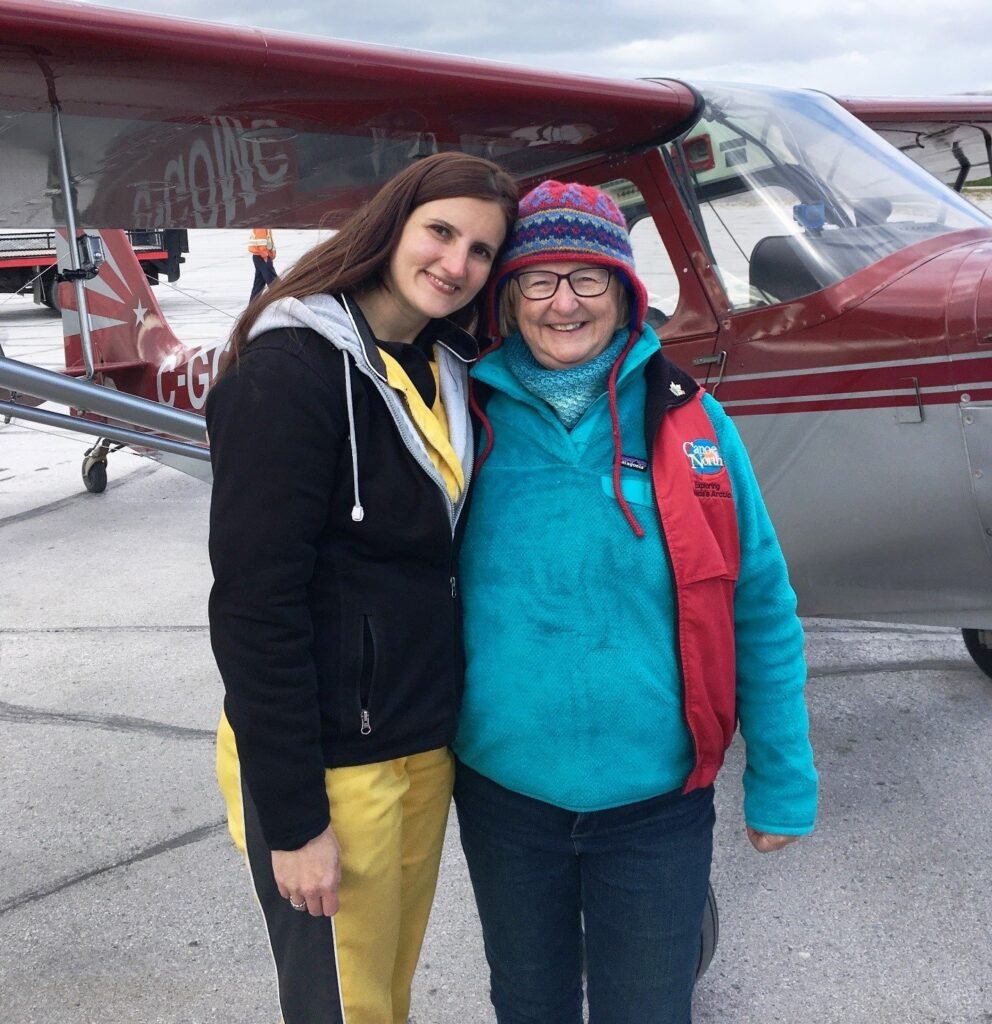
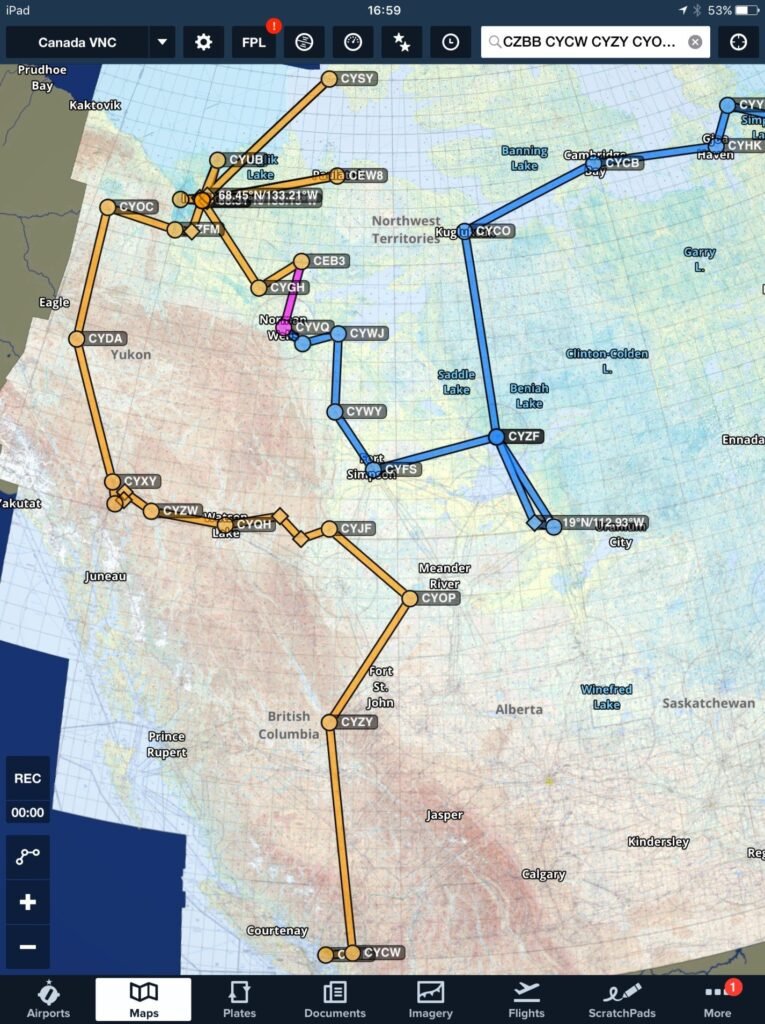
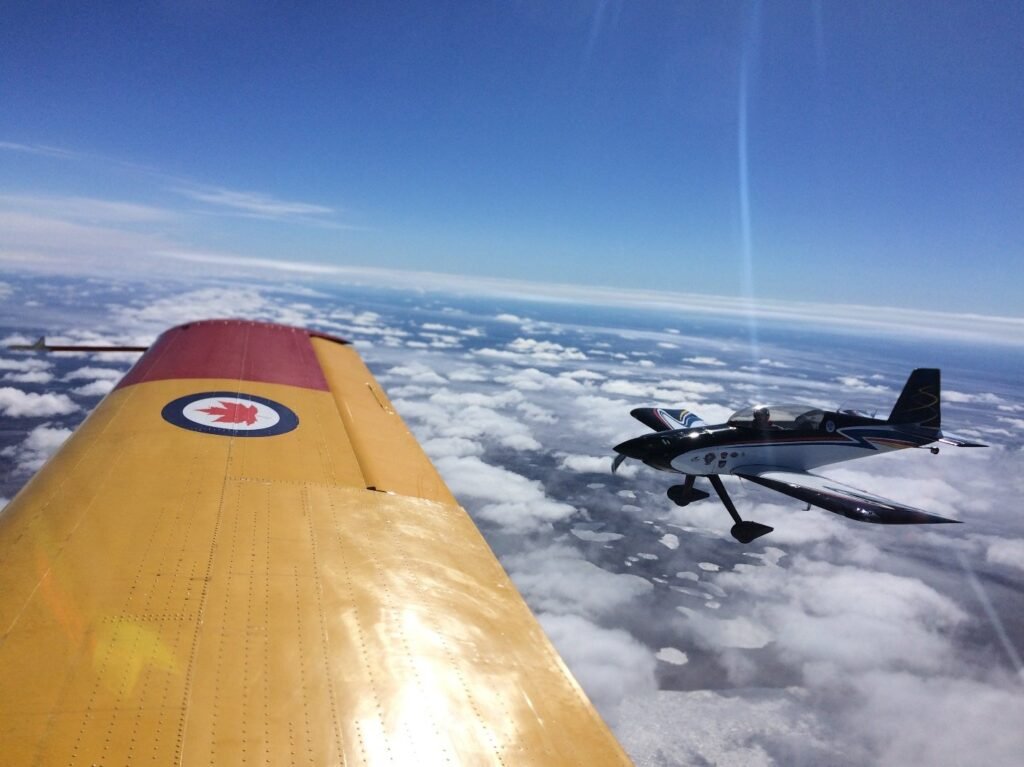
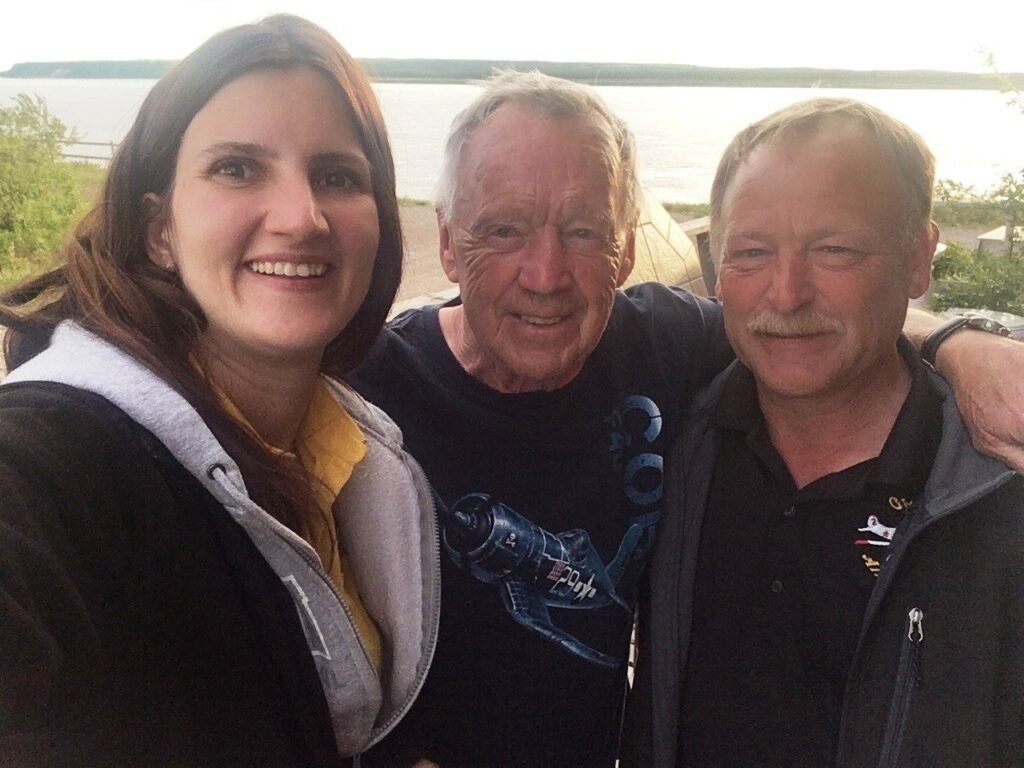
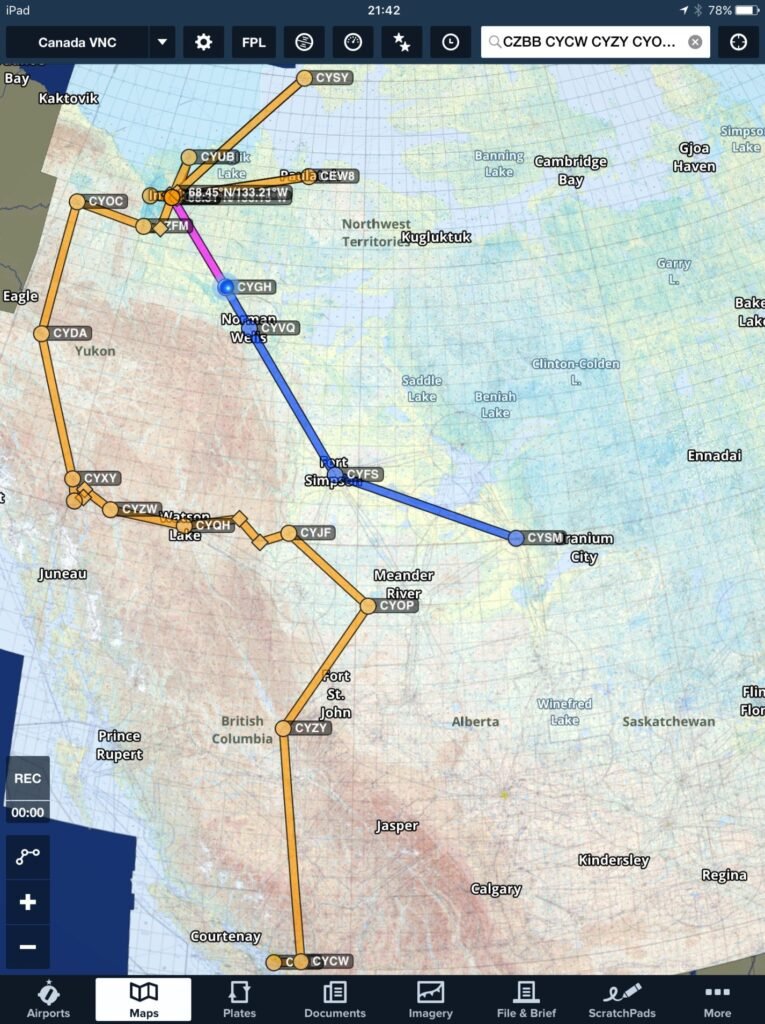
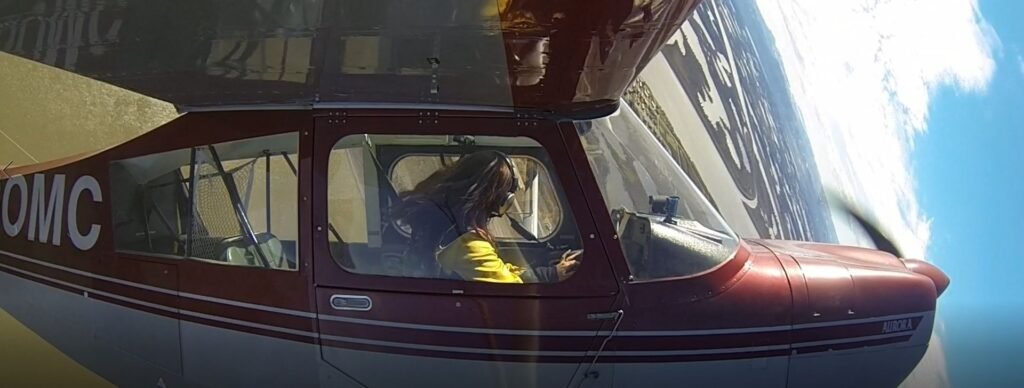
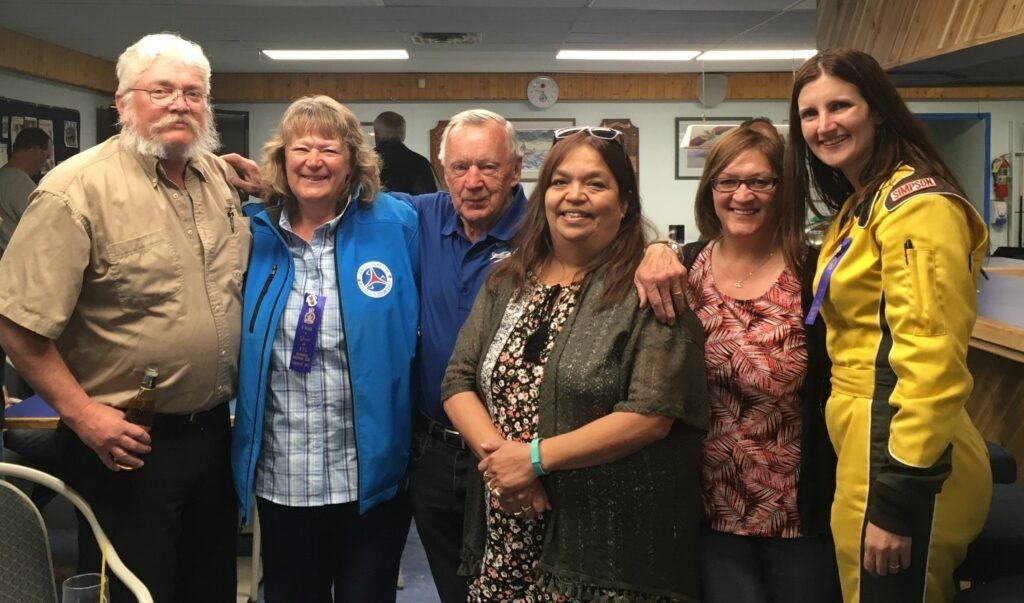
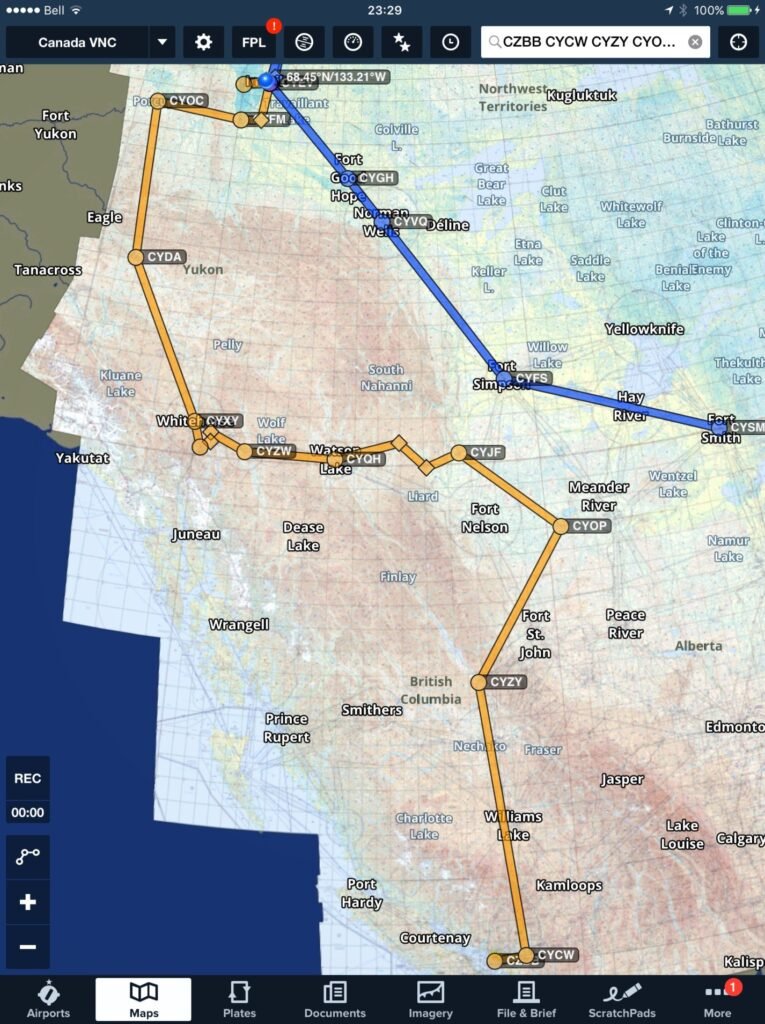
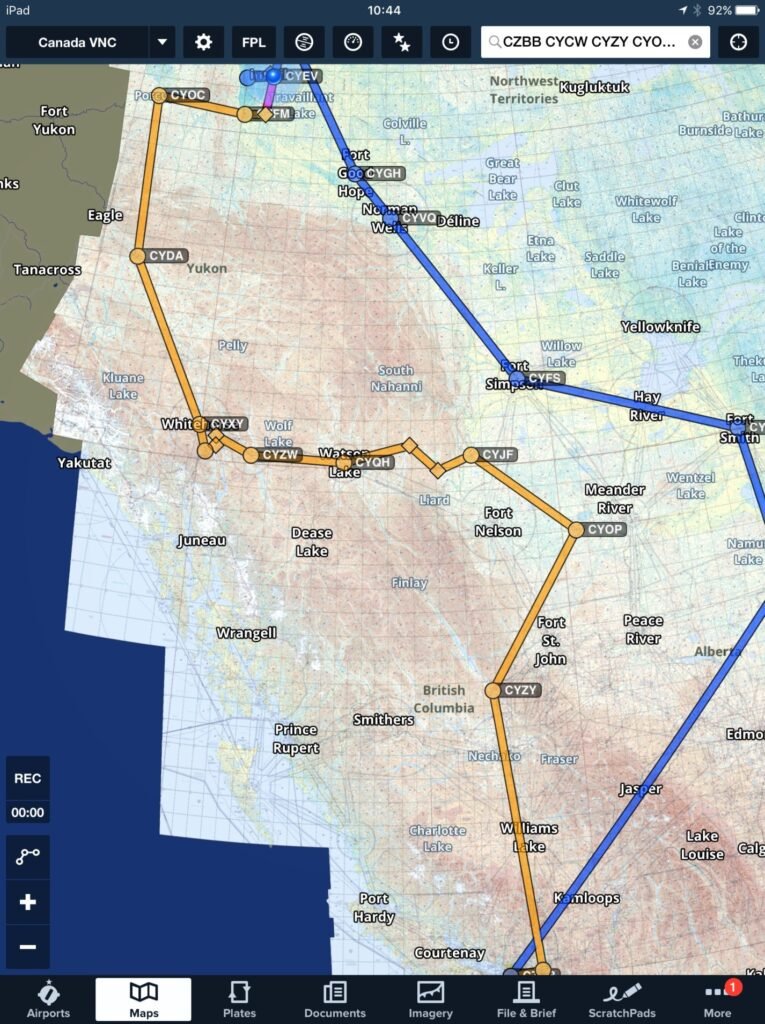
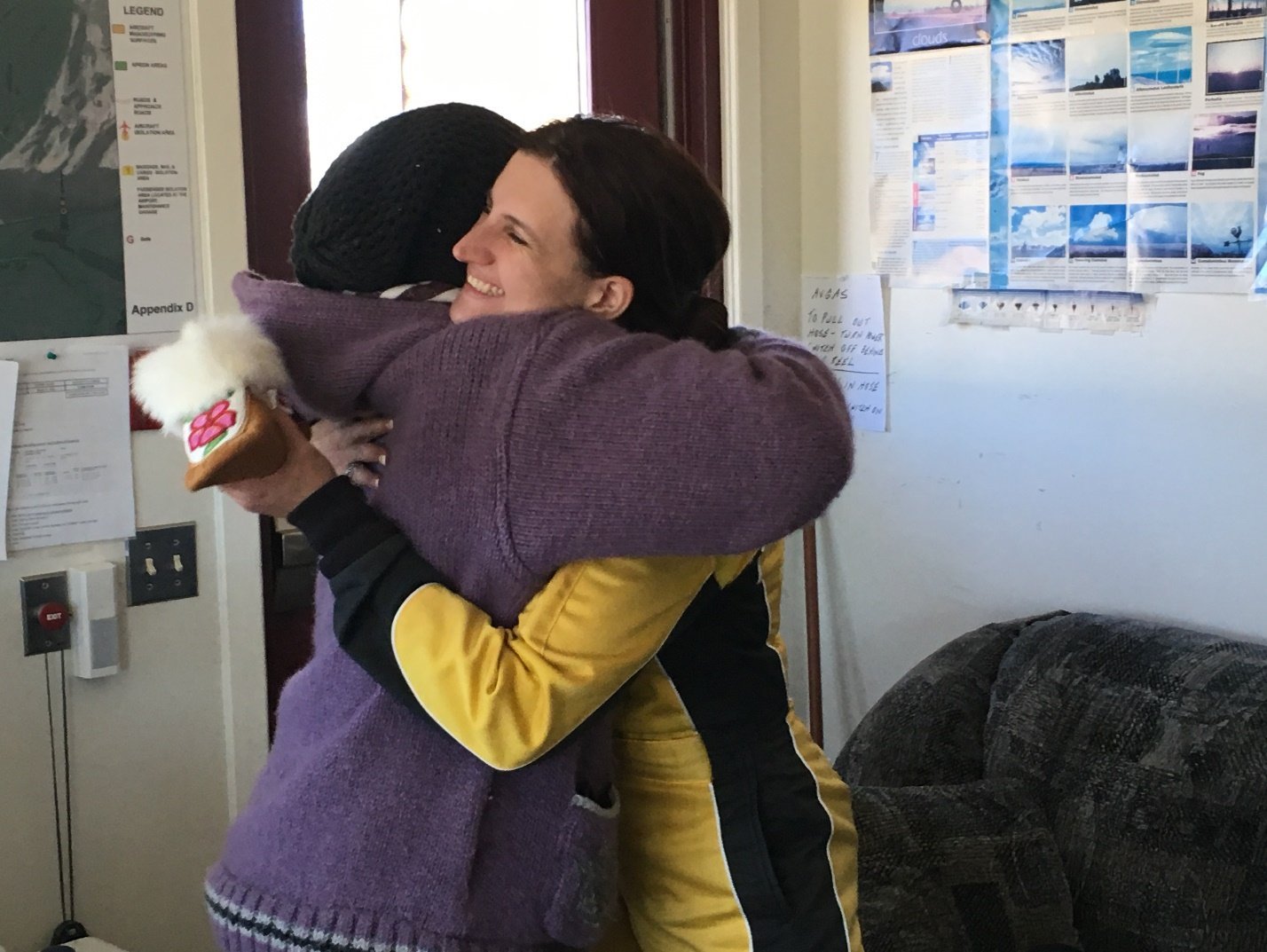
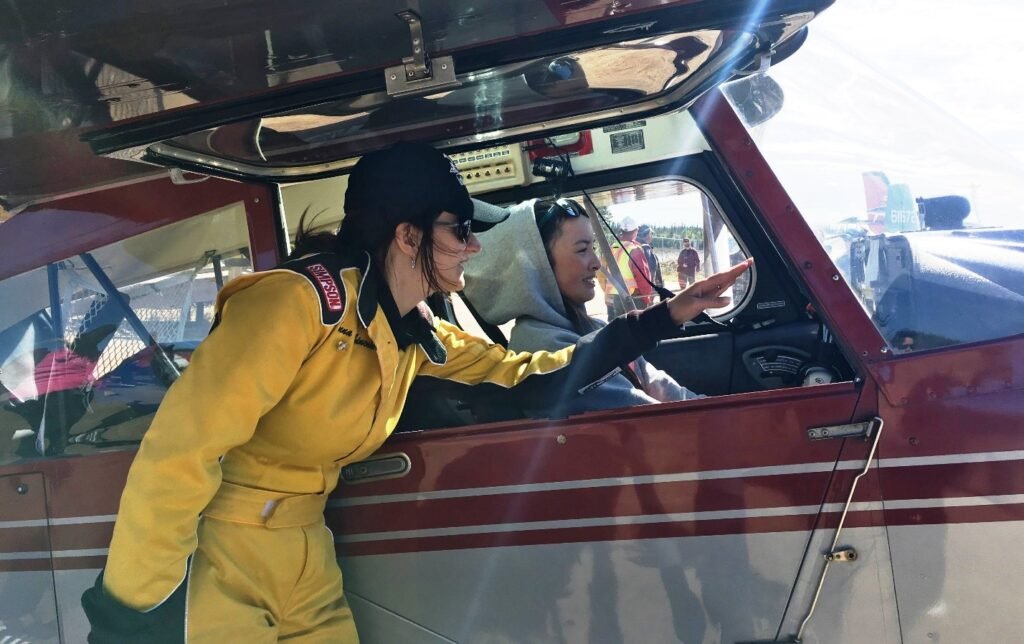
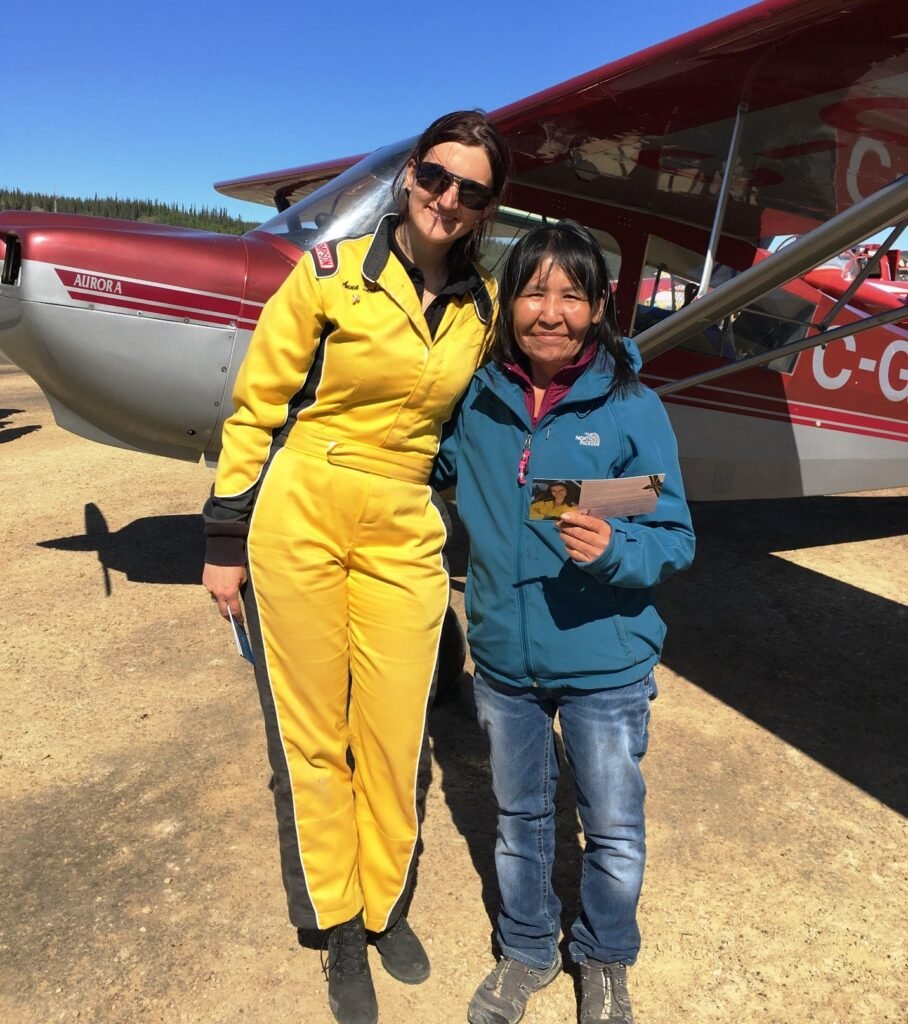
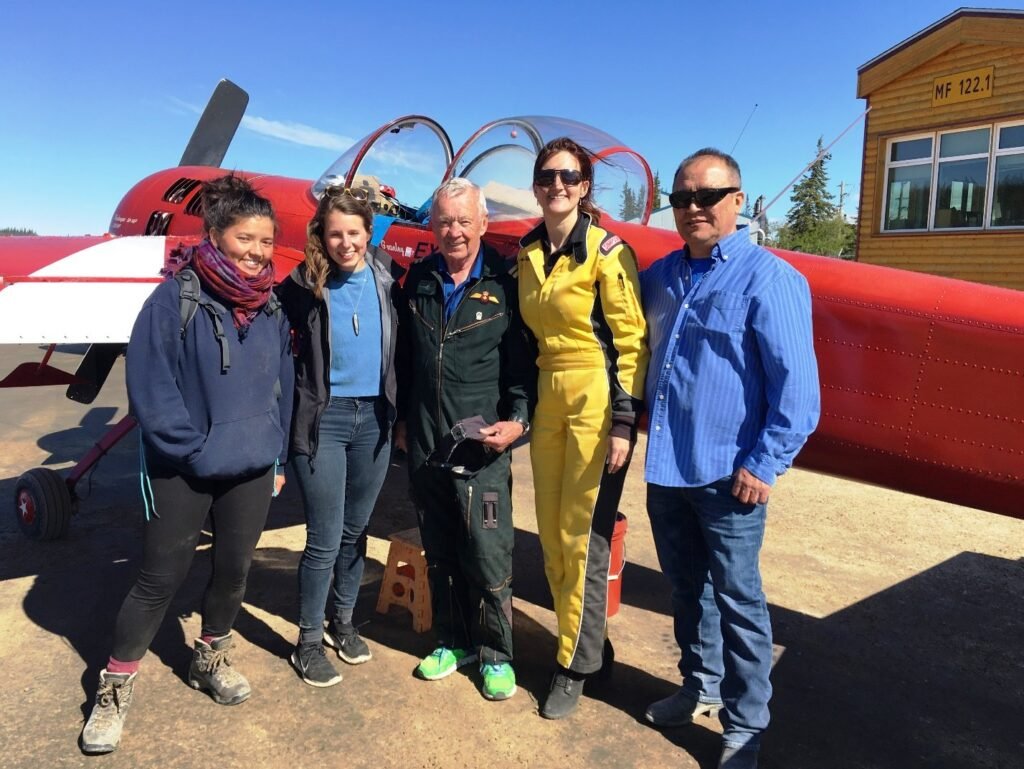
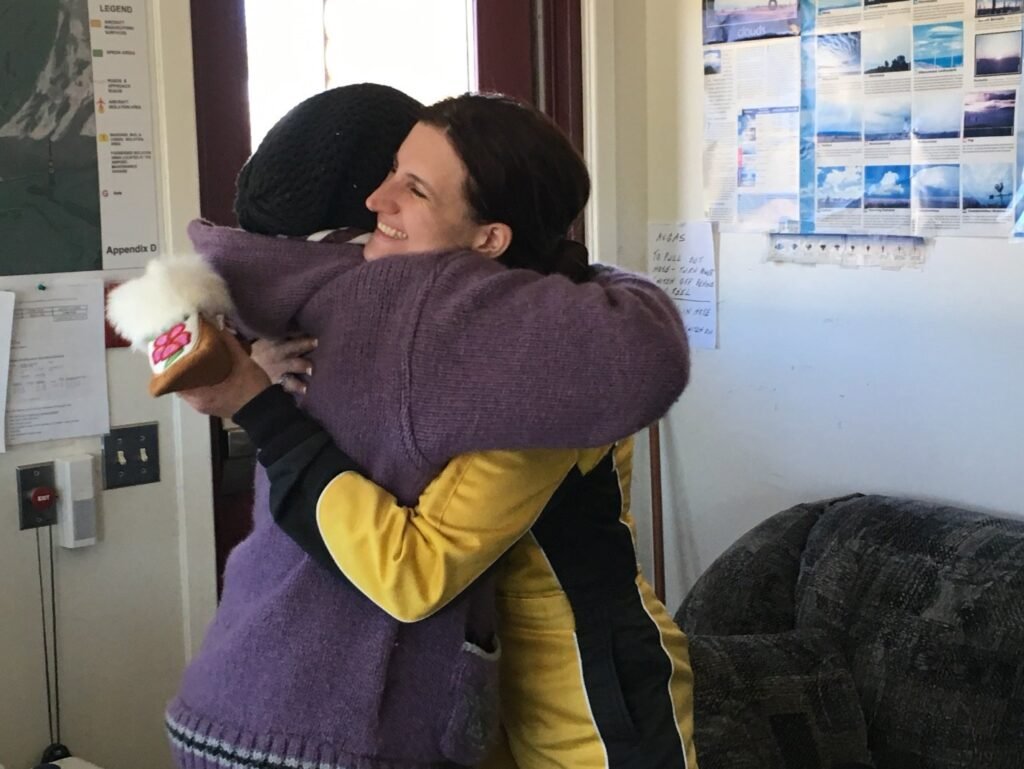
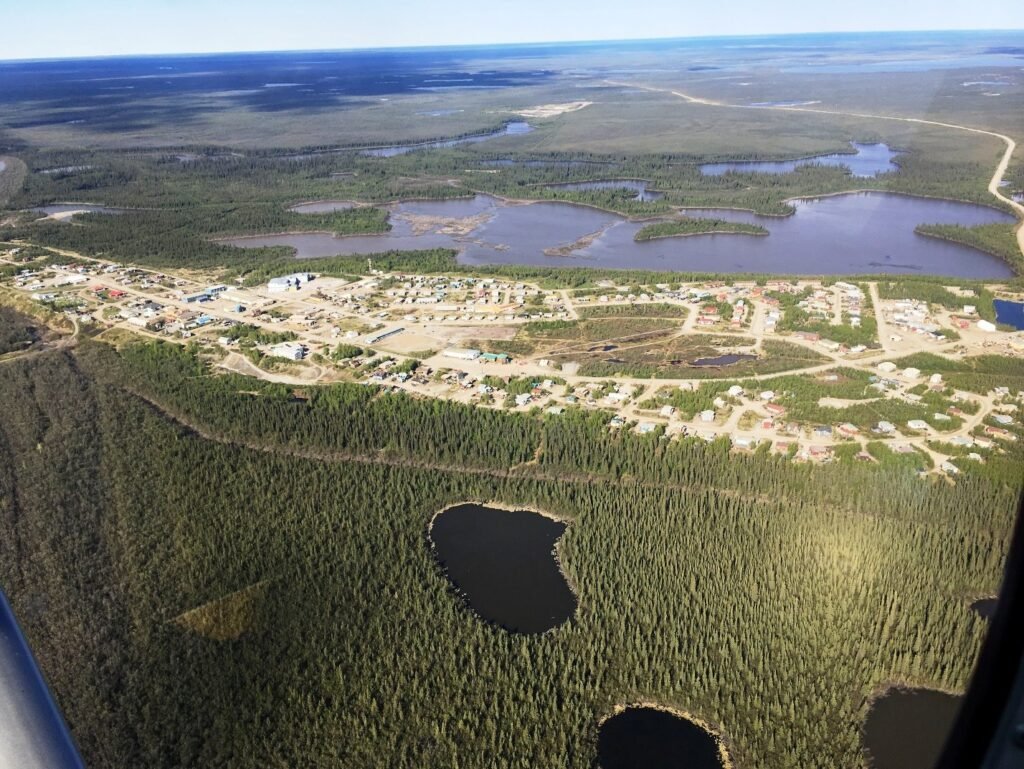
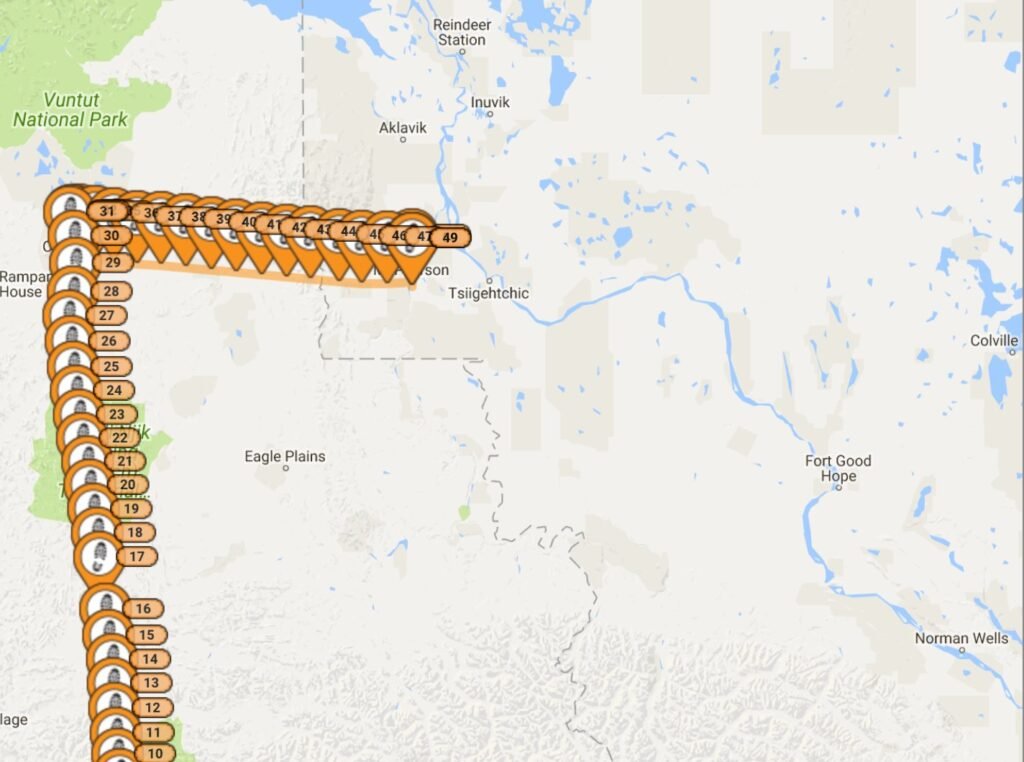
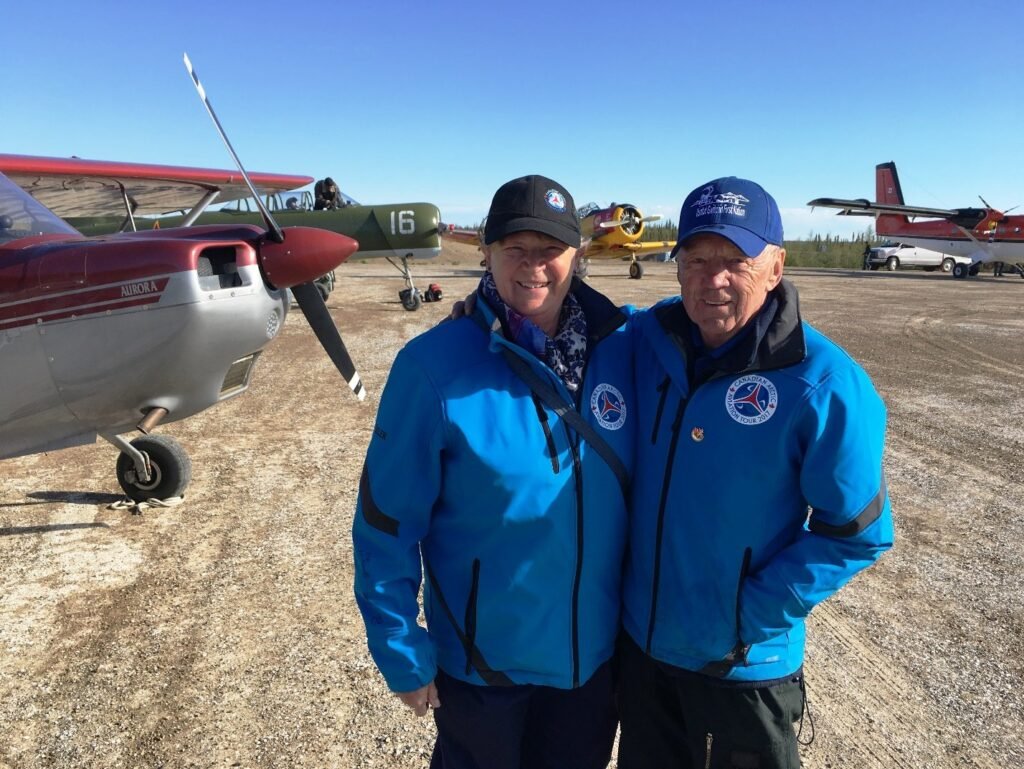
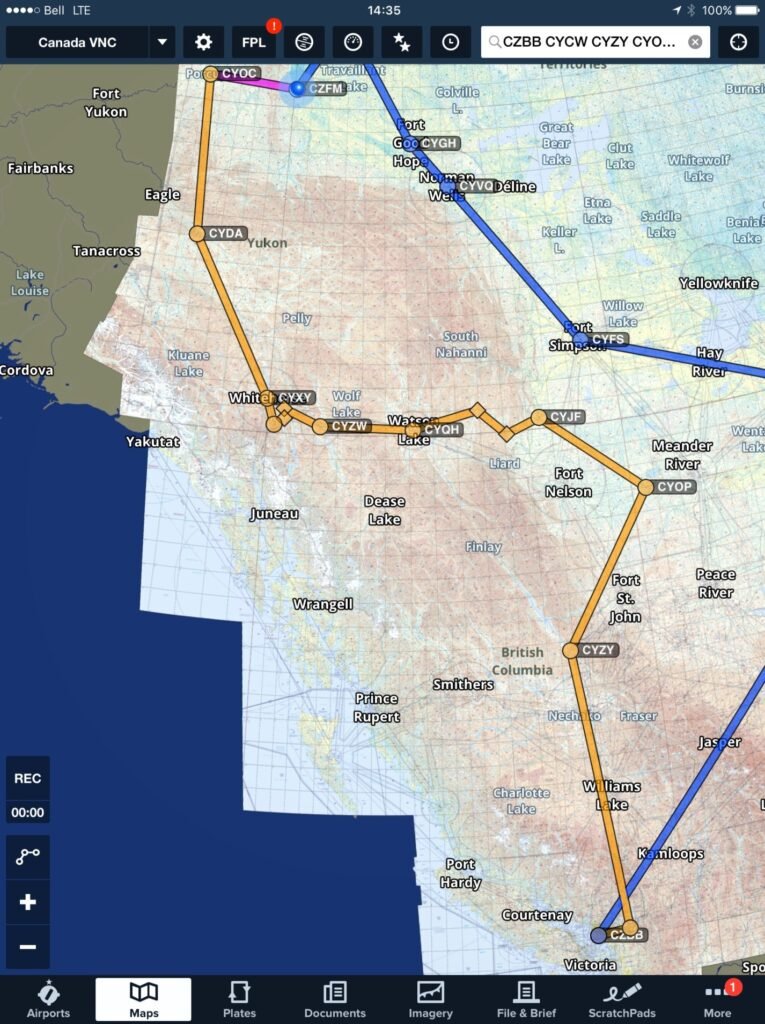
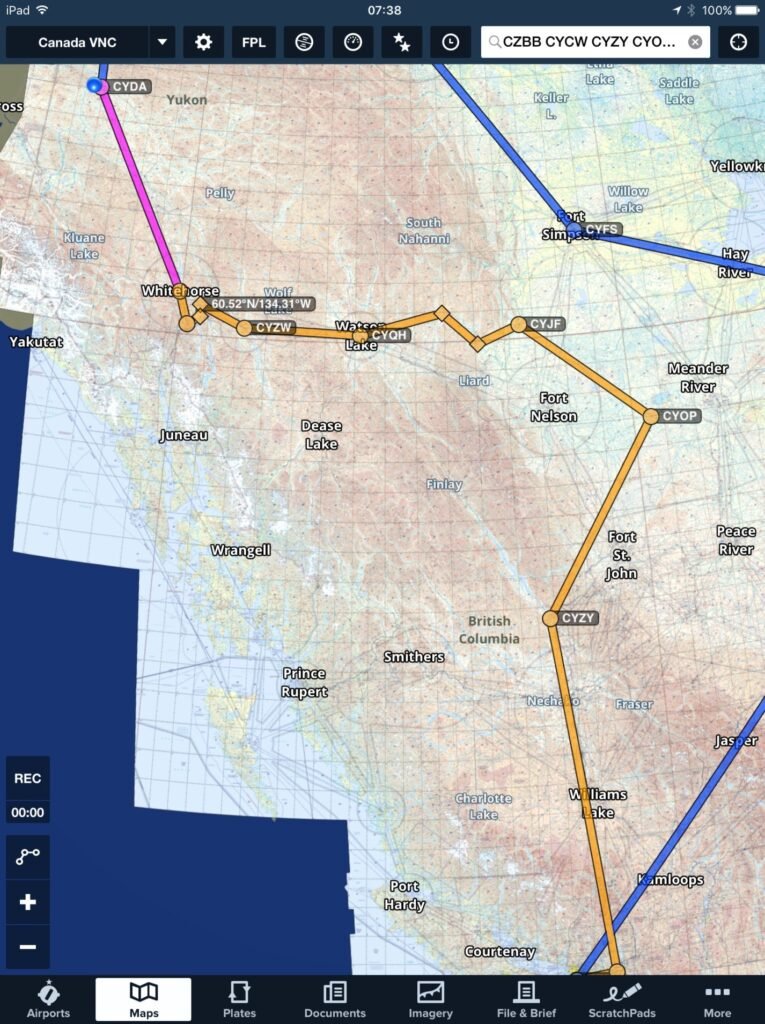
    This part is still in the planning stage at this time. But for now, it’s time to go home soon. It’s a bittersweet feeling. I missed home, family and team of the flight school. I met many new friends here up North, and I know that I will be back here. I tried not to make it too hard, and “rip off the band-aid”: a few hugs to the team and the Fort Smith welcoming ground crew, and I was on my way to Fairview, AB.

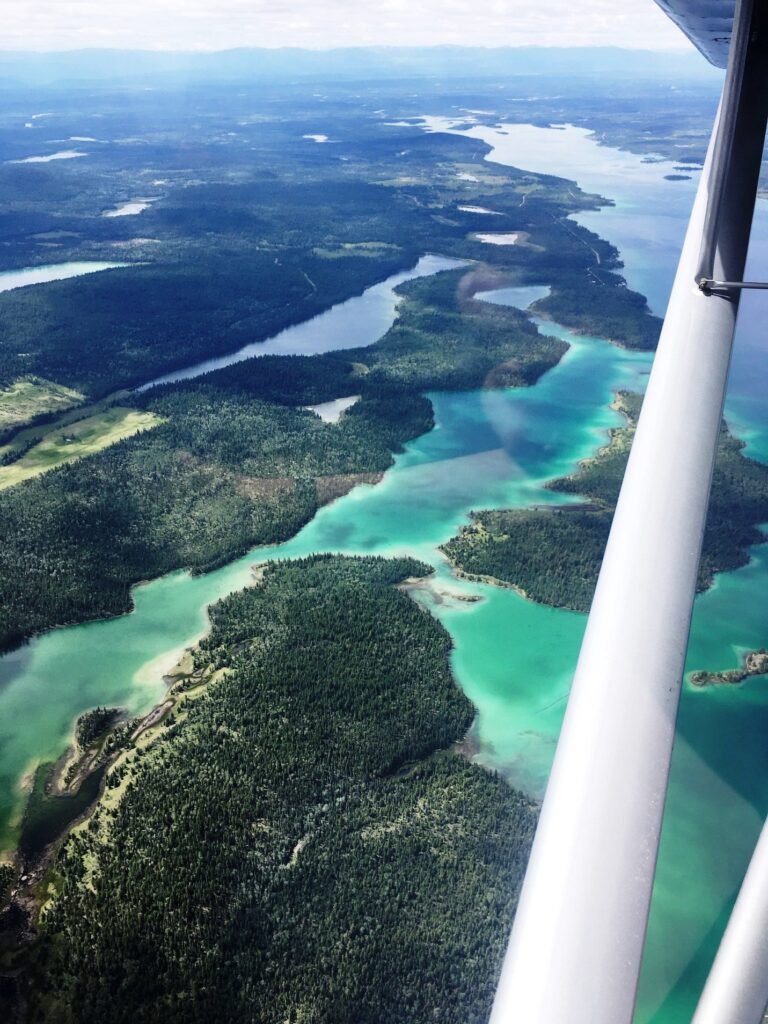
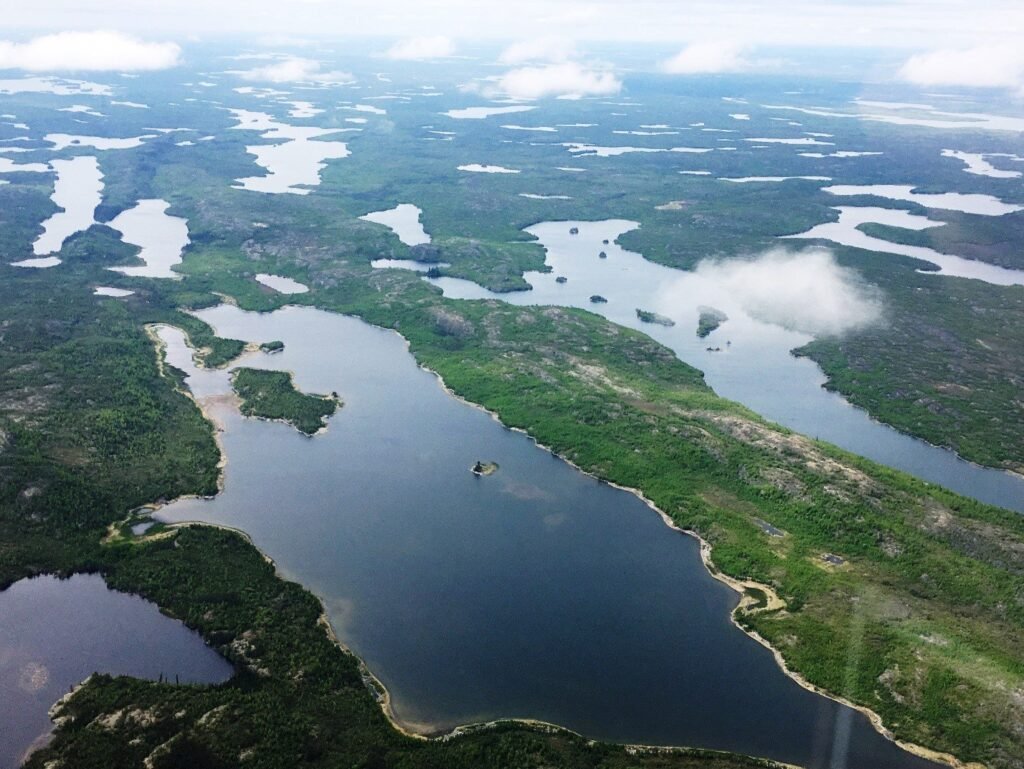
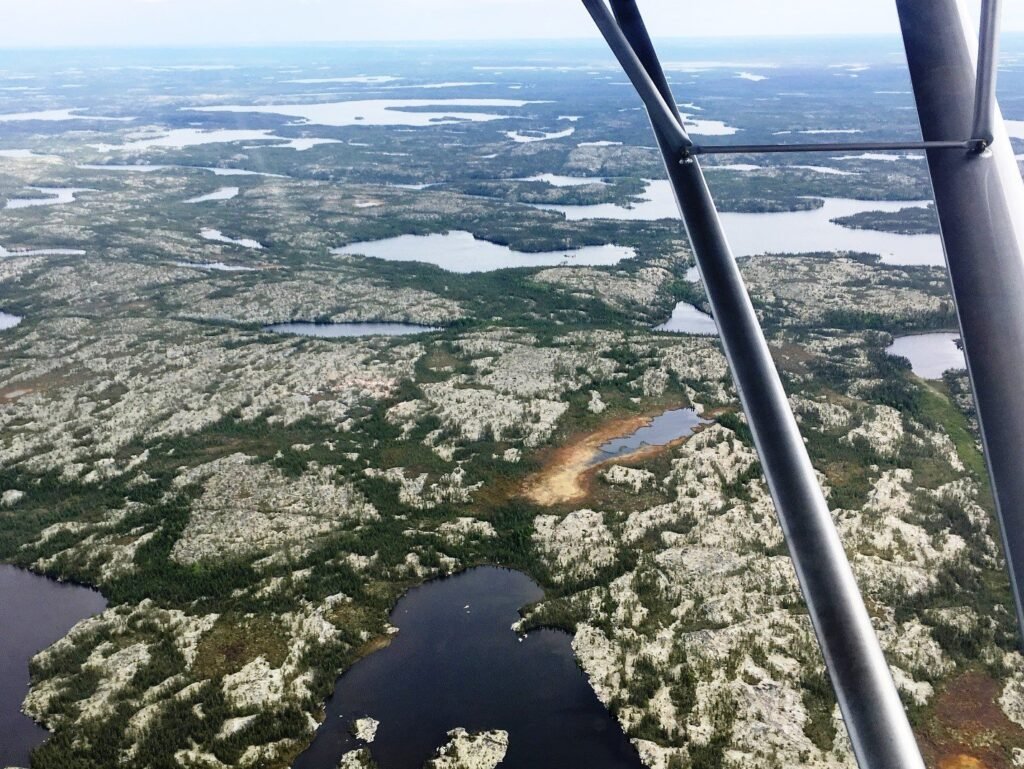
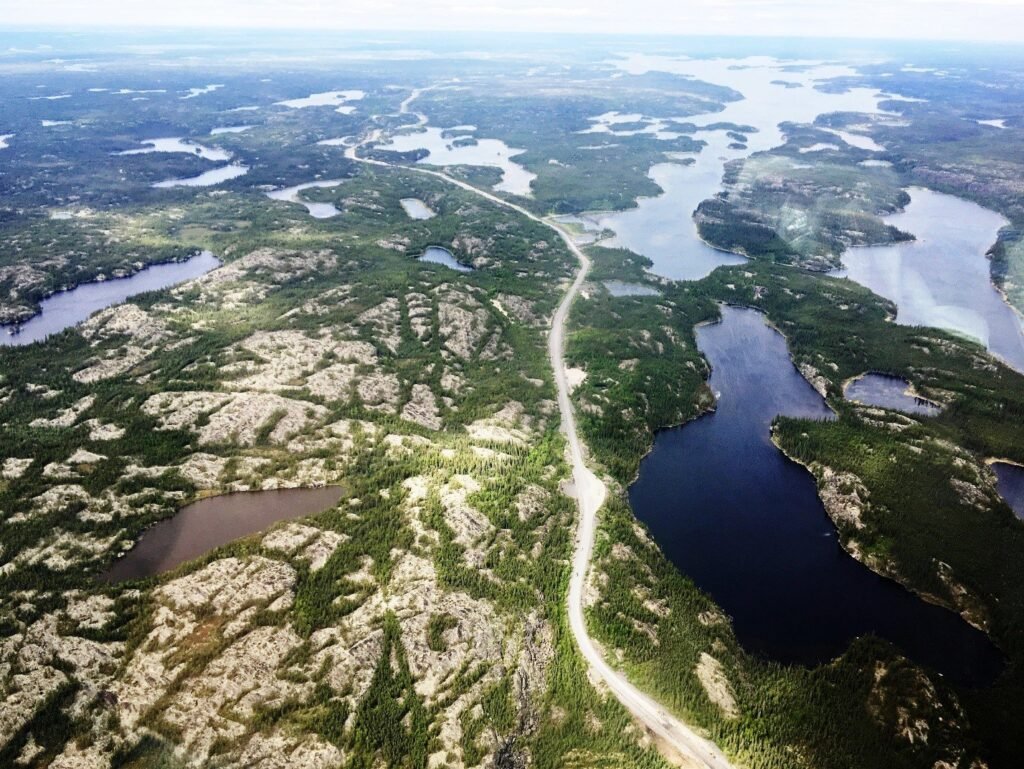
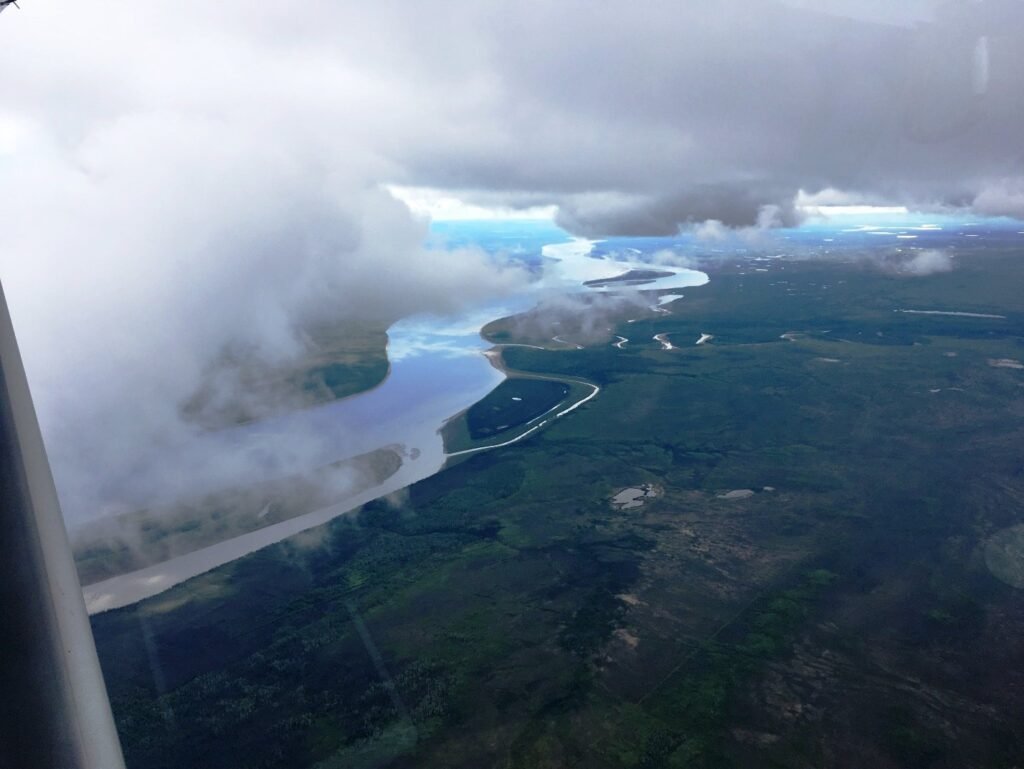
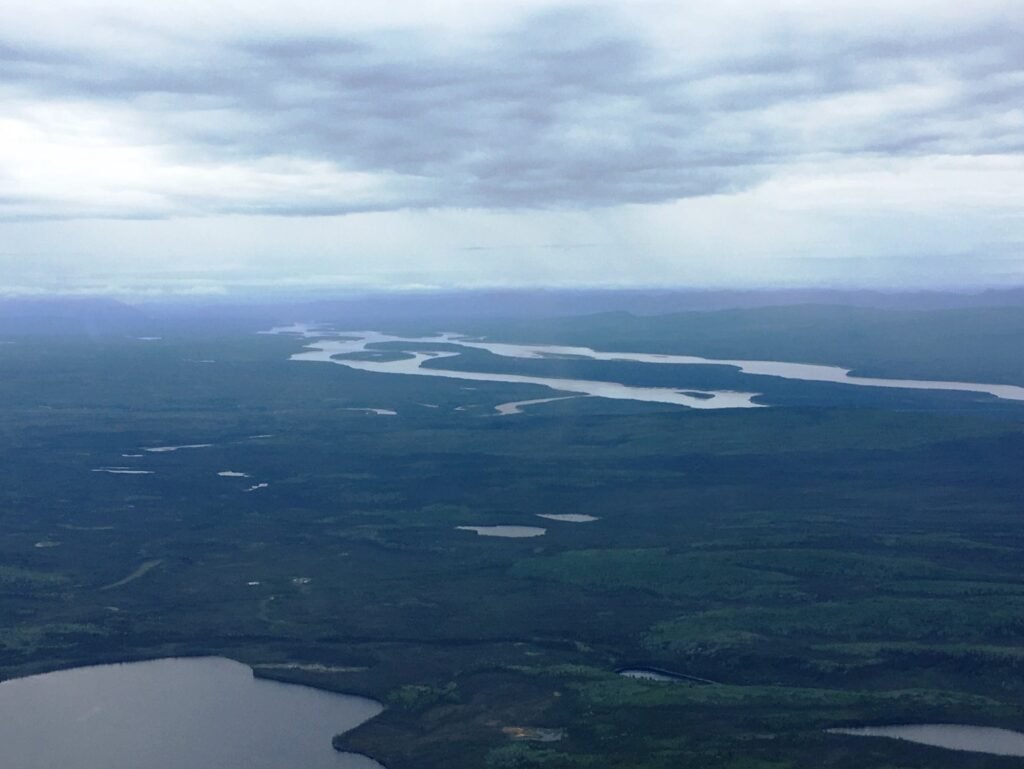
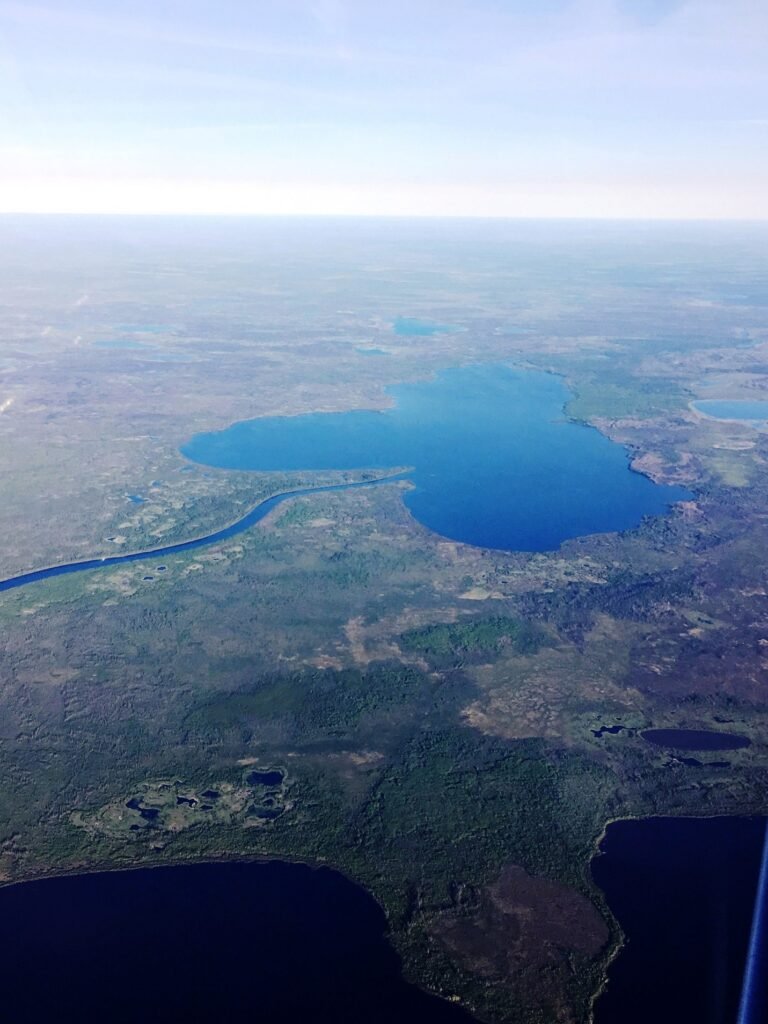
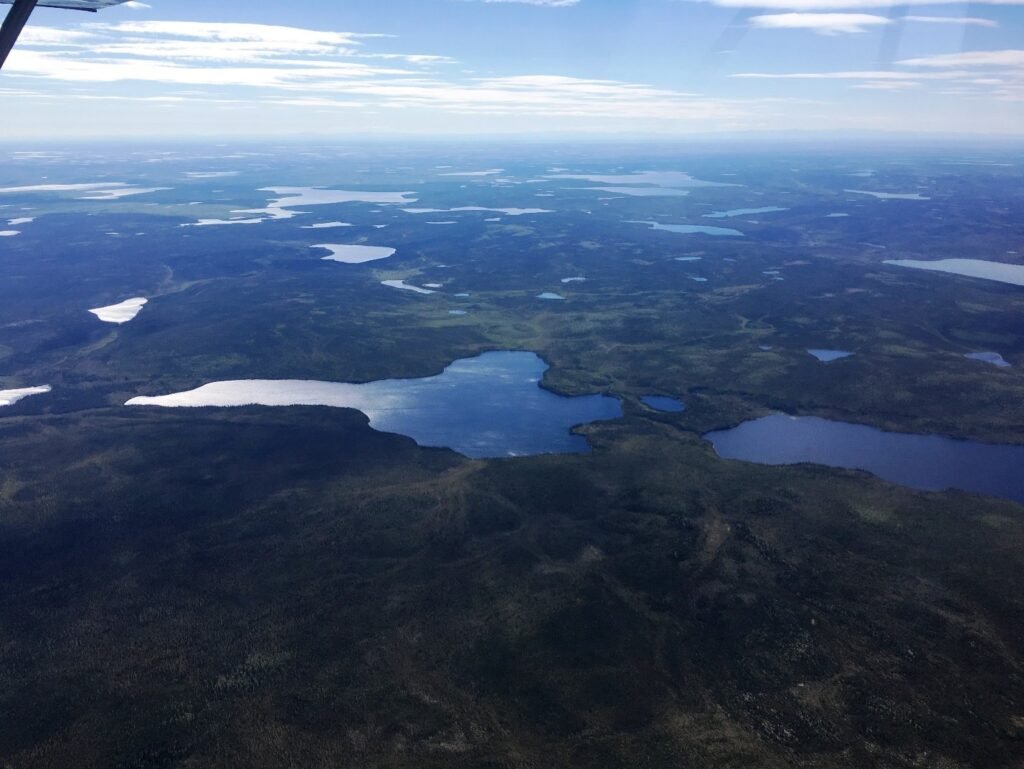
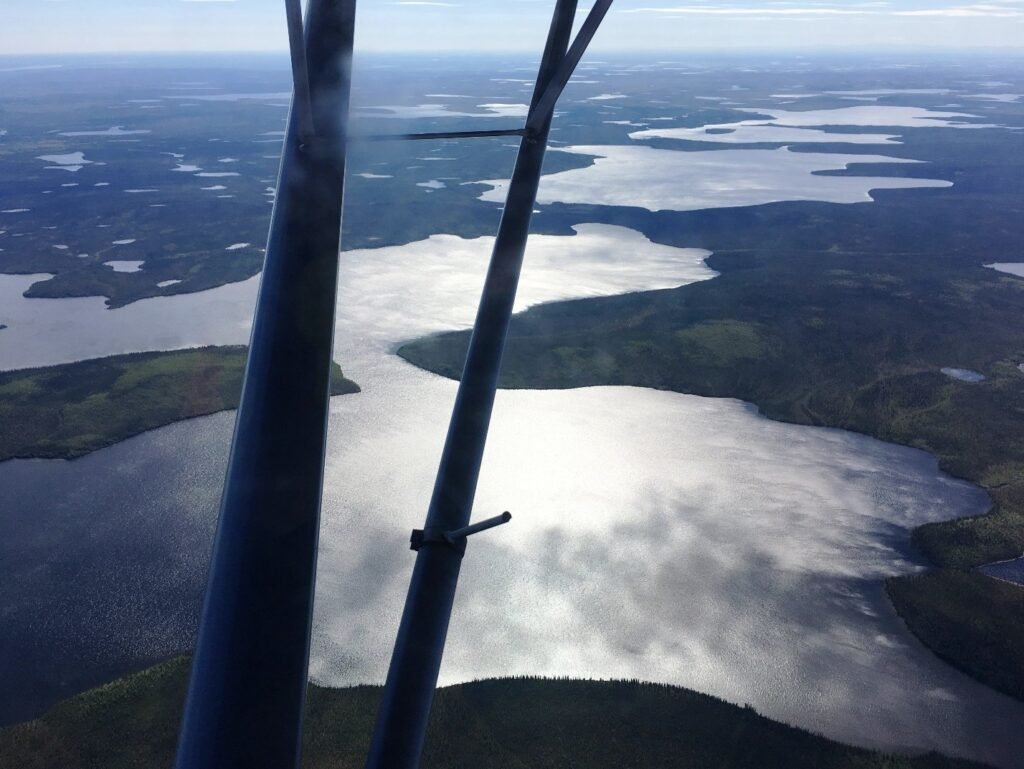
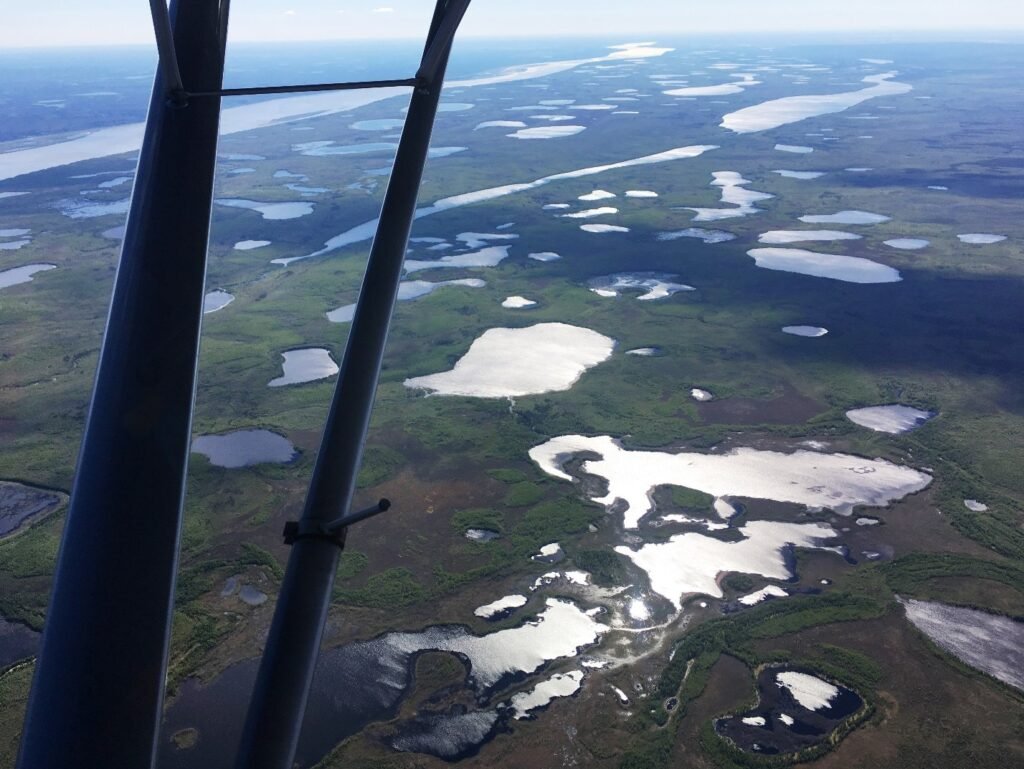
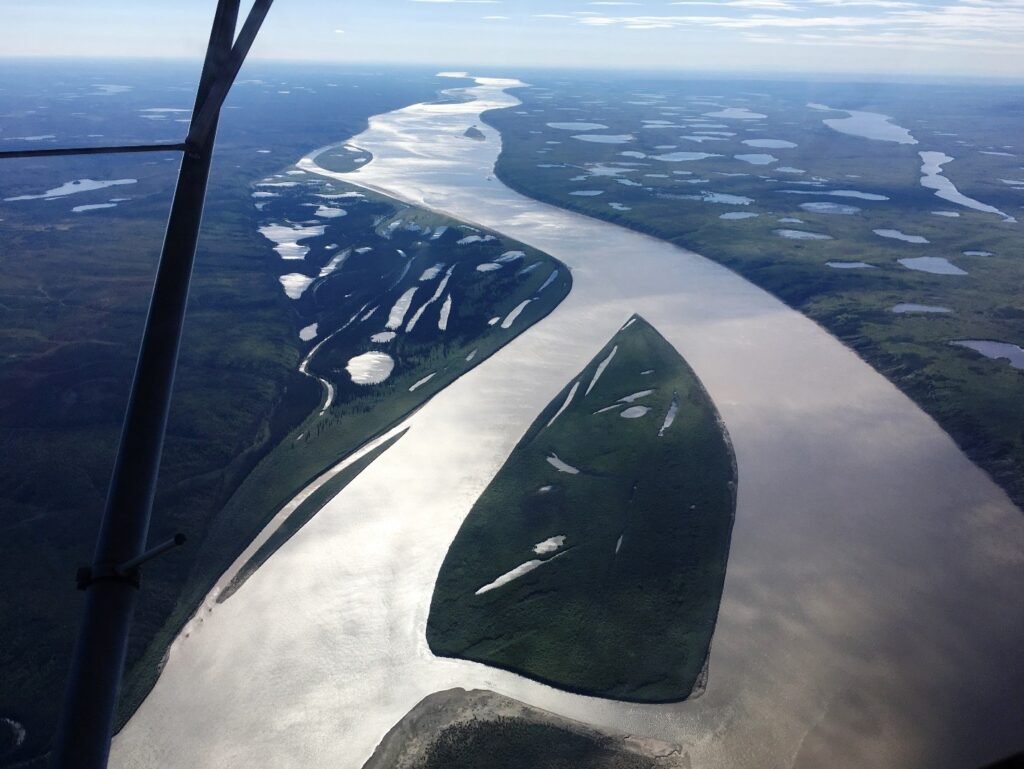
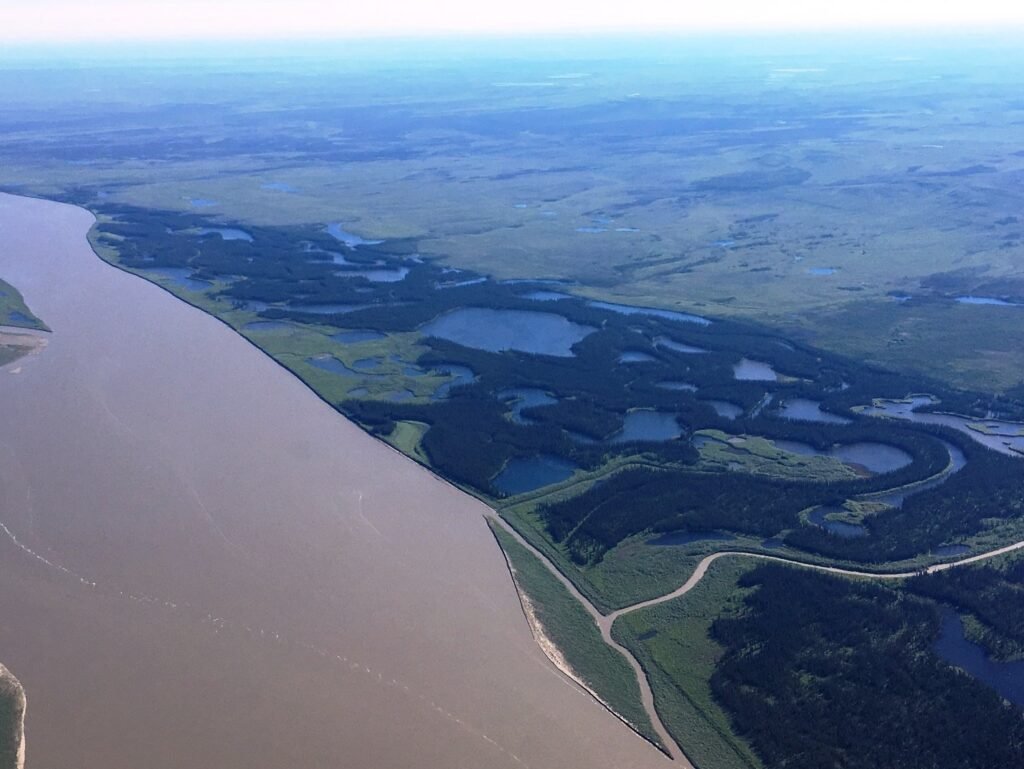
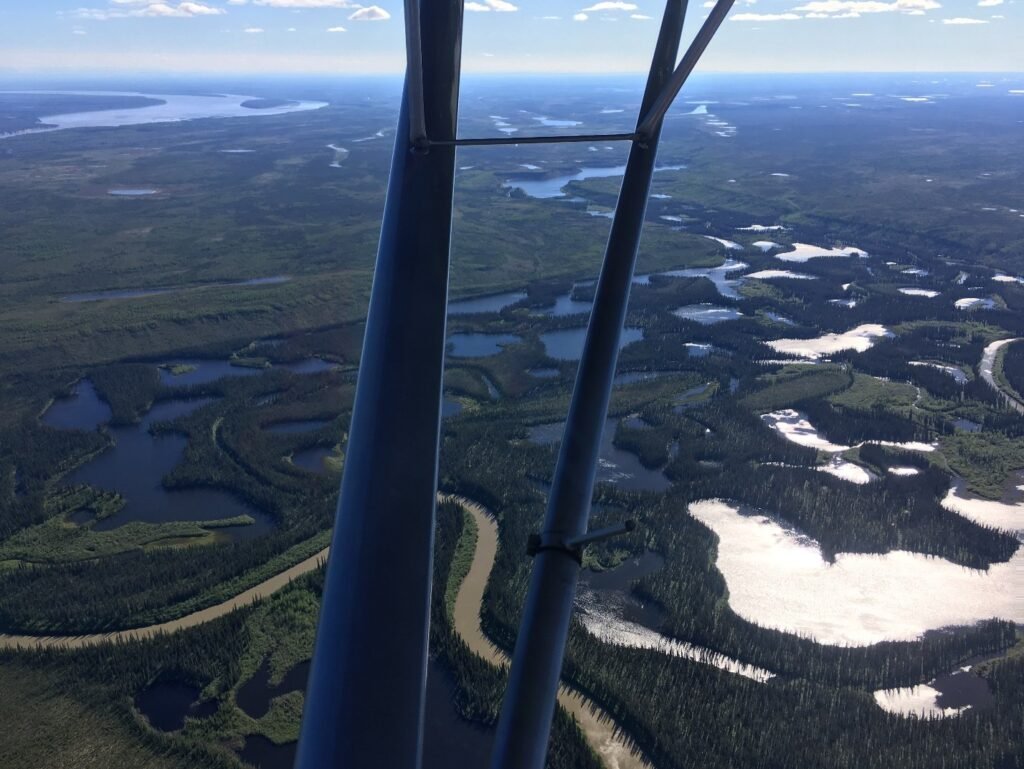
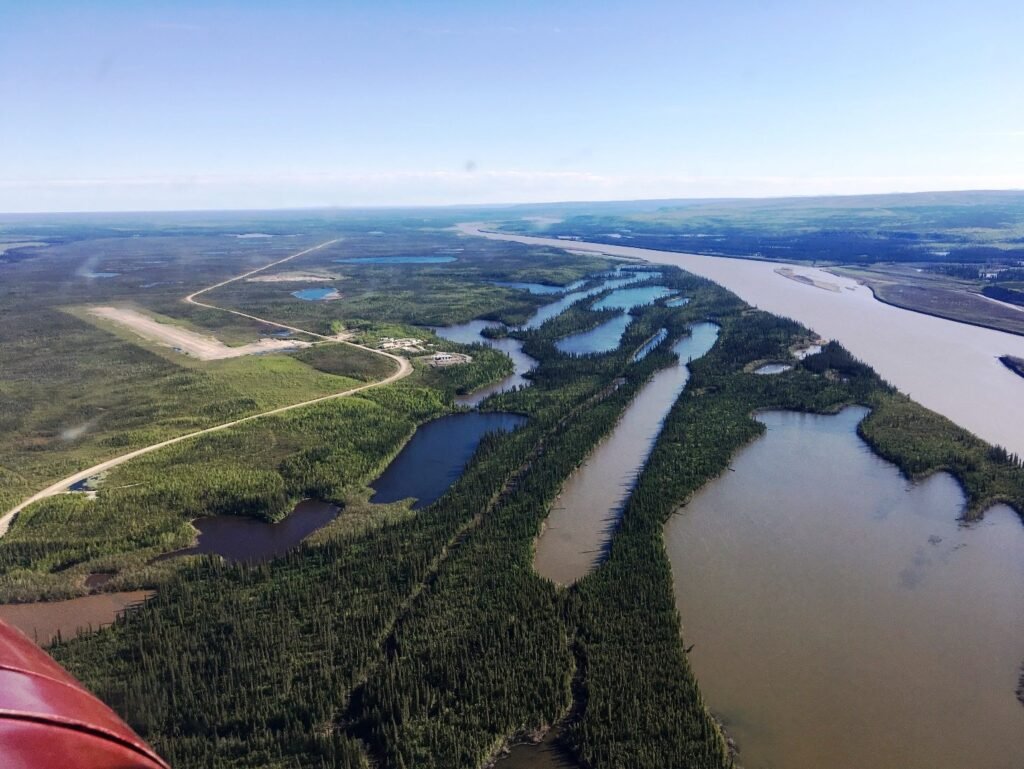
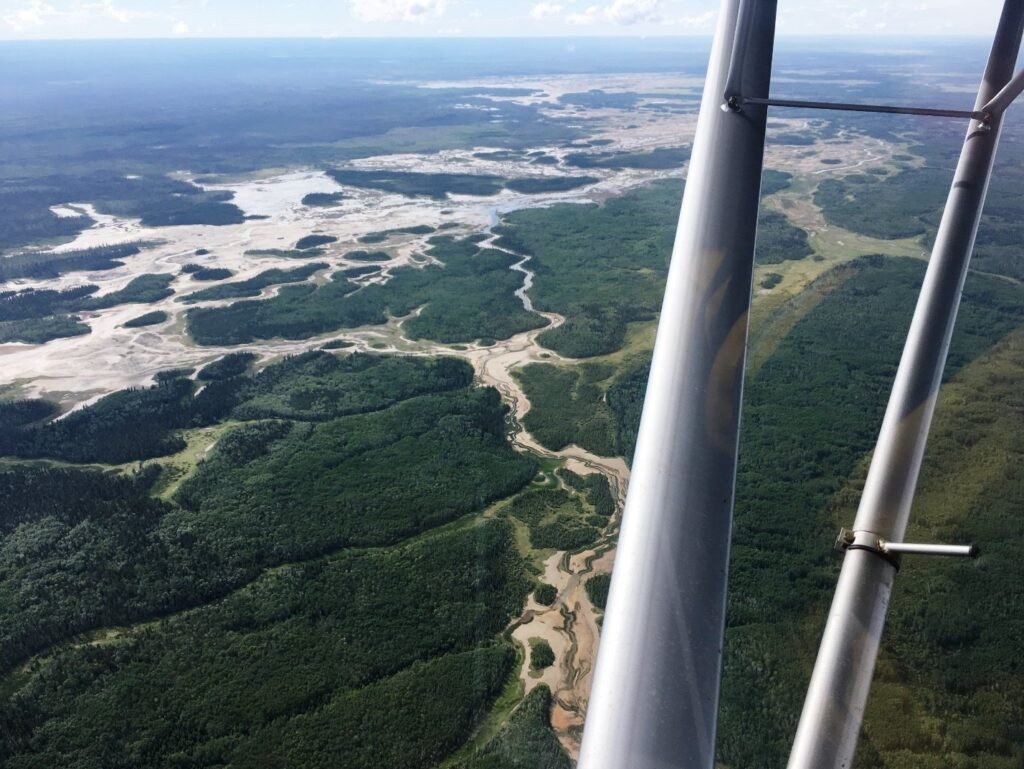
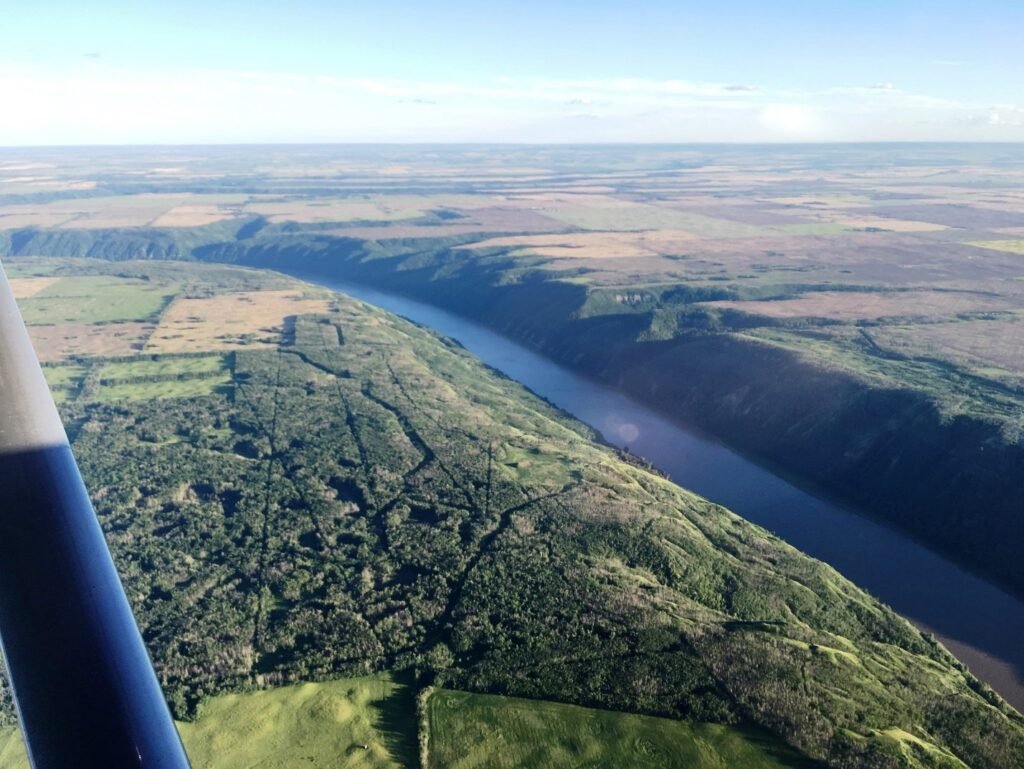
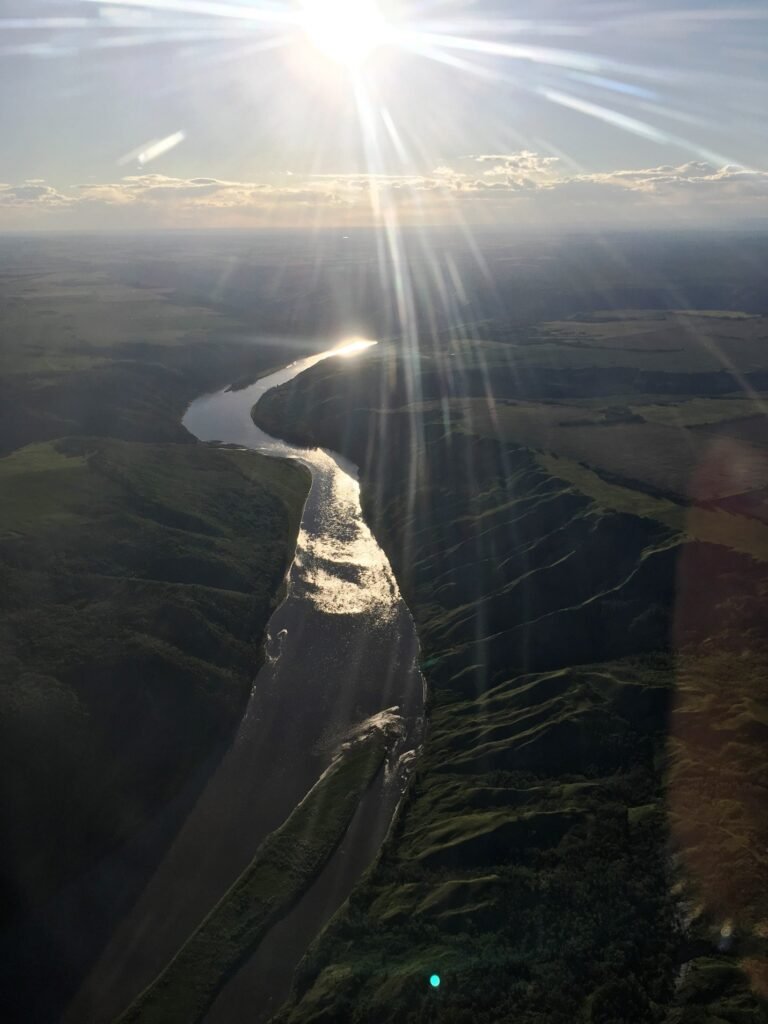
    The trip was scenic, but it was more and more “civilized” scenic. More groomed fields, more towns, bigger and bigger every time.

    At Fairview, I figured that I have another two hours before dark, and decided to go for another short leg of 170 nautical miles to MacKenzie, BC. For those who are familiar with mountain flying, will remember that strong winds between cumulus granitus are no fun. From Fort Smith to Fairview, I had 10-30 knots of headwind and constant light chop. But now it was getting serious.

    Imagine air is water. How would water behave if it was rolling fast over the mountains. Both air and water are fluids, therefore their behavior is very similar. So on the lee side of the mountain ridge, you often encounter downdrafts for this reason. It’s all a very cool theory when you teach it on a local mountain flying course. It was no theory that night. I was approaching MacKenzie with only 10 minutes to spare before dark, and no night lighting at the airport. Winds were so strong that with full power, and indicated airspeed of only 80 mph at 10000 feel of altitude, I could barely maintain altitude. My ground speed at that time was dropping down to 44 knots. So I was questioning if I was really “approaching” MacKenzie.

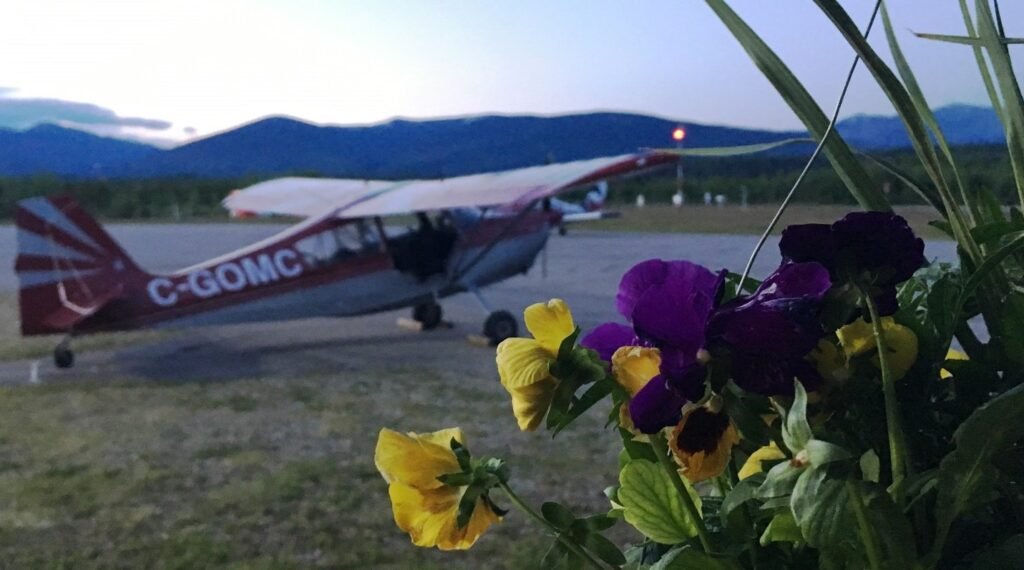
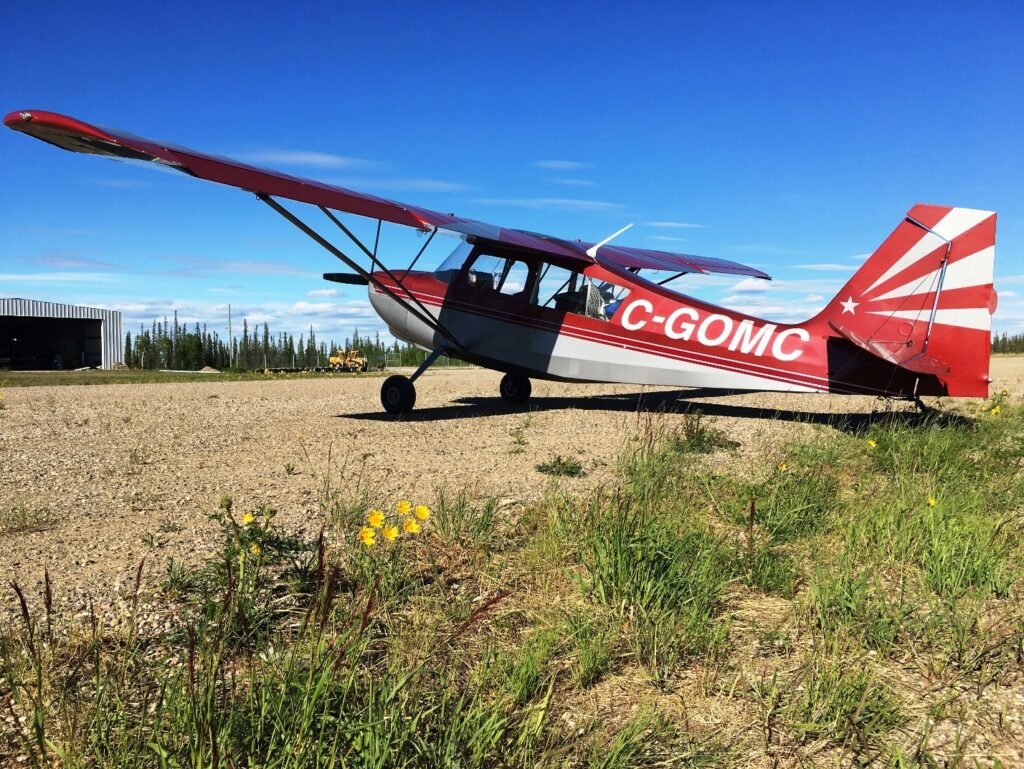
    I was already about to turn around and go to Fort St John if I was not able to cross this mountain ridge. Or continue another 100 miles or so at night in the mountains to Prince George, nearest airport certified for night operations. But citabria once again was a brave little plane that persevered, and picking up speed in a steep descent, we landed 7 minutes before the official night MacKenzie. To a big surprise after the upper level storm, there was not a slightest air movement on the surface.

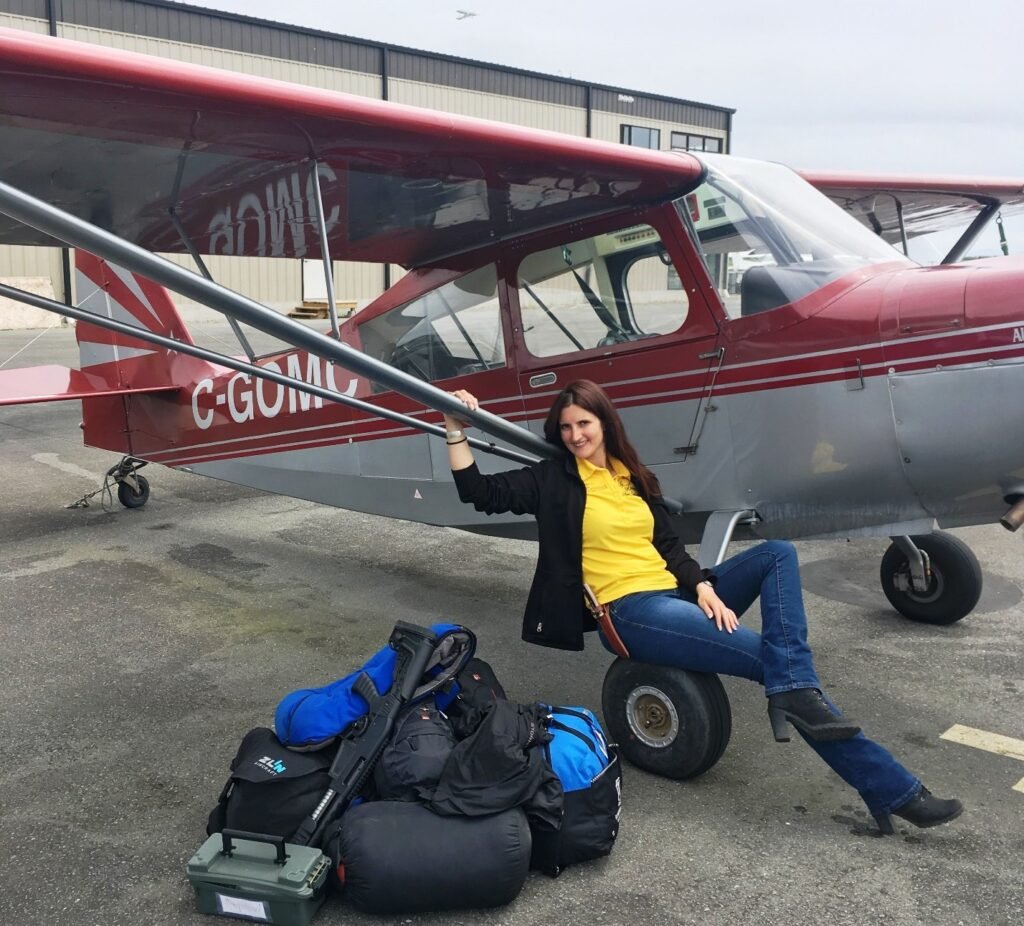
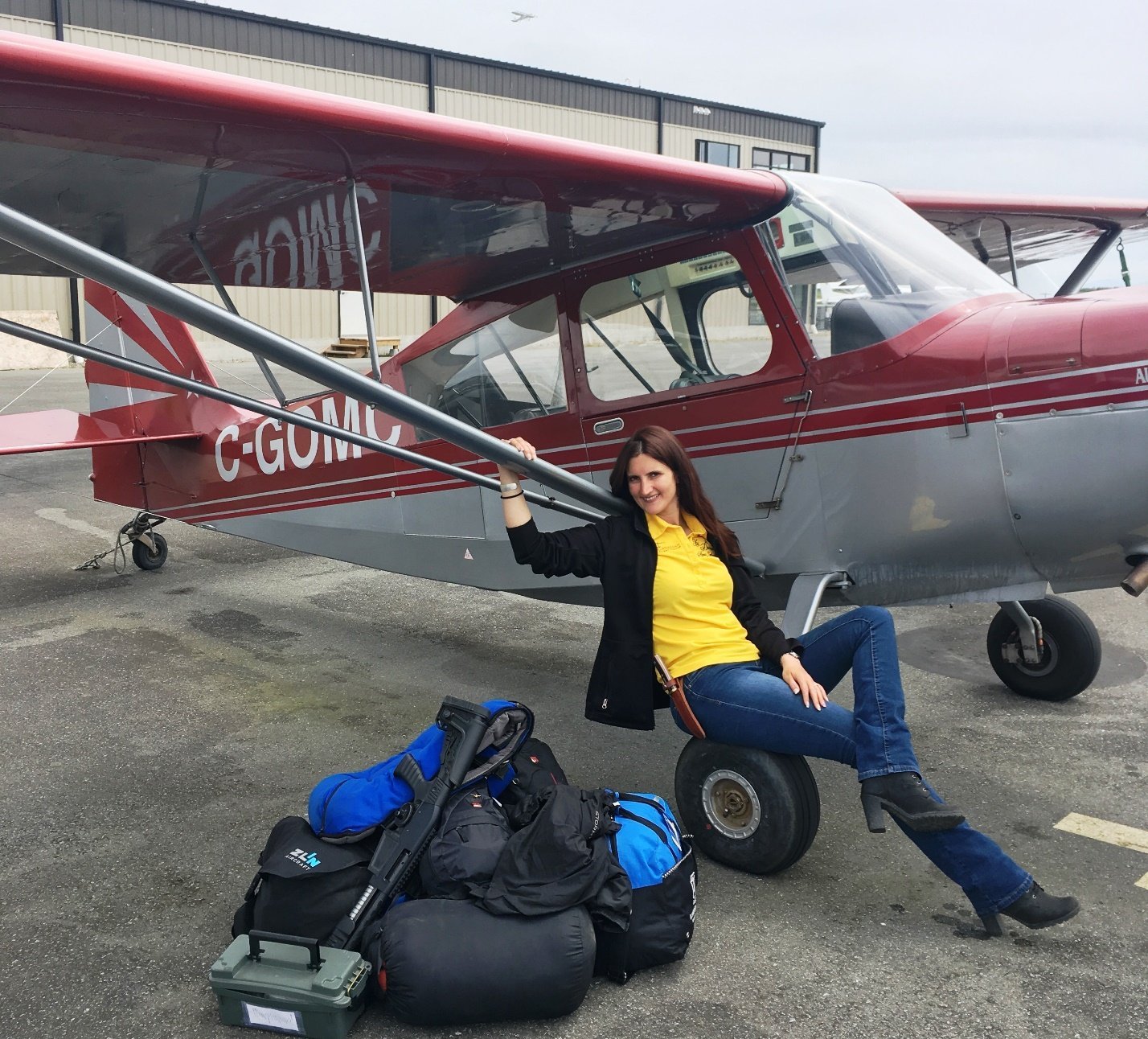
    I was back at my favorite fuel stop. Don’t take the deceiving friends surroundings for granted – grizzlies are near. But people are here extremely welcoming and friendly! I was actually so tired after 6 hours of constant turbulence, that I was ready to pull out my sleeping bag and camp under the wing – I had my bear repellent with me after all! (A nice 12-gauge shotgun from Seraphim Armoury in Abbotsford). But what was worse than bears – are the mosquitos that invaded the cockpit and took a few bites out of me before I had a chance to put a jacket on!

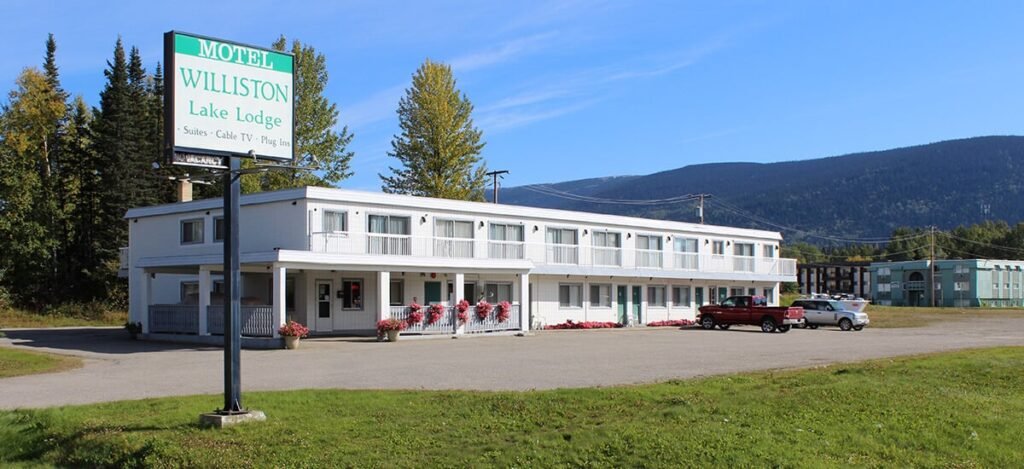
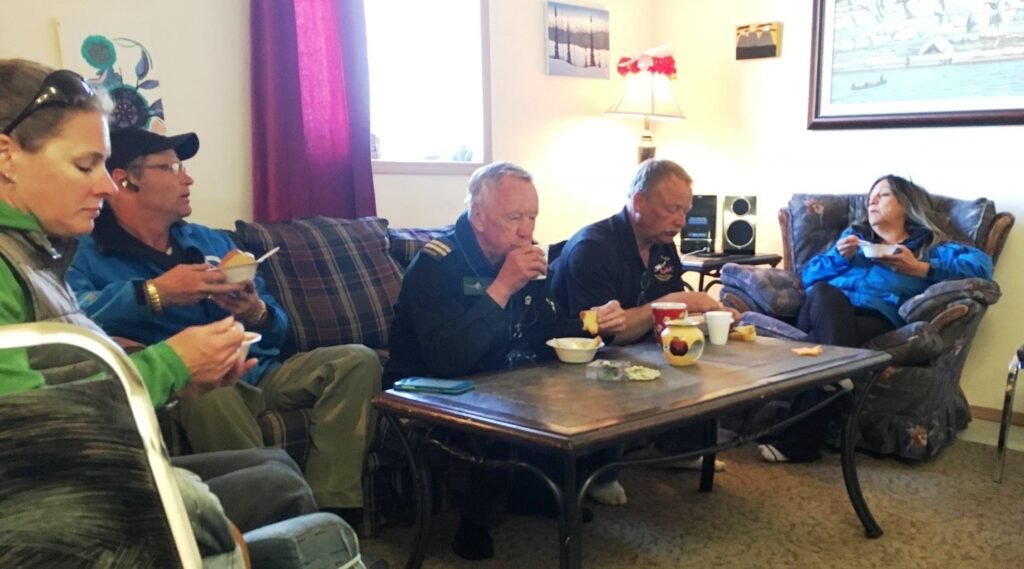
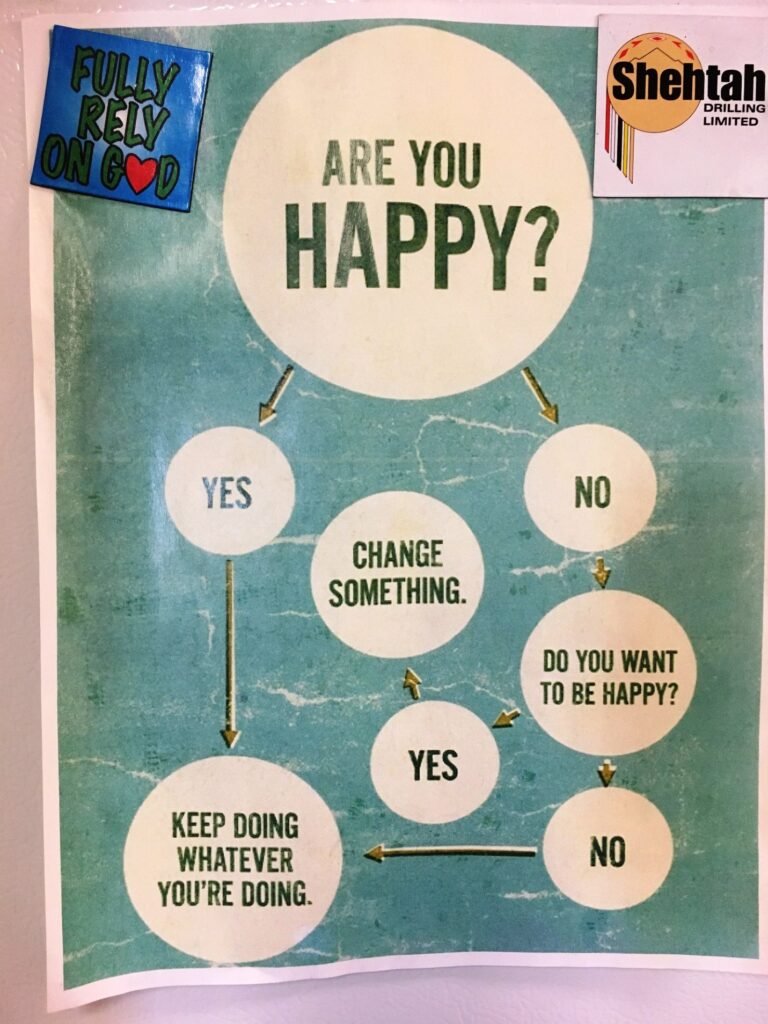
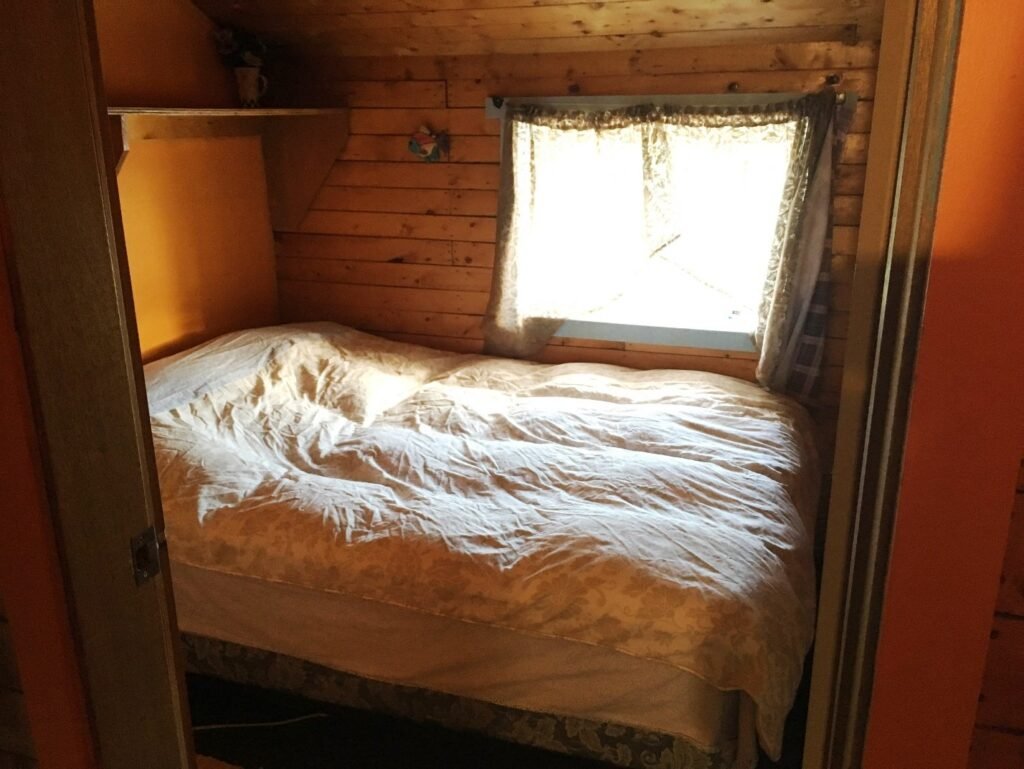
    So I phoned the Willinston Lake Lodge for an overnight stay. The nice Chinese lady at the reception took my booking for a standard room, then asked if she would make me happy if she put me in a King bed room. I said it would be lovely. So she just upgraded me to a very nice King bed suite – “Here, she said, I’m glad I can make you happy”.

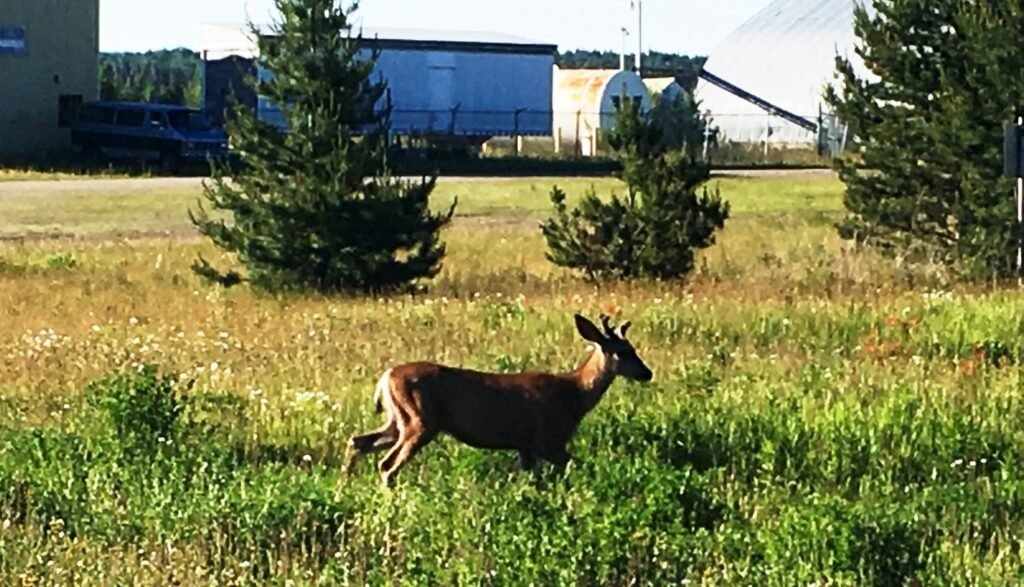
    Vicky from Trench Aviation Fuel was an angel. She drove back from the airport to the motel to pick me up, then made be toast and strawberry with cream for breakfast. On the way to the airport we met a local deer family, unafraid of people.

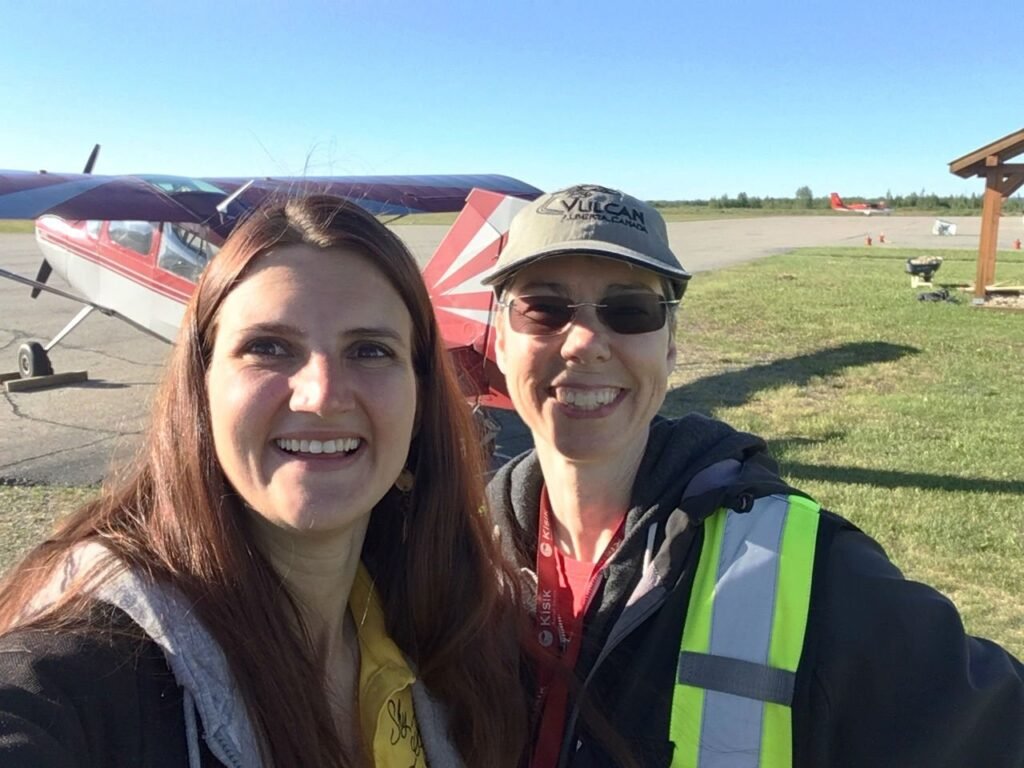
    And while fueling, the crew of the next plane parked arrived – Kisik aerial survey pilots, our neighbors from Boundary Bay airport! If there are coincidences, this morning was definitely packed with nice ones 🙂

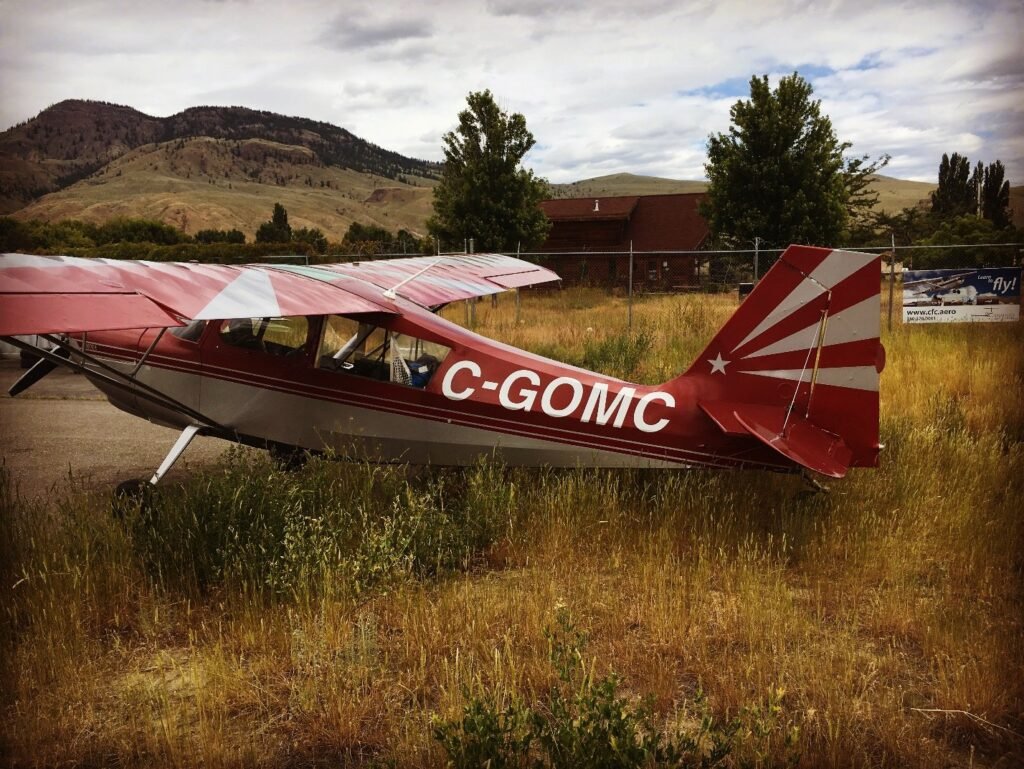
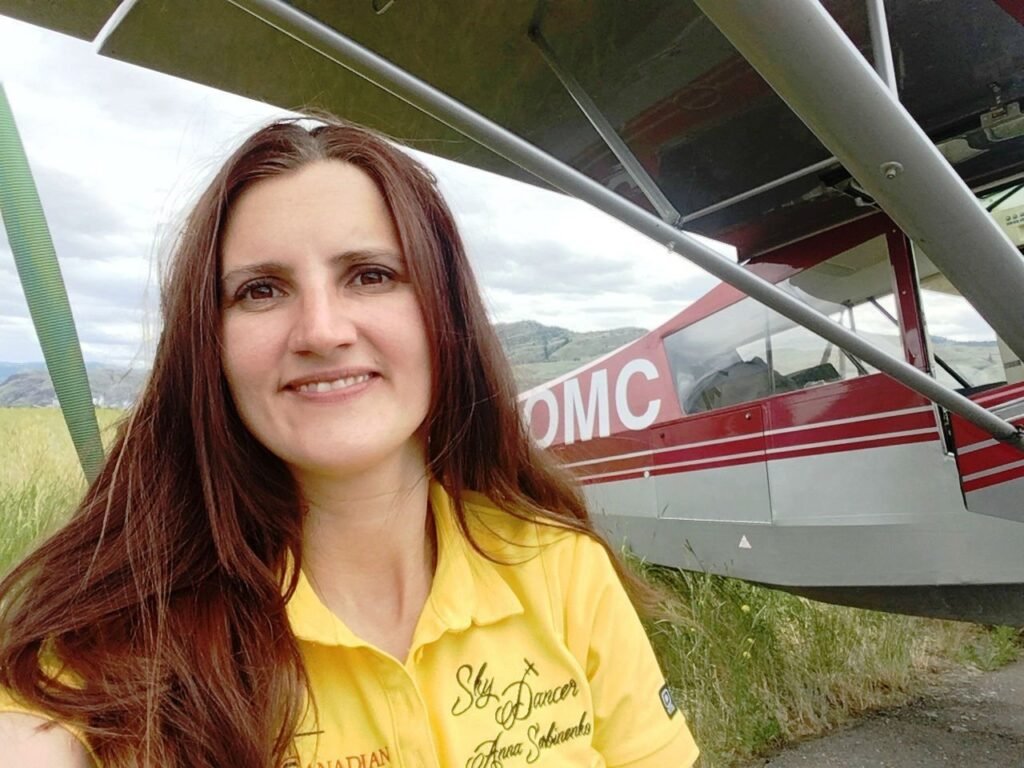
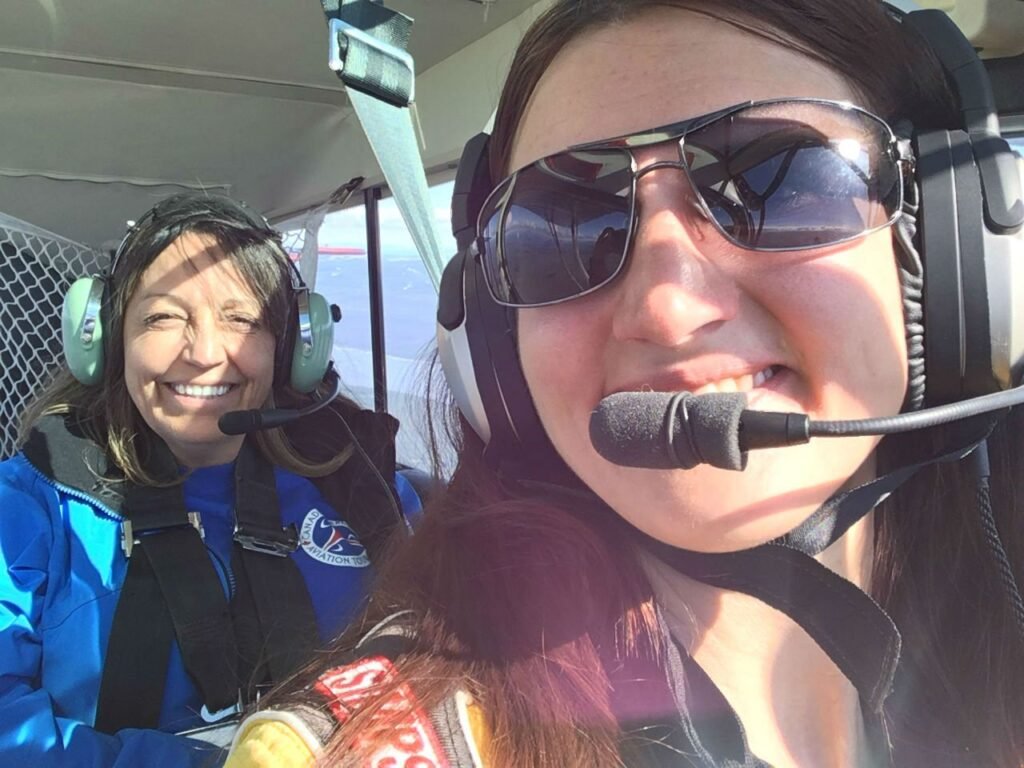
    That day, I could only make it as far as Kamloops. Vancouver is still IFR weather all day.Starting our flight school base in Kamloops 5 years ago was one of the best decisions. Since then it has been not only a year-round good weather training base for our students, but also a safe haven “home away from home” returning from long trips, when Vancouver coastal weather was prohibitive. In 2015, I returned to Kamloops from the Atlantic coast, last year from Alaska, and today from the Canadian Arctic Aviation Tour. Love Kamloops!

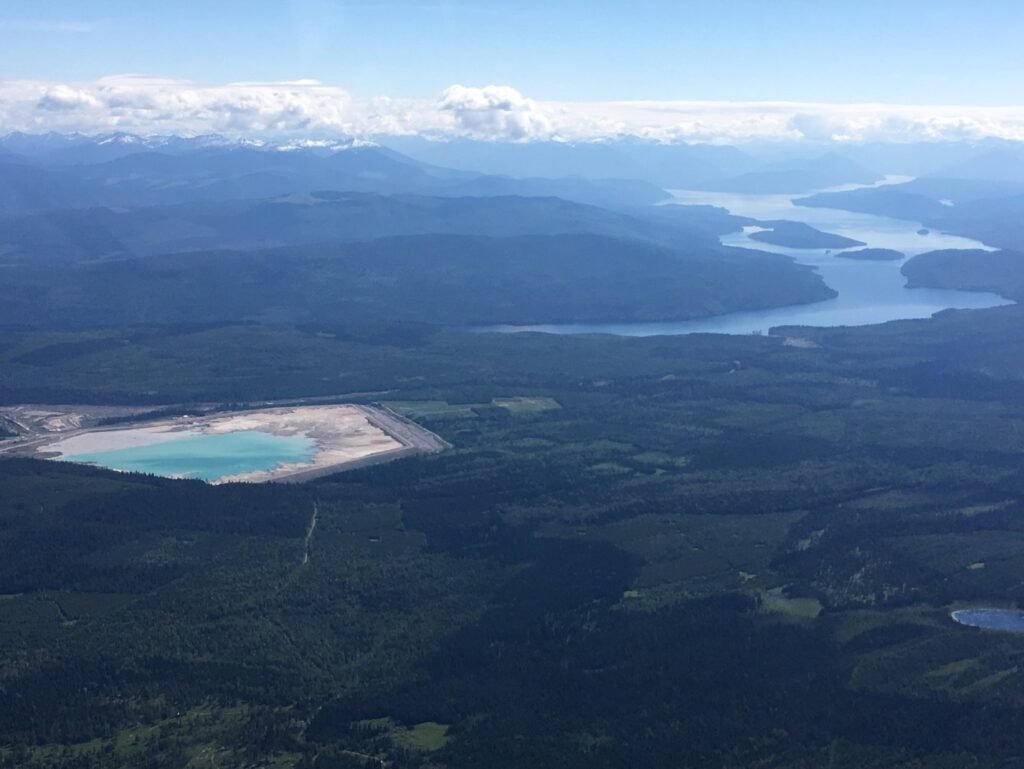
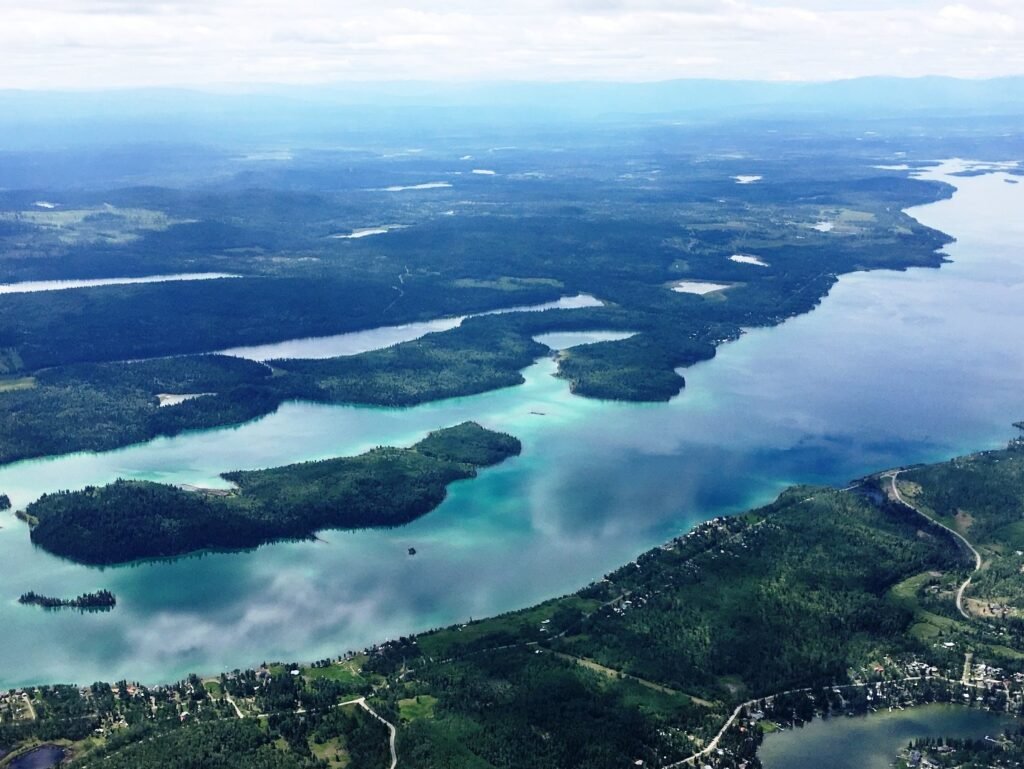
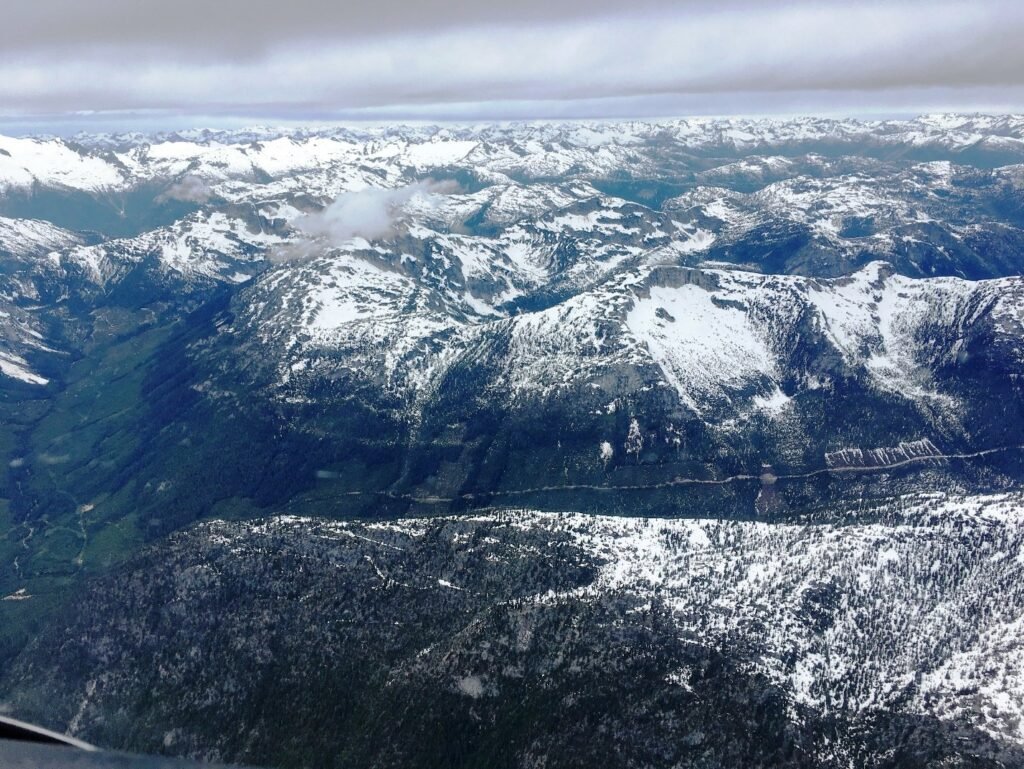
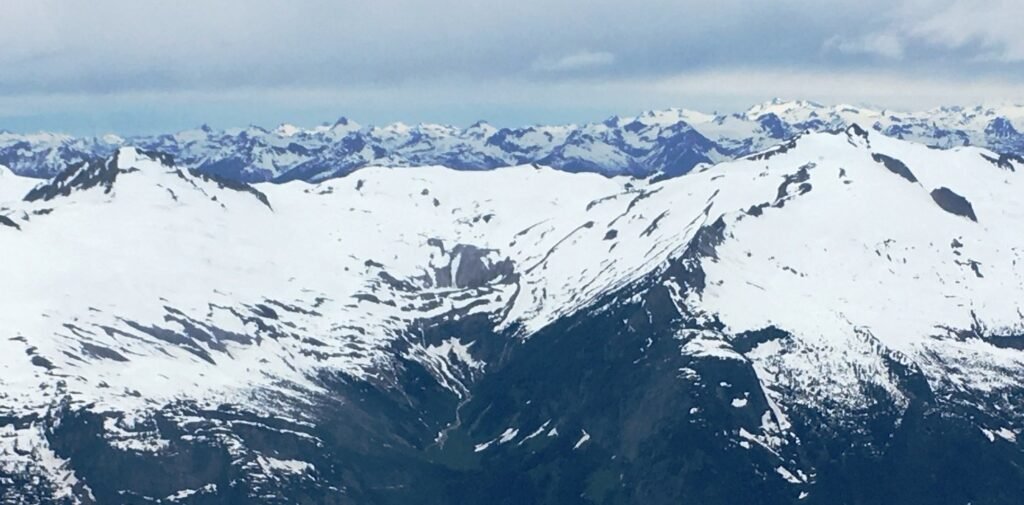
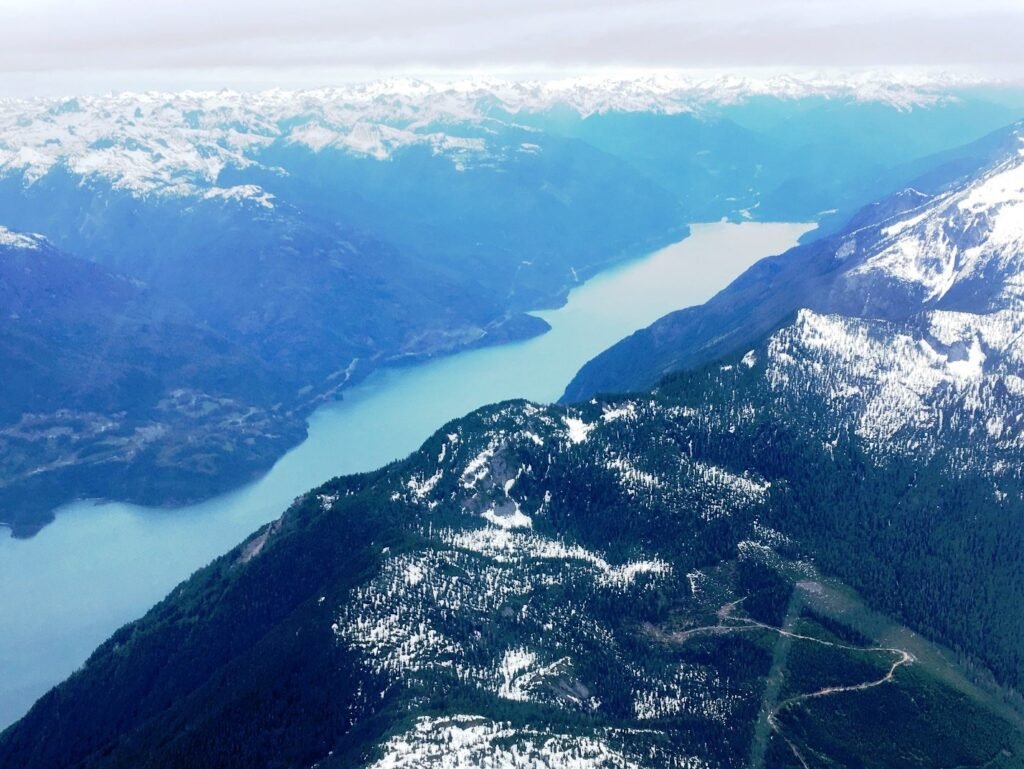
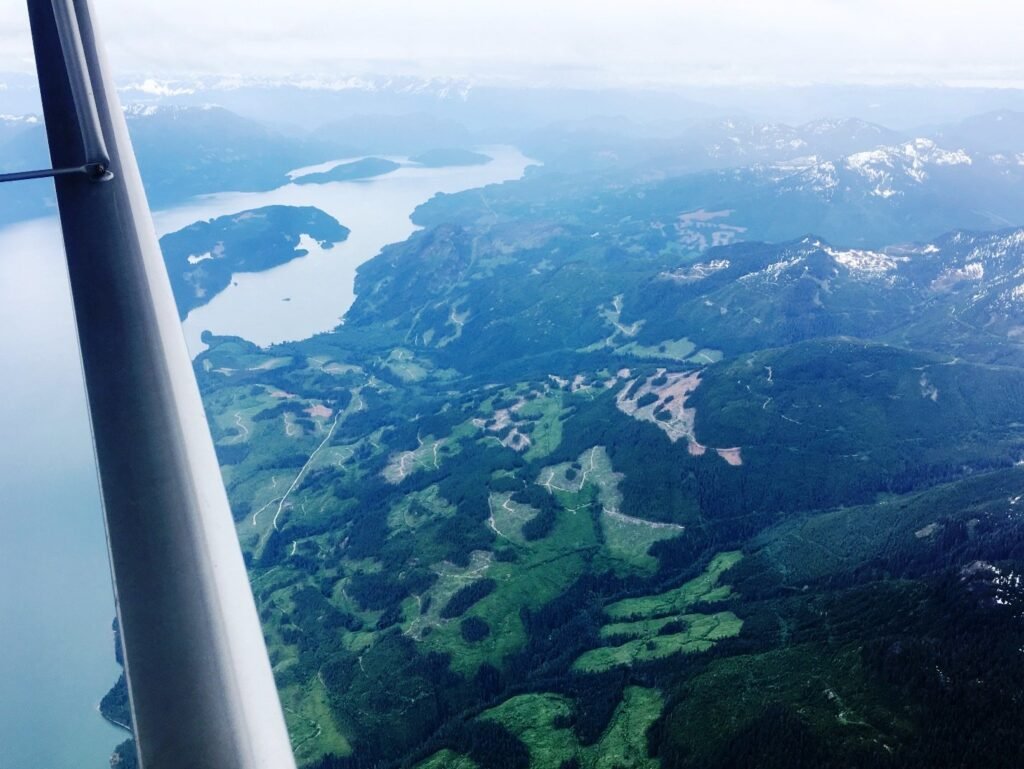
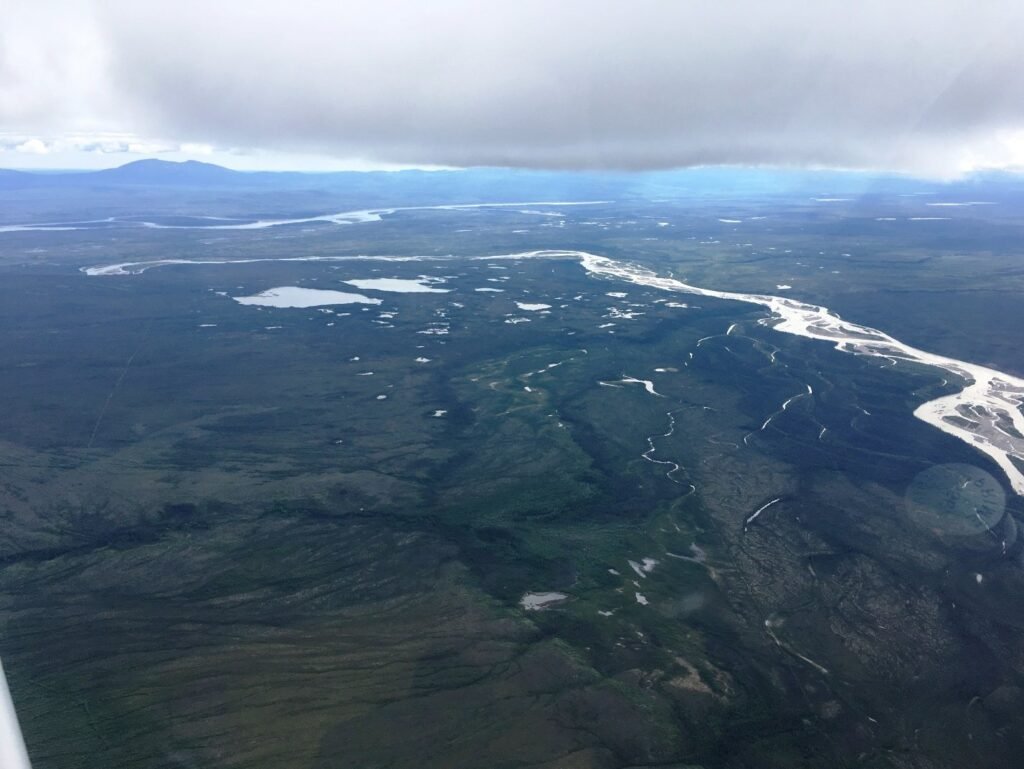
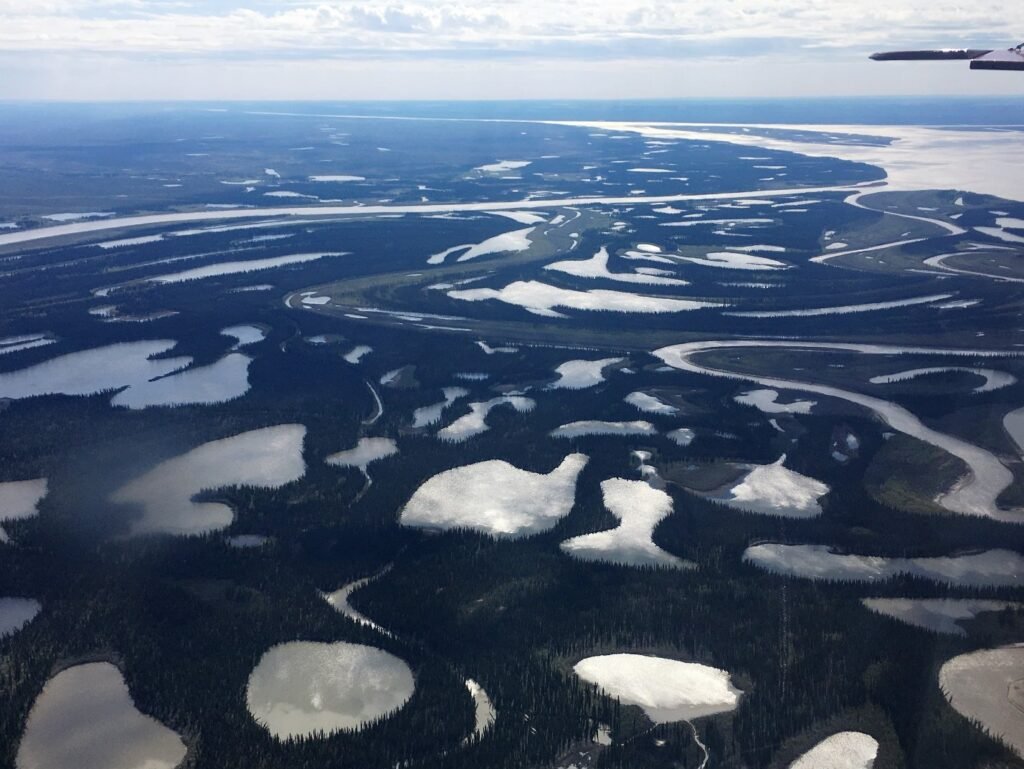
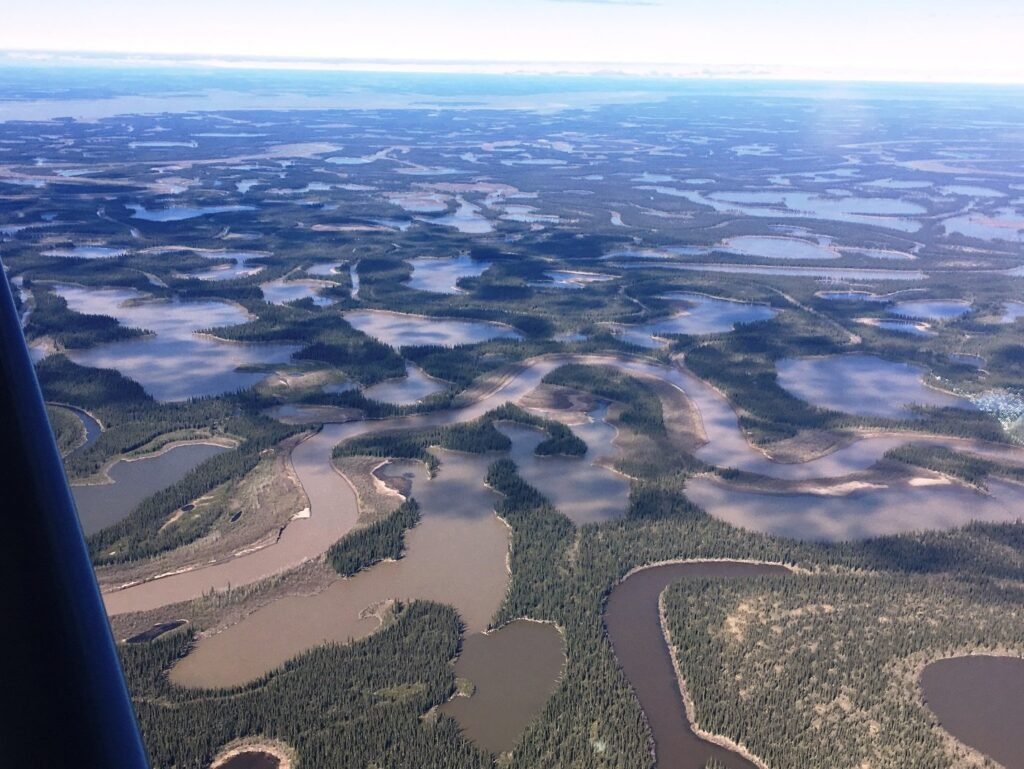
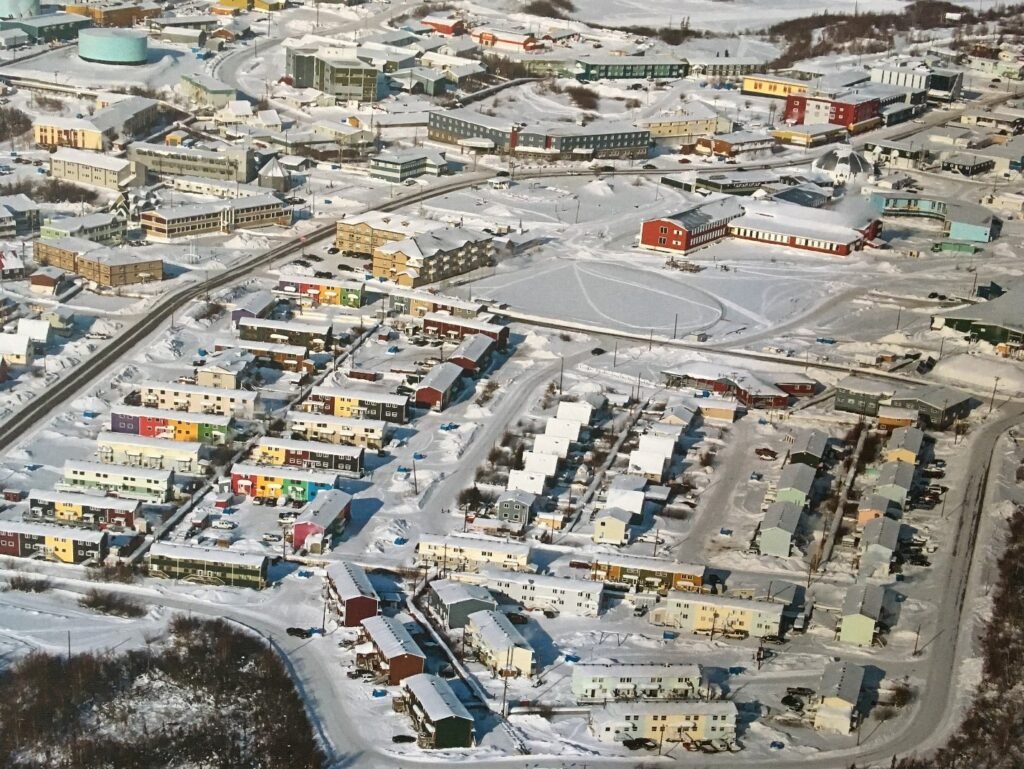
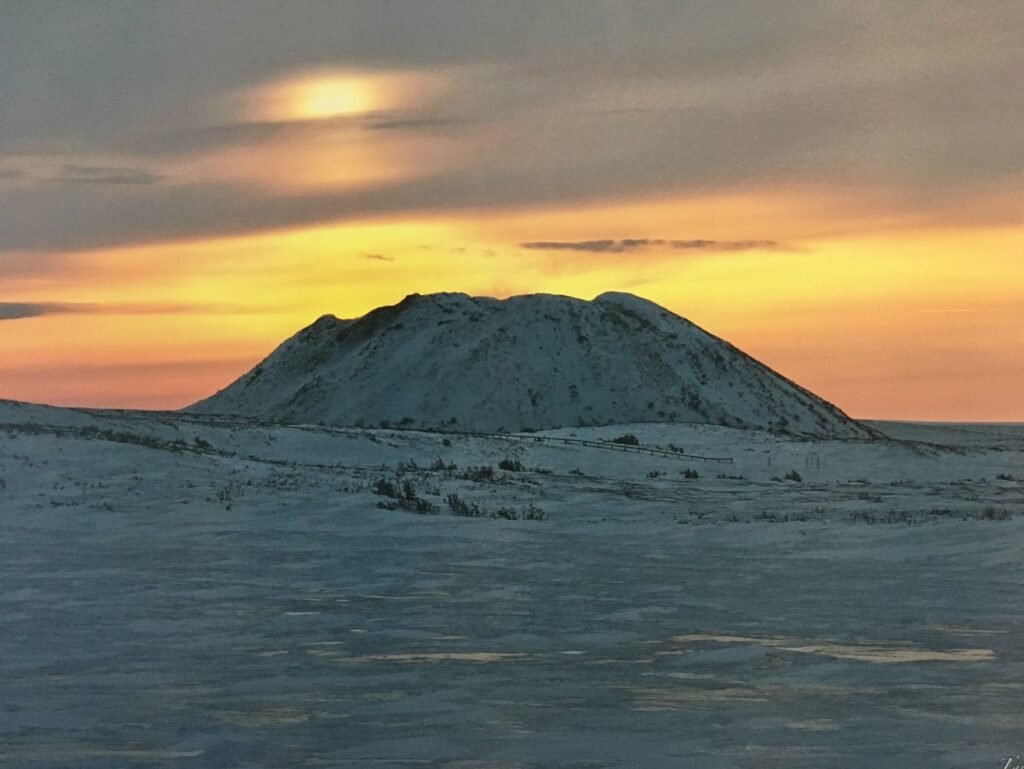
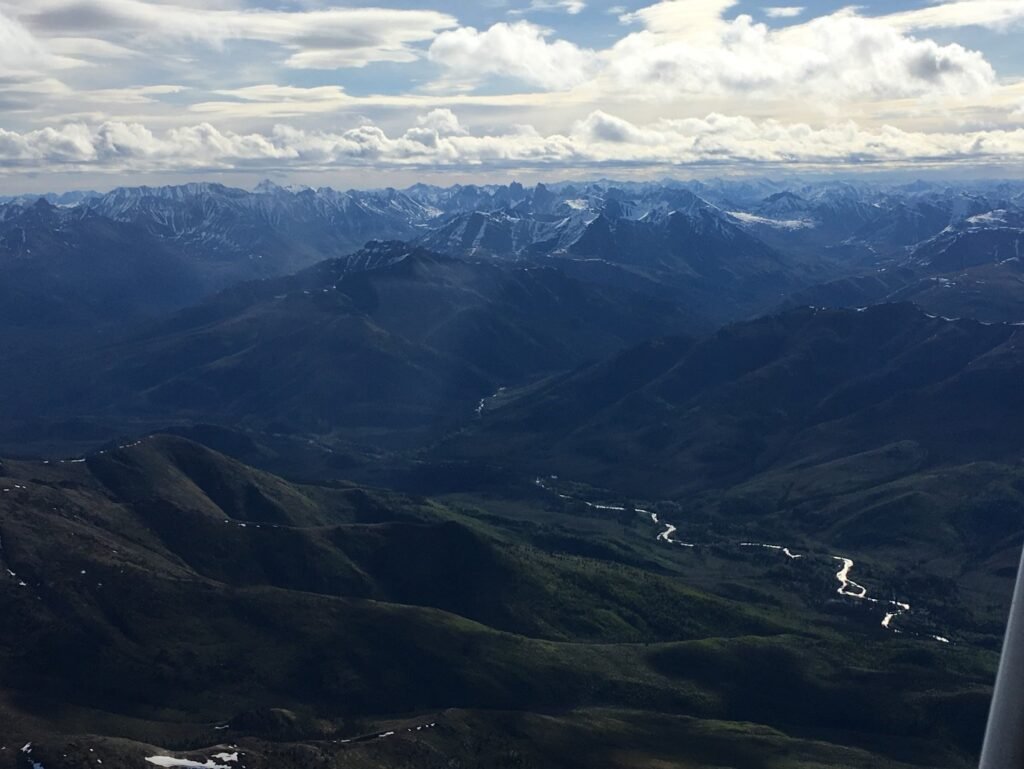
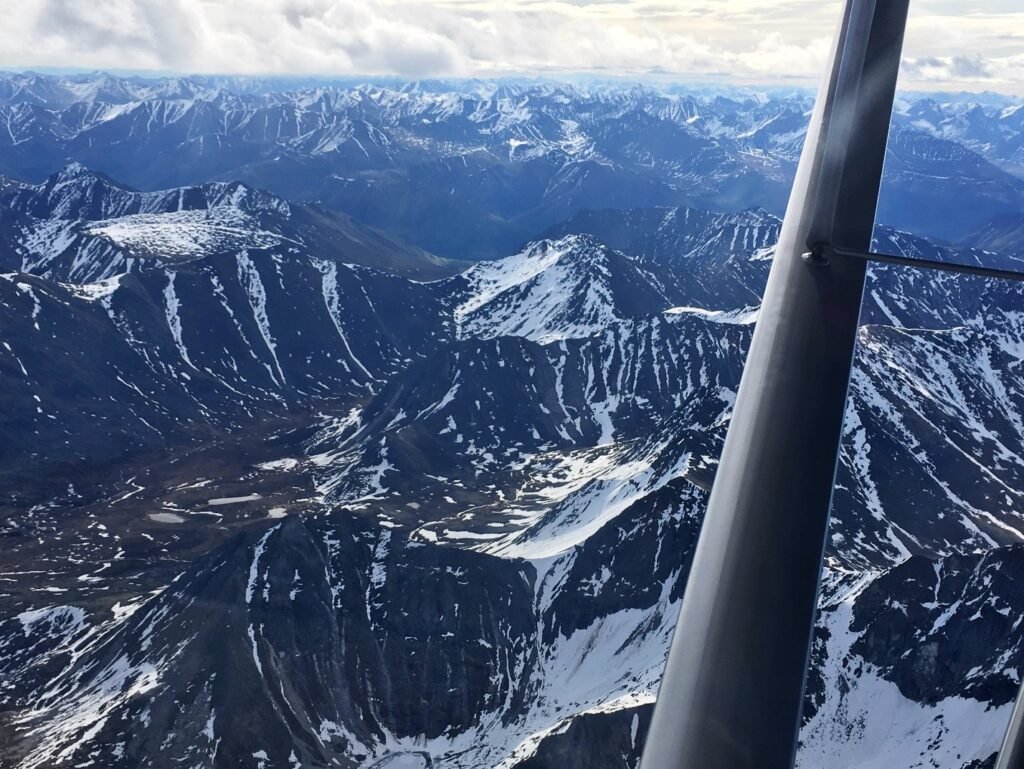
    The next day, weather cleared up and it was just a short 140 nautical miles leg to the home base. As I was flying over the snow covered peaks, I was reminded how privileged we are to live in one of the most beautiful parts of the most beautiful country, and having these mountains, glaciers and lakes literally on our back yard.

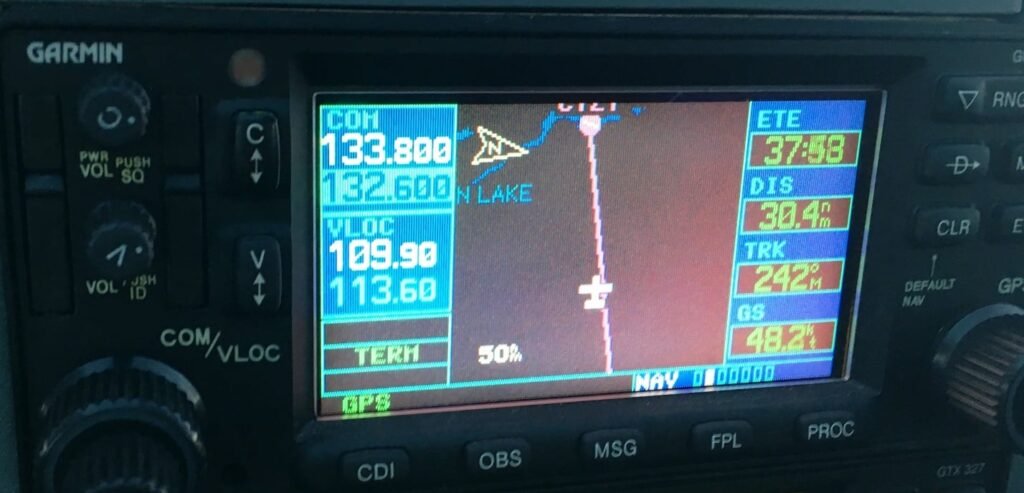
    And it was nice for once to have the GPS always showing you way. In the Arctic it was giving up on me often, switching to “dead reckoning” mode a few times per hour. As you remember, there are no GNSS satellites North of 60th. So satellite availability becomes less and less, the further North you go.

    Disturbing thing coming to the Lower Mainland was the traffic. Vancouver terminal controller right away told me to stay away from his space because he is too busy, and Pitt Meadows guy pointed out three potential traffic conflicts right away. In the North, we were the entertainment of the week (or month?) for any traffic advisor up there! And seeing no other planes for hundreds of miles…

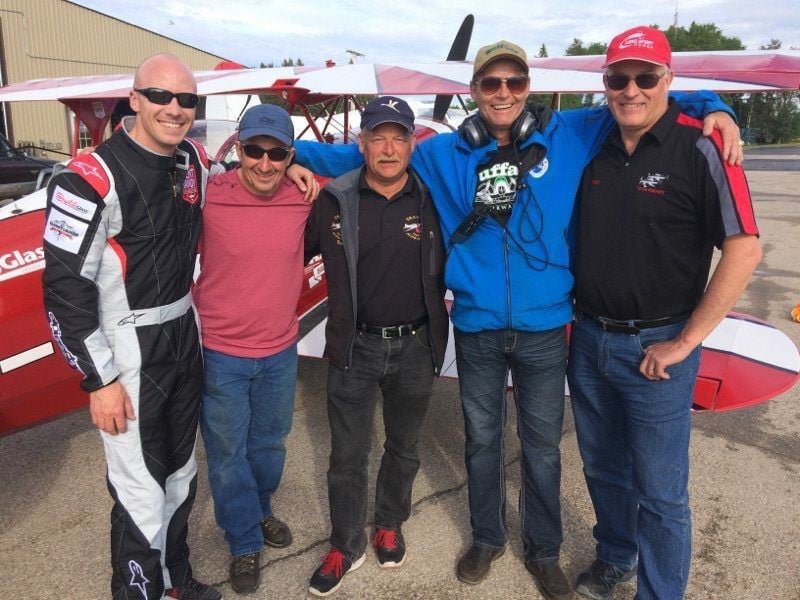
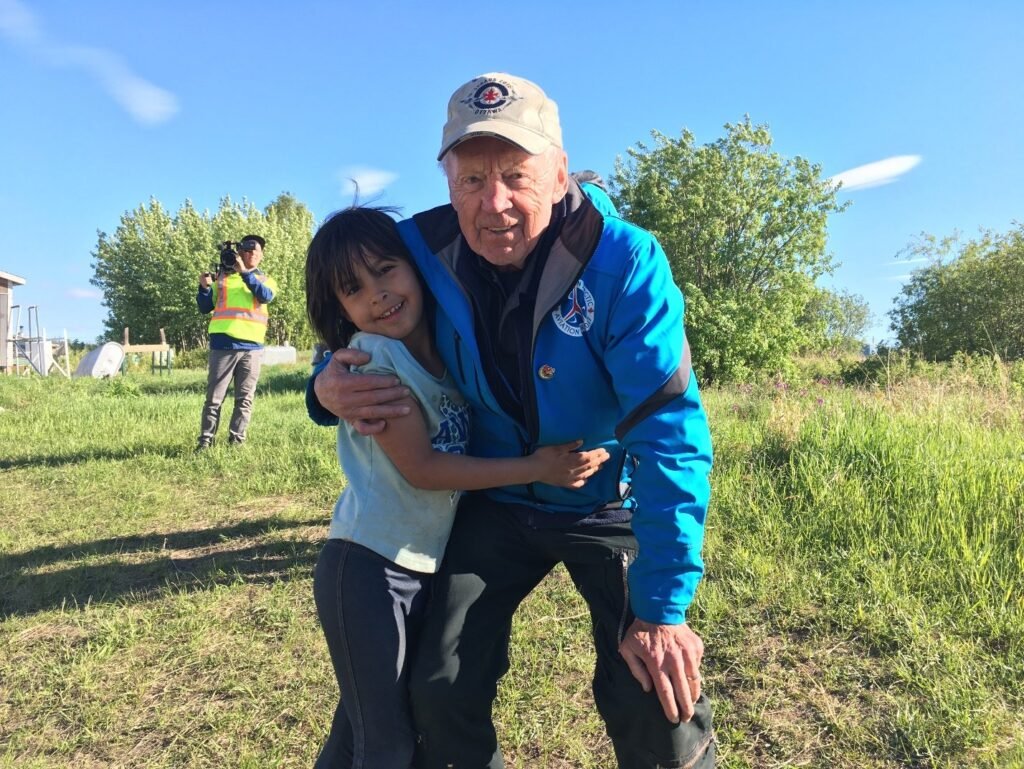
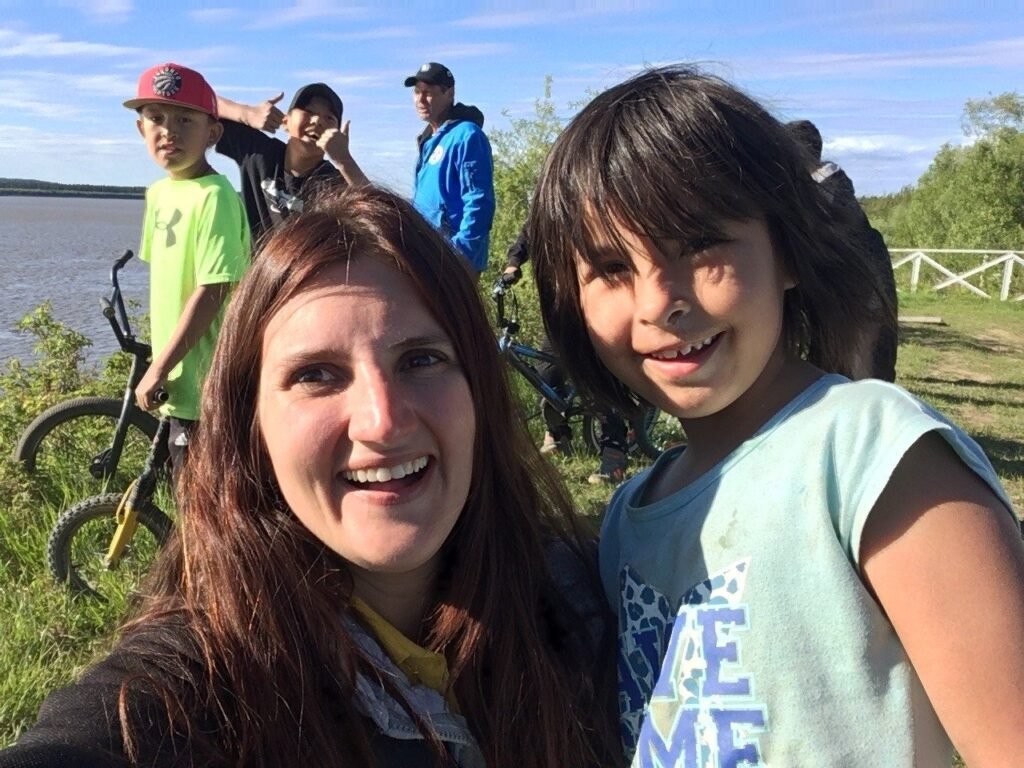
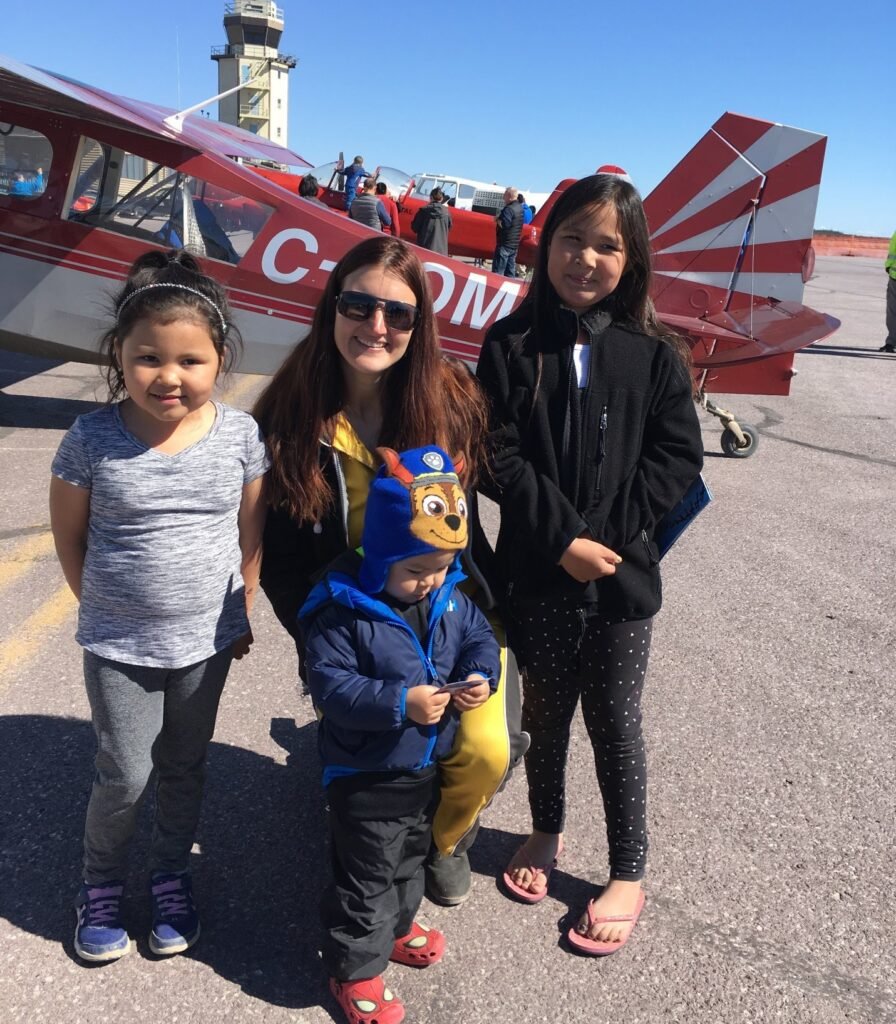
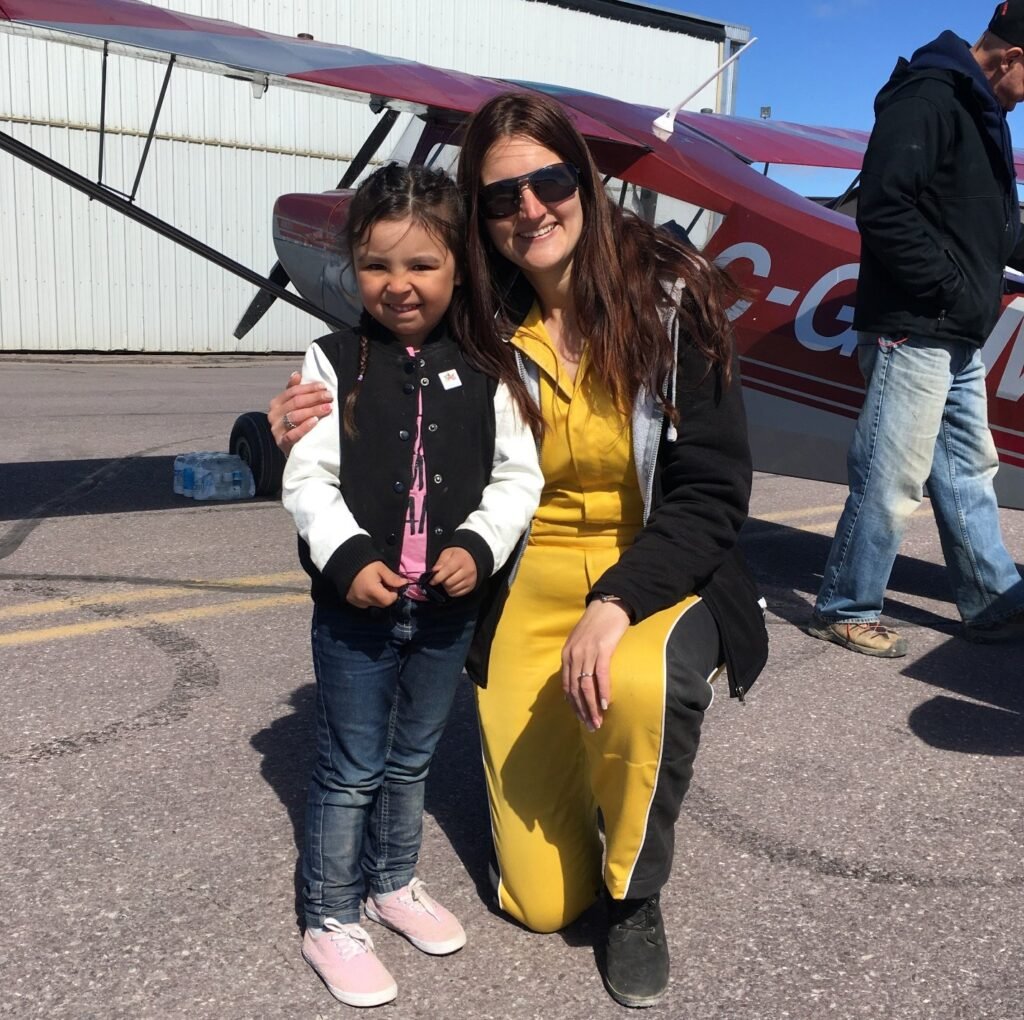
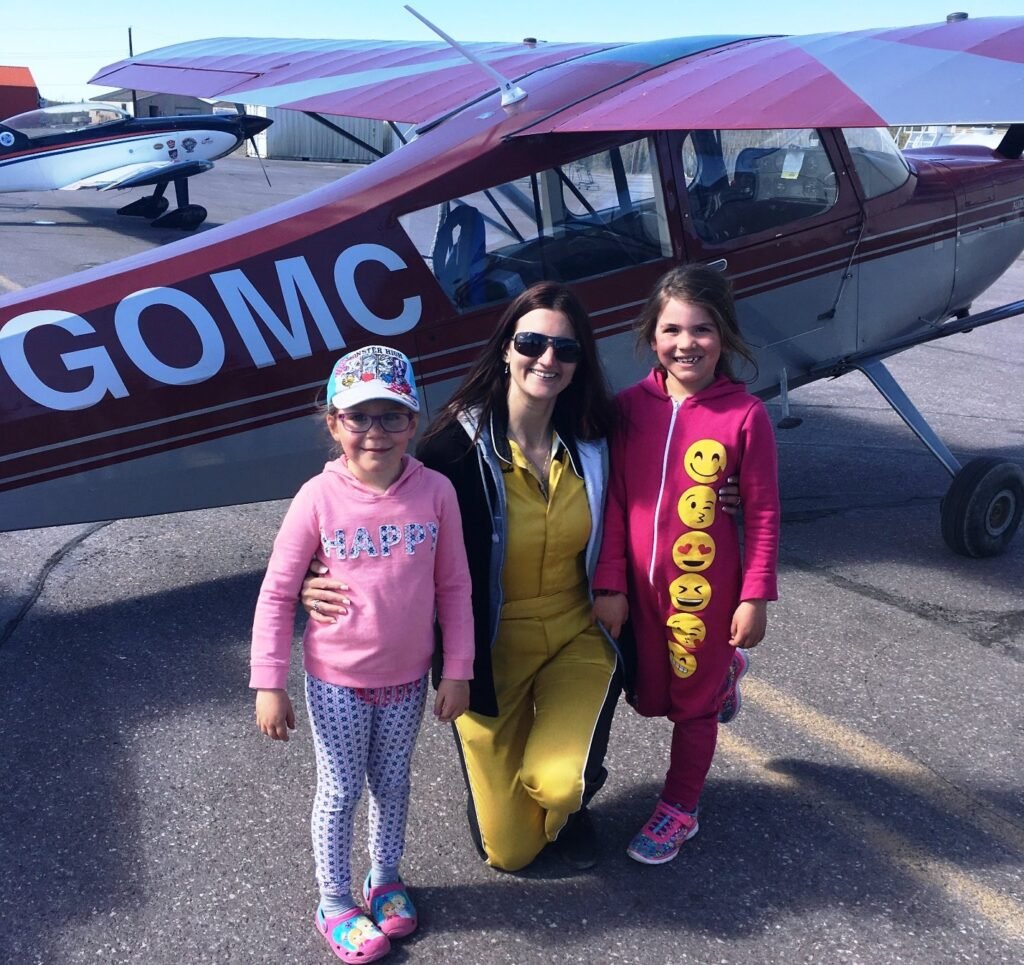
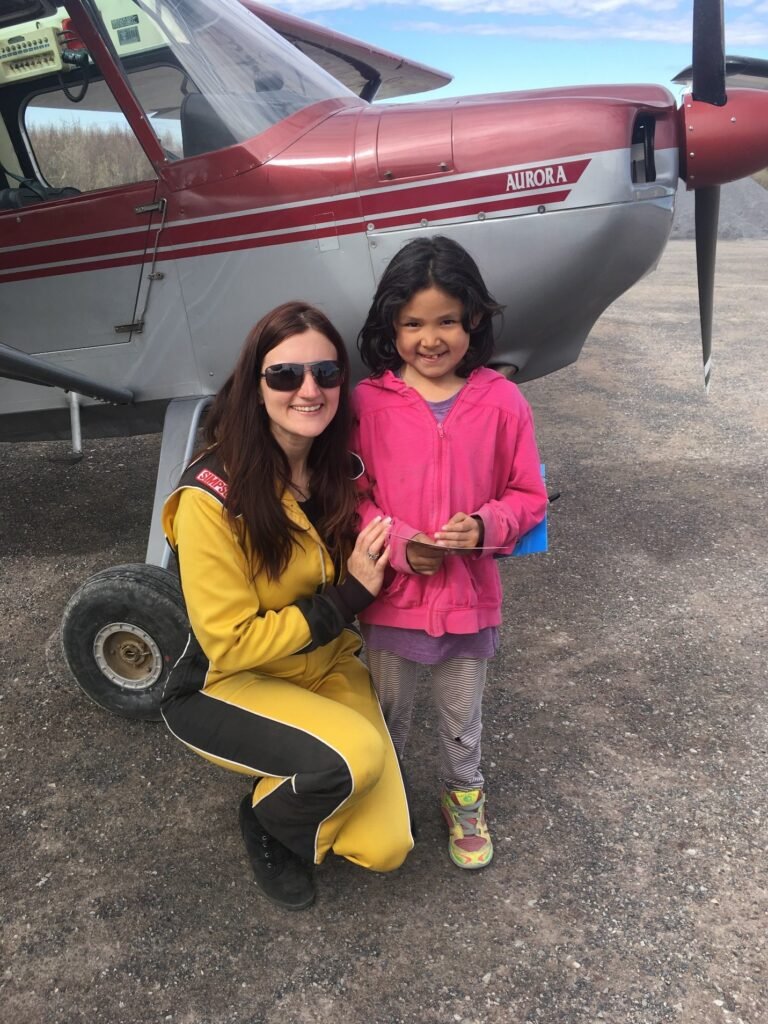
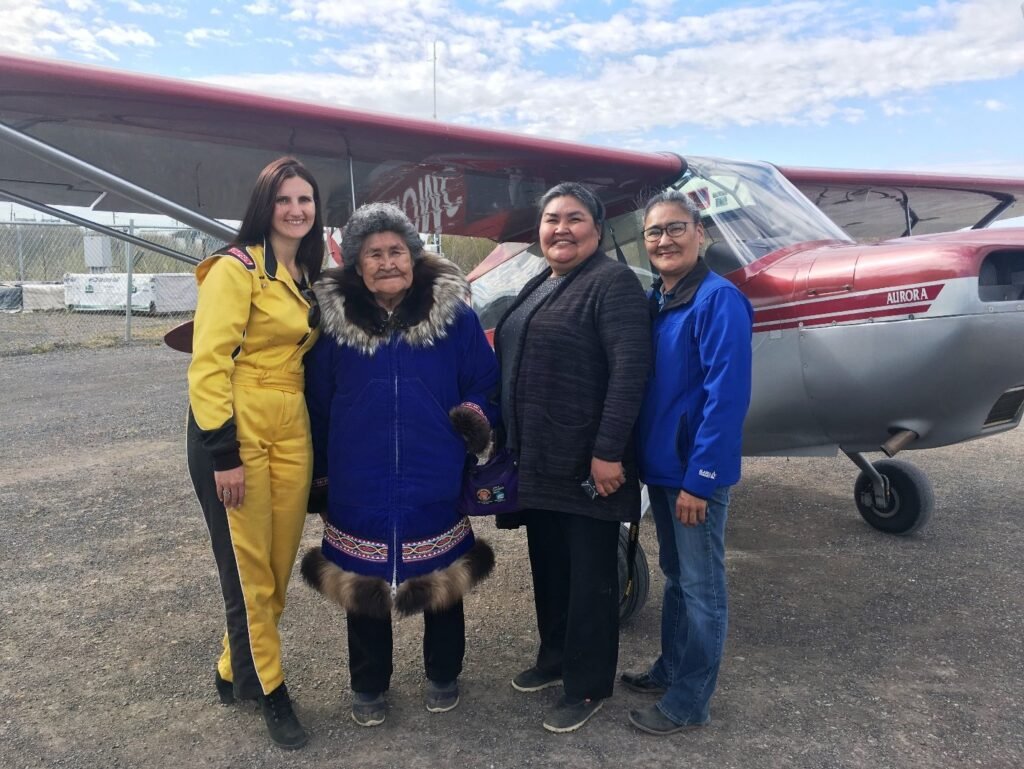
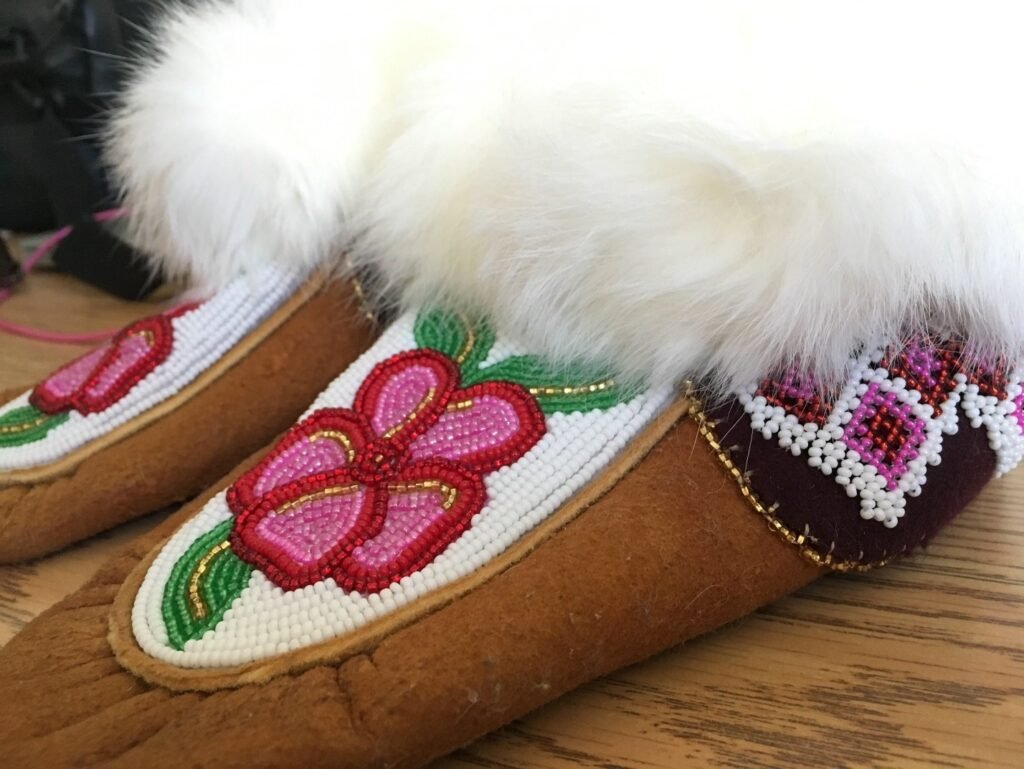
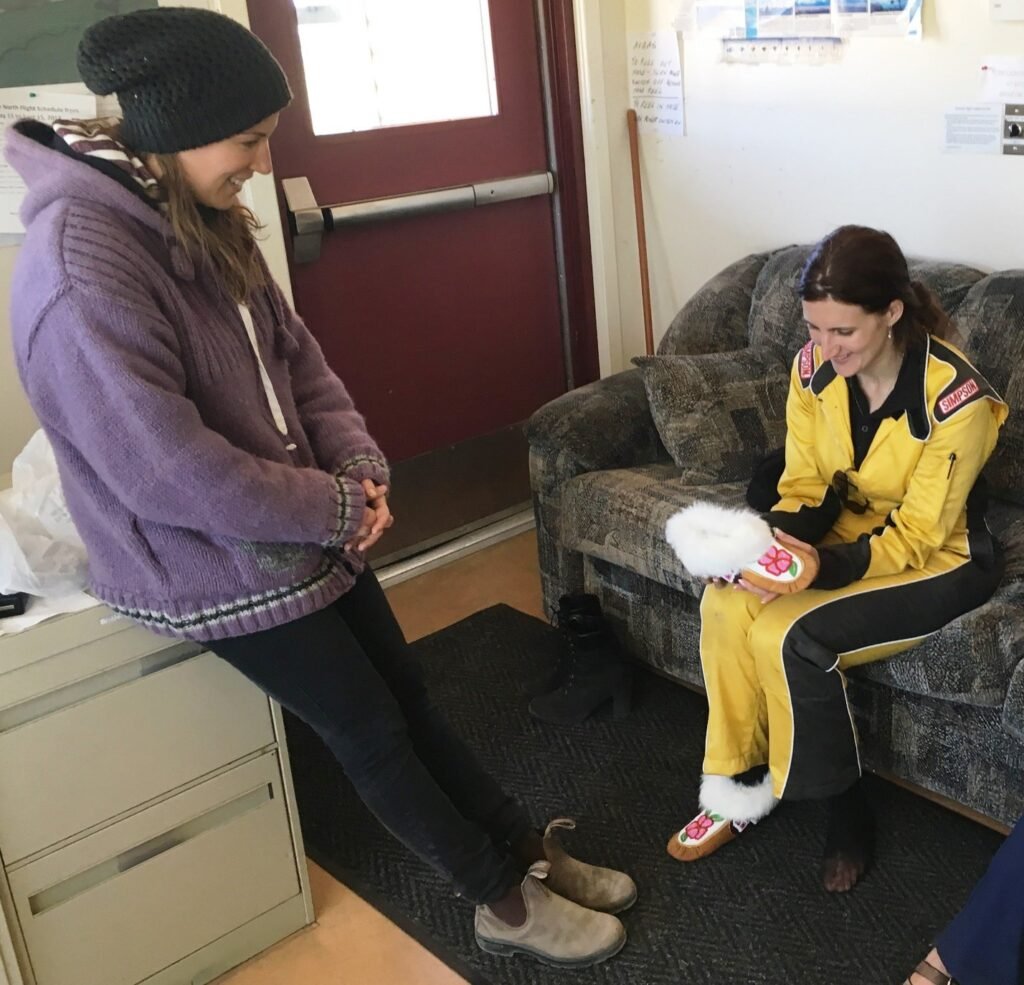
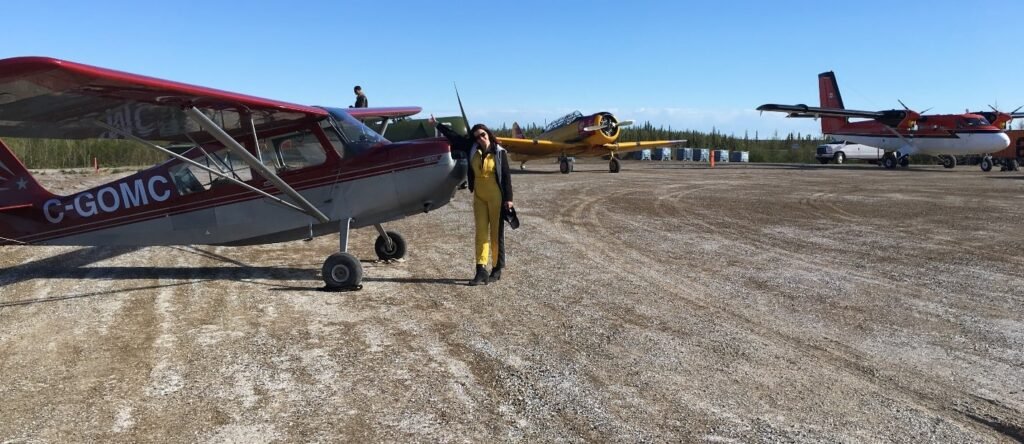
    Landing in Boundary Bay and unpacking the plane. I departed on the trip with lots of equipment and “stuff”, trying to be prepared for any possible scenario I’d encounter up North. I ended up throwing away a lot of meaningless things. And coming back with three bags of gifts and treasures instead: gifts received from the people of the North (including Duchess’s Camelia moccasins 🙂 ), gifts bought supporting the local artists, for the friends and the loved ones back home. More important – most valuable and totally not affecting the Weight&Balance of the plane – gifts of new relationships and experiences, in your mind and heart. They will stay with me forever.

    I definitely know why so many people go up North for ten days and stay for ten years. I know that I may be back in the Phase 2 of the Arctic Tour. I know that I will be back up North one way or the other. I hope if you had a chance to follow me for these three weeks online, you will want to go up North and discover it for yourself first-hand – because it’s one of the most amazing experiences you will have.

    I’m proud to be Canadian. I have heard our anthem sung in English, French and Inuktitut over the frozen Arctic ocean. I have seen the most beautiful sceneries, the most exotic wildlife and the most fascinating rich cultures. I am in love with Canada. We are “TRUE NORTH, STRONG AND FREE”. Happy Canada’s 150th!
  • Days 17 and 18. Yellowknife and Fort Smith

    Days 17 and 18. Yellowknife and Fort Smith

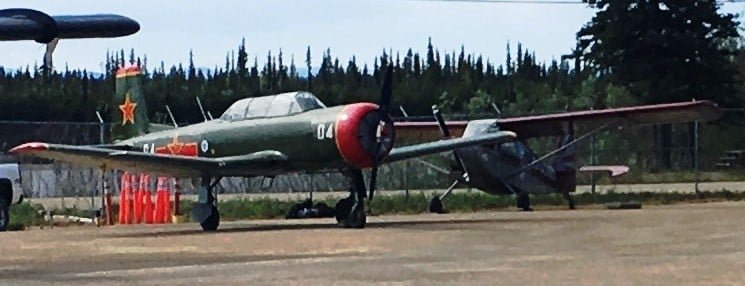
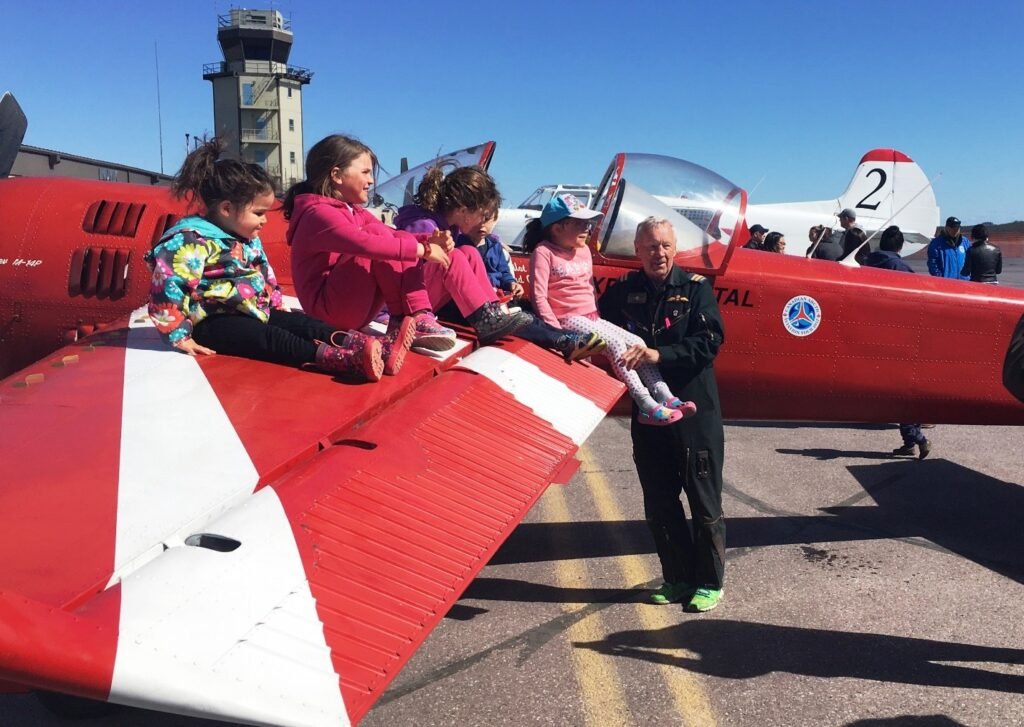
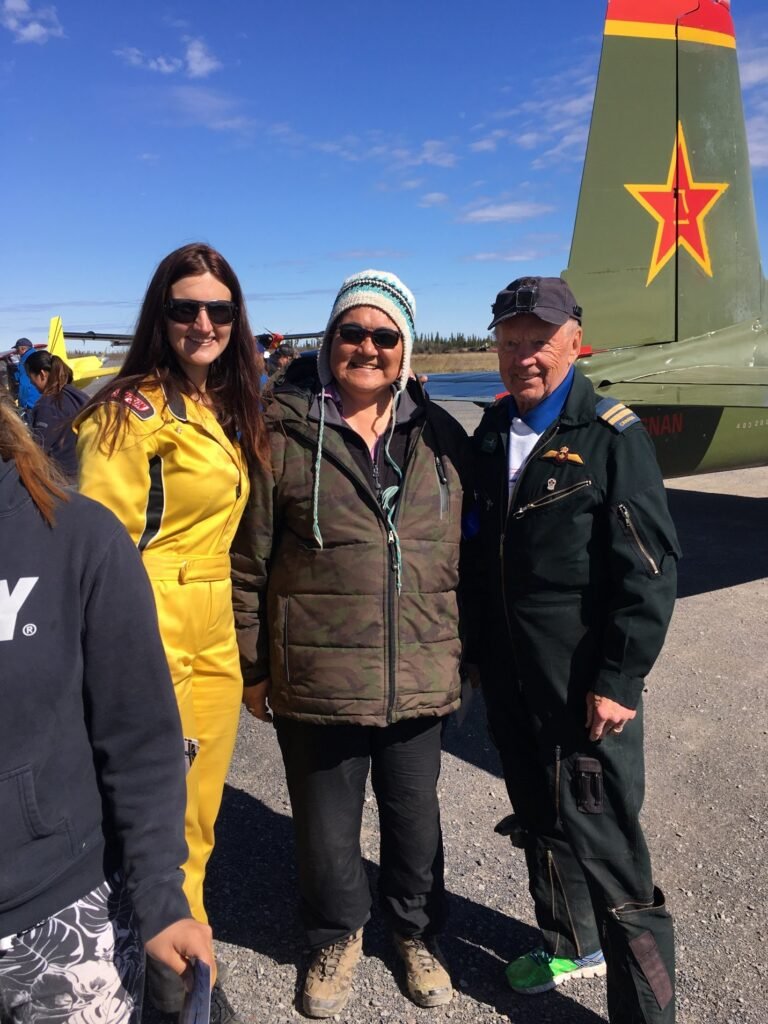
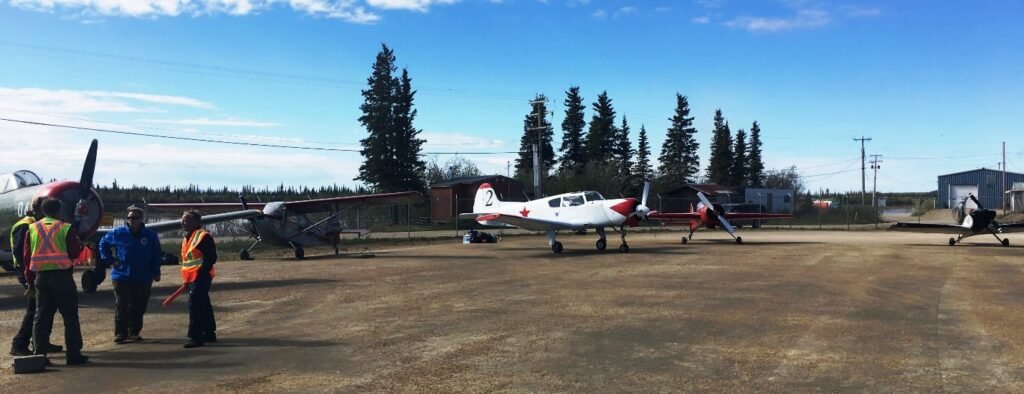
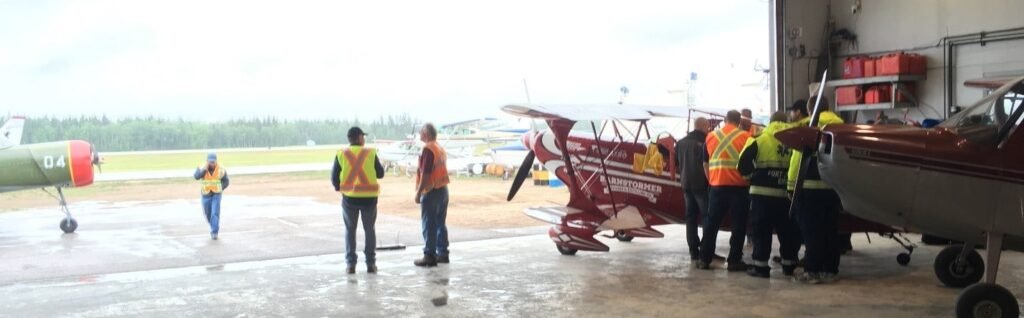
    Until about 10 years ago, Nanchang was the primary Chinese military trainer aircraft. It looks like a fairly old warbird, but this one was built only in 1983. They are robust and capable, but were intentionally designed with small fuel tanks: so that the Chinese student pilots would run out of fuel and crash within the Chinese borders before they get a chance to defect. So we are now sure that Tanya will not leave the CAAT for the same reason 🙂

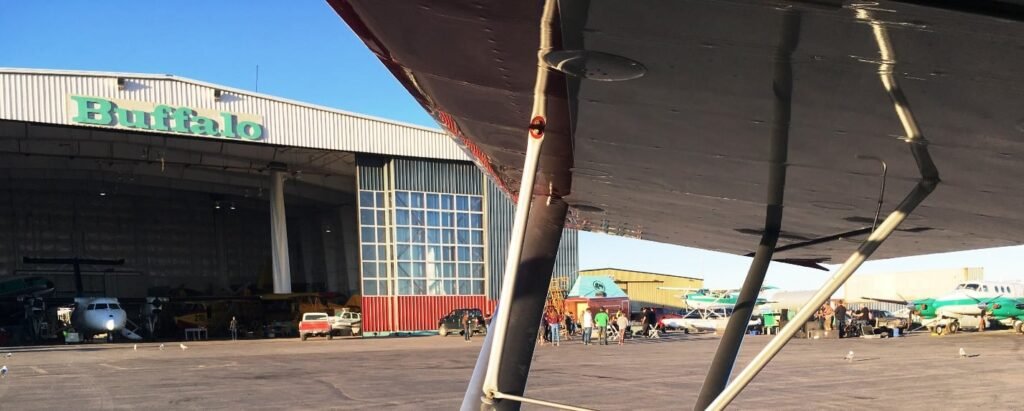
    We get ready by the Buffalo’s hangar.

    Weather in Yellowknife is decent, but to the North scattered clouds soon turn into broken.

    And facing a wall of clouds, we unfortunately had to turn around. This is actually the first airshow we were not able to do due to weather on the scheduled day. In Fort Liard, our first airshow, the elder was singing a prayer for the Canadian Arctic Aviation Tour, our safety and the weather – and “cut the cloud” with a knife. Since then, despite some weather in the area and total IFR days before and after, we had the skies opening up for CAAT airshows every single time for every single community. And even today, this is an airshow that will be flown in a couple of days on our way to Kugluktuk.

    Going South we only had a few raindrops on the way, so carried on with the scheduled airshows. For wheels-up shows we had to leave the exact timing open, because weather is an unknown, incl. en-route winds. Aircraft fly at different speeds and we have to do multiple airshows in one flight. On the other hand, most of these communities have their own local event on the same day, so we communicate with them to tie the two together, and make the most from the air and the ground for the people living in there.

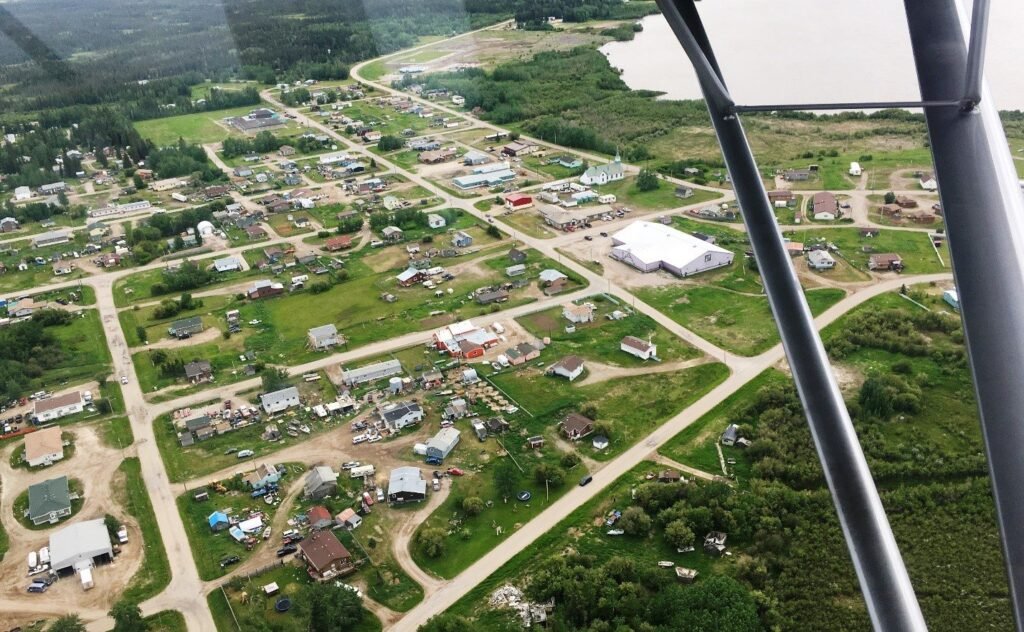
    Fort Smith, with 3000 people living in town, is the 4th biggest town in the Northwest Territories – after Yellowknife (appx. 18000), Hay River (appx. 3500) and Inuvik (appx. 3200 people). About 70% of Fort Smith population is First Nations speaking Chipewyan, Cree and Michif.

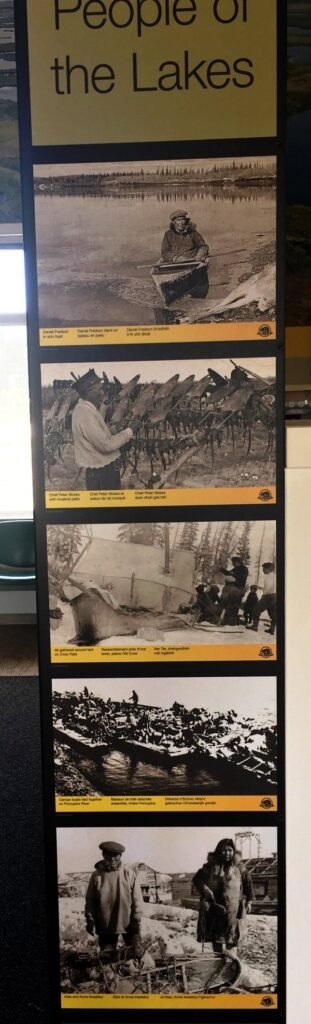
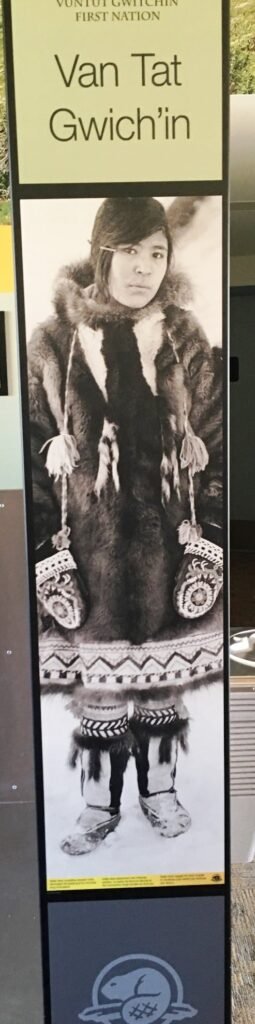
    I believe many Canadians still see the native people of the North as all the same. Nothing can be further from the truth. Gwitch’in and Inuit are just examples. Inuvialuit (part of the Inuit group) means “real people”. We have encountered some more “modern” variations too – when a Newfoundland husband of an Inuvialuit woman introduced himself to us as “Newfialuit” LOL.

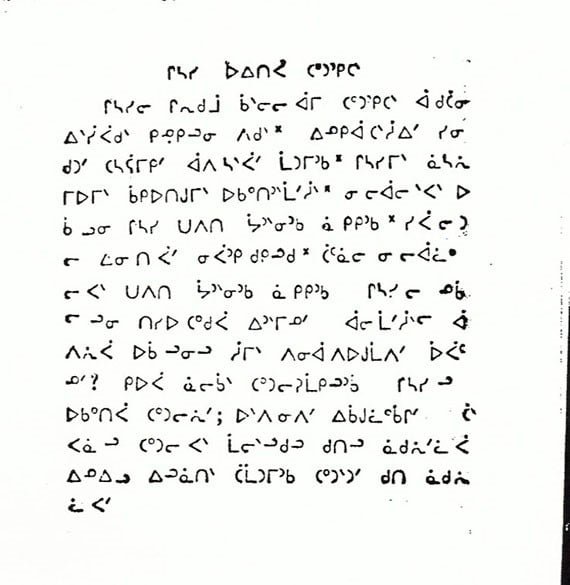
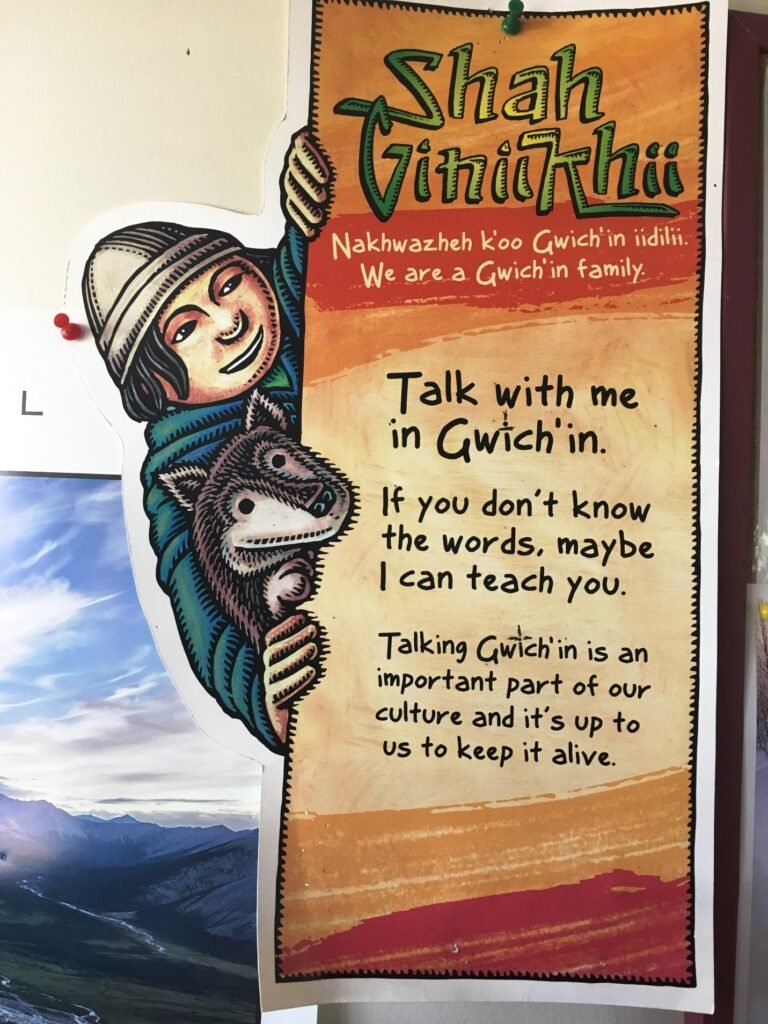
    The languages and writing are very different too. Some dialects never had a written version, and were passed verbally from generation to generation. Later, when European descendants came in these areas, the natives adopted Latin alphabet to transcribe their language. On the other hand, Inuit language, Inuktitut, has a very interesting writing. And even with my experience of learning the languages, I don’t know if I would be up for this challenge!

    Despite the fact that we are celebrating this year Canada’s 150th birthday, native people of Canada were here centuries ago. There are signs of Vikings having landed on the Northern Atlantic Coast of Canada up to 1000 years ago. Alaska was not always separated from Russian Kamchatka by water – it is believed that a small group of people crossed the land bridge (or actually the “ice bridge”) several thousand years ago from Siberia. Chinese landed on the Pacific Coast of Canada in the late 1770s. The First Nations and the Chinese even understood each other’s spoken language reasonably well – they were speaking a mix of Aboriginal, Cantonese and a hybrid language Chinook.

    Fort Smith welcomed us with some sporty winds on landing. Brian from Northwestern Air was very kind to look after the planes, incl. hangarage – a luxury that we have not seen in a very long time. Combined with a paved runway, Fort Smith felt very upscale in comparison with our recent experiences.

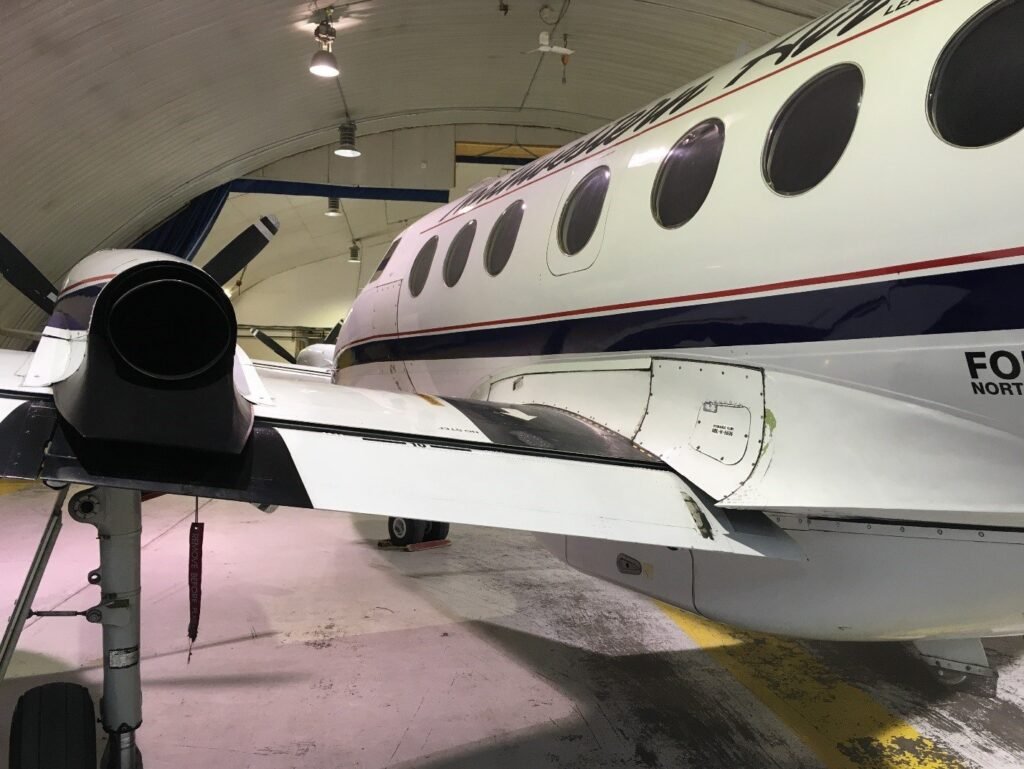
    Brian, together with his father Terry, is an owner of the Northwest Air. Terry founded it in 1965, and today the company serves the air connection of the community both to the North to Yellowknife and Hay River, and to the South – Edmonton, Fort McMurray, High Level and Fort Chipewyan 5-6 times per week with JetStreams.

    If you are a new commercial pilot (min 250 hours and IATRA required) and looking for a job, I encourage you to contact the company (www.nwal.ca). Most new employees here start on the ramp and the office. We’ve met two of them while putting our planes away for the night. One of them was a bright motivated young lady pilot. It’s the matter of a few months now that these new hires find themselves in the right seat of a turboprop aircraft – with the training provided by the company! An operation like this is an awesome way to start your pilot career, and – who knows! – you might like it up here in the North more than you think!

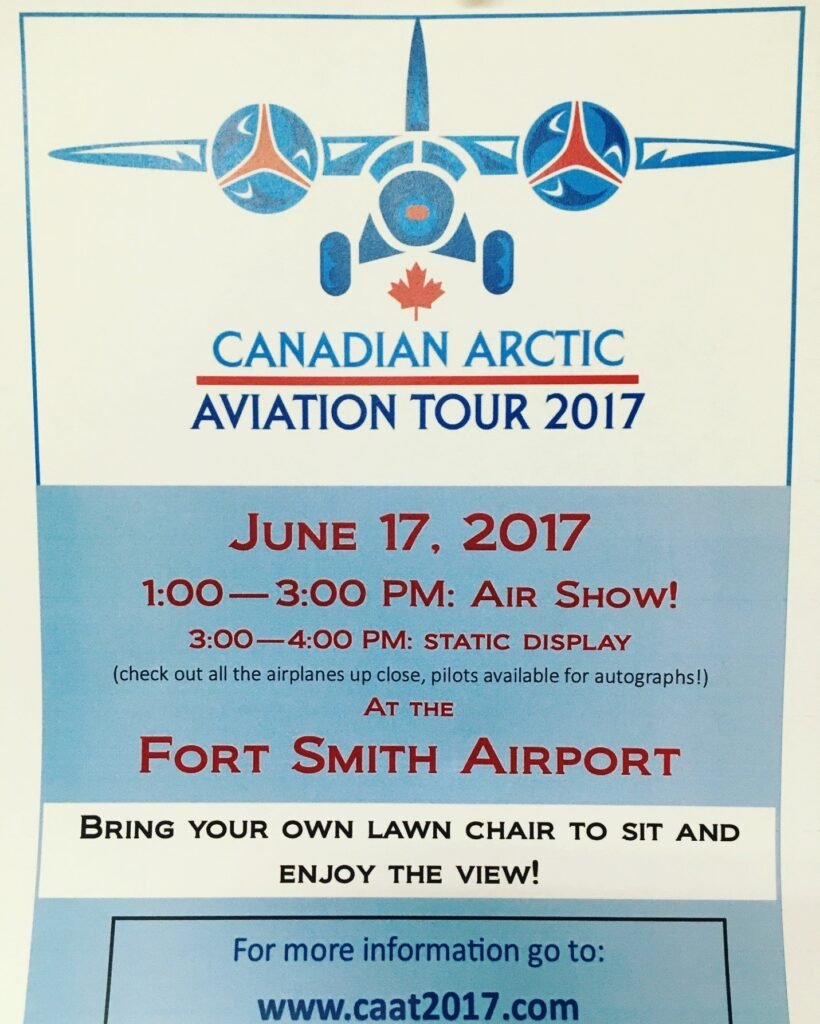
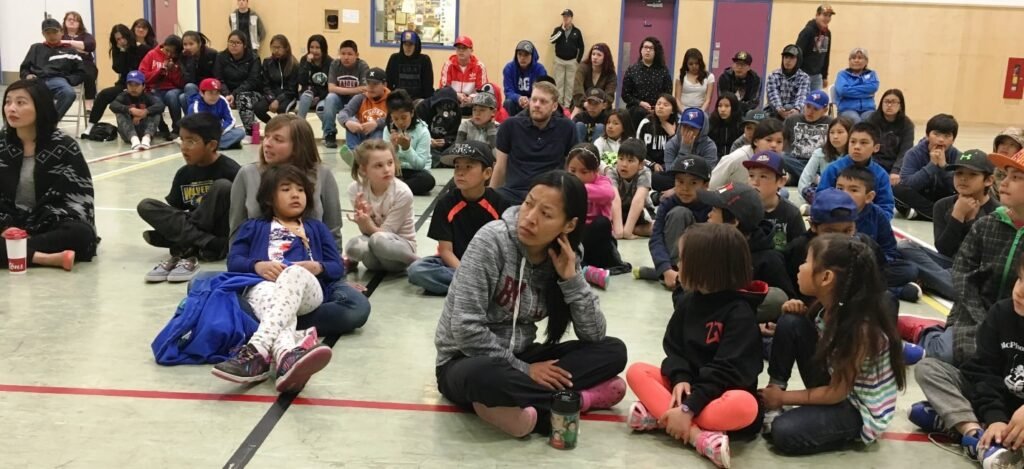
    In the evening, we headed for the local museum, where everyone from the town could meet pilots, hear the story of the Arctic Tour, ask questions and hopefully get inspired. The time with the local public – young and old – was very casual and interactive. We’ve received many questions about the Arctic Tour, the aircraft, aerobatics, aviation careers etc. The museum director shared with us that the community did not manage to get any government support or funding for the celebration of Canada’s 150th birthday, so the Canadian Arctic Aviation Tour was their celebration, the event – with the whole community excited about it!

    It is also the show where there are some “crew changes” happening. Brent Handy flew in from Cold Lake for this show. Watson brothers (“Yellow Thunder”) start their part of the CAAT here in Fort Smith. Out of the non-performers part of the team, since our announcer Gavin had to leave for a family emergency, Nancy McClure, the president of the CAAT, discovered a new for her airshow announcing career (despite what she says, he is doing a pretty good job!). Helen Towne, our “mama bear” returned home to Alberta from Yellowknife, and the volunteer Carolyn took her place. Carolyn’s background is psychiatry, so now the CAAT team gets its own shrink on the road too. Carolyn still believes she can organize and whip the pilots in shape LOL. Helen chuckled: it has been so far just “herding cats”. Actually “herding CAAT cats”.

    Despite the hopes, the next morning was a waiting game. We briefed the extraction crew and got aircraft ready. The radar images were promising good weather “in just a little bit”, but it was not coming soon enough.

    To entertain the public, we put some music on, and Jimmy buzzed the surroundings in his Harvard as a “weather check”. The most surprising thing, it seems that people would have stayed under the rain regardless. Some just ran back home for warmer and dryer clothes, but were back shortly.

    Unlike many big events that just “come to town” and announce it, Canadian Arctic Aviation Tour approached beforehand every single community North of 60th with two questions: “Can we bring you an airshow?”. We did not tell them, we asked for permission. The answer invariably was YES every single time. Then the next question was “How can we make it YOUR airshow?”. Options varied, but we adapted and found a way every single time. Therefore now it is very special not to just be strangers and travelers in town, but every time join a local team putting OUR airshow together – and have the excited community support us.

    With a 3 hour delay, we finally started the show. The first couple of acts still had to a fly a “low show” (we had 2 ACEs amongst performers watching, so no fooling around!). And the really good weather came soon after.

    Canadian Arctic Aviation Tour so far:

    Distance flown: 4397 nm (8143 km)

    Airshows flown: 48

  • Days 15 and 16. Norman Wells, Fort Simpson, Yellowknife

    Days 15 and 16. Norman Wells, Fort Simpson, Yellowknife

    Nancy mentioned that since the beginning of the trip, she was riding nothing else but a twin otter, so I offered the citabria ride.

    No, it does not go as fast as the twin otter, but of all team members we had the most sightseeing of all. Even despite a little bit of weather and 20 kts of headwind, it was a nice flight.

    We can definitely see the difference now as we are moving South. Norman Wells is appx. 700-800 people town, Fort Simpson is about 1300. Fort Simpson is now the first stop in a while that has actual road (not just ice road) access. Temperatures are getting warmer too.

    Sometimes the echoes of civilization greed are more here than we would like it to be. In all the small communities further North, we were welcomed by people offering help from their hearts. And yes, we paid for some of it, some was even brought to us for free to support the project. At no point did we feel taken advantage of or ripped off. But the Fort Simpson fuel guy told us there would be a 100 dollars per plane call out fee to get gas for airshow aircraft – regardless what time of the day! It was waived eventually, but it was a sad reminder of the civilization greed…

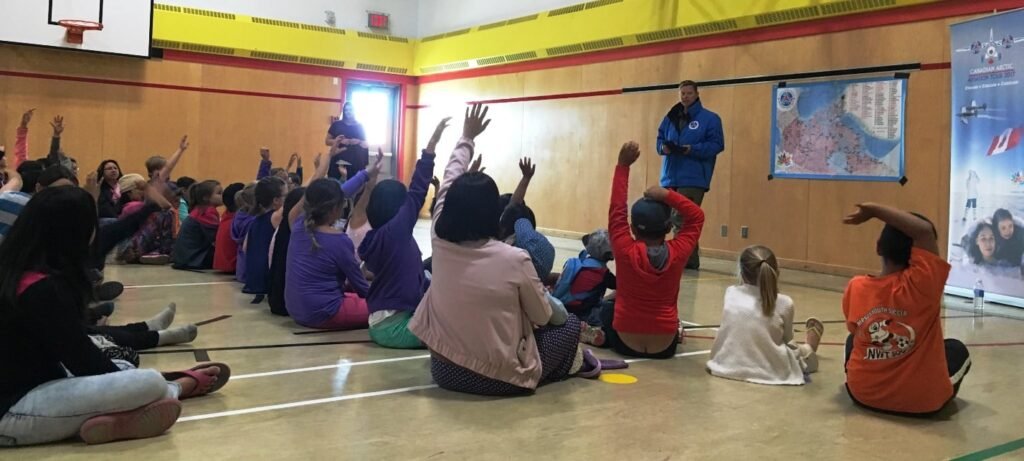
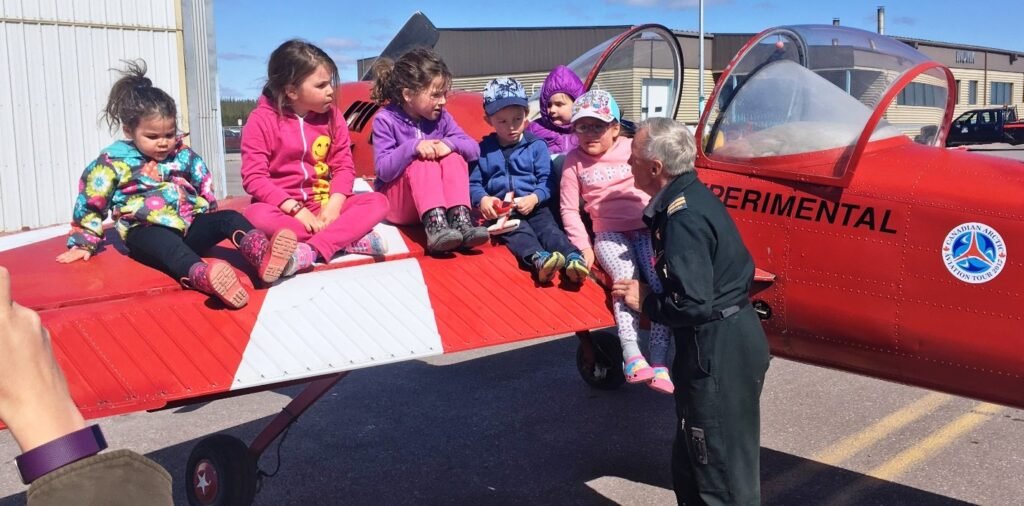
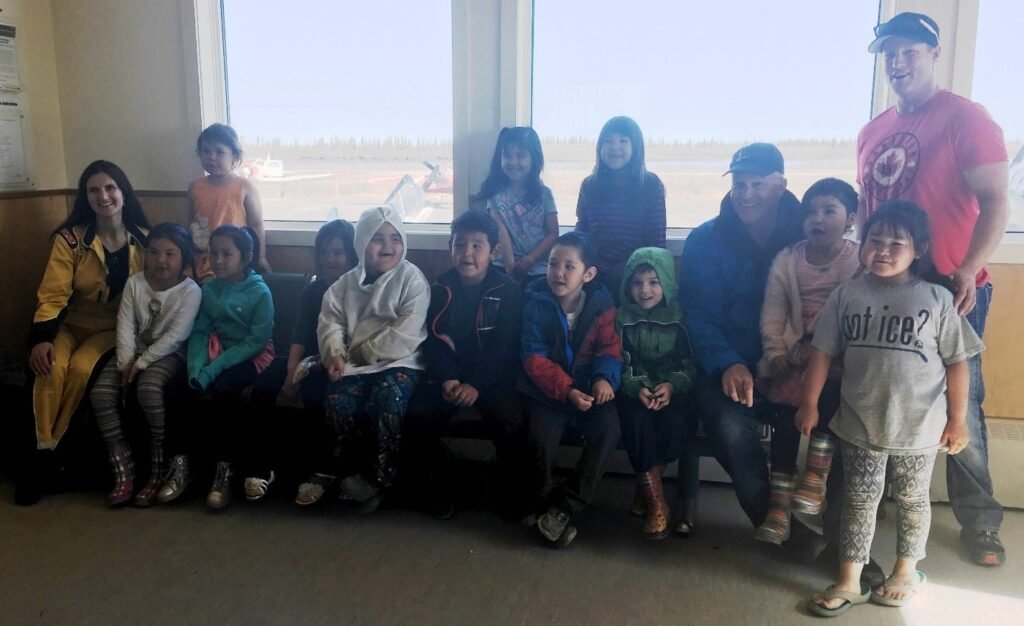
    We started our time in Fort Simpson with a school visit. The kids could have been more excited, and asked lots of questions.

    It was a sunny show with light wind. The town gathered on the river shore, as we sky danced over the river at our 34th airshow of the Tour.

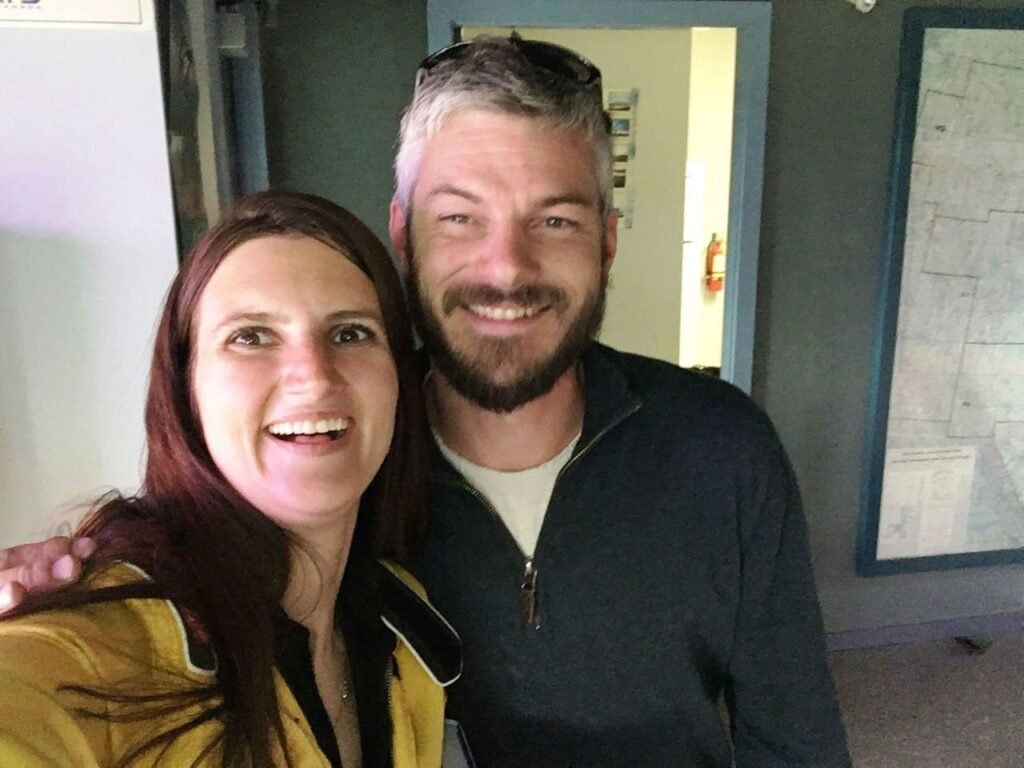
    Shortly before the departure I was at the CARS operator’s office. A young man, local pilot, walked in and I introduced myself: “Hi, I’m Anna”. “I know” – he replied, standing and smiling. For the life of me, I could not remember where I met him! “I instructed in your school 4 years ago”. OMG! Well, in my excuse, he did grow a beard and his hair turned grey, hence not that easy to recognize. But the aviation world is truly small! Back in 2013, Thor was working for Wolverine Air prior to coming to Canadian Flight Centre to instruct, spent about a month in the big city, realized that it was not for him, and returned back to Wolverine. He now lives in Fort Smith and recently married a local girl. We did not have much time to chat, because his Cessna 206 passenger was waiting.

    The transit to Yellowknife was smooth like silk, and at 8500 feel we finally found a couple of knots of tailwind.

    And upon our arrival to Buffalo Air in Yellowknife, there was already barbecue and live Newfoundland music!

    Yellowknife is an awesome place for it. Despite the fatigue, we did not want to miss anything in exploring the town.

    Yellowknife is a relatively big Northern city (about 18000 people) and is the capital of Northwest Territories. It also has a strategic military importance: along with Inuvik, Iqaluit and Churchill, it is a “forward operating base”.

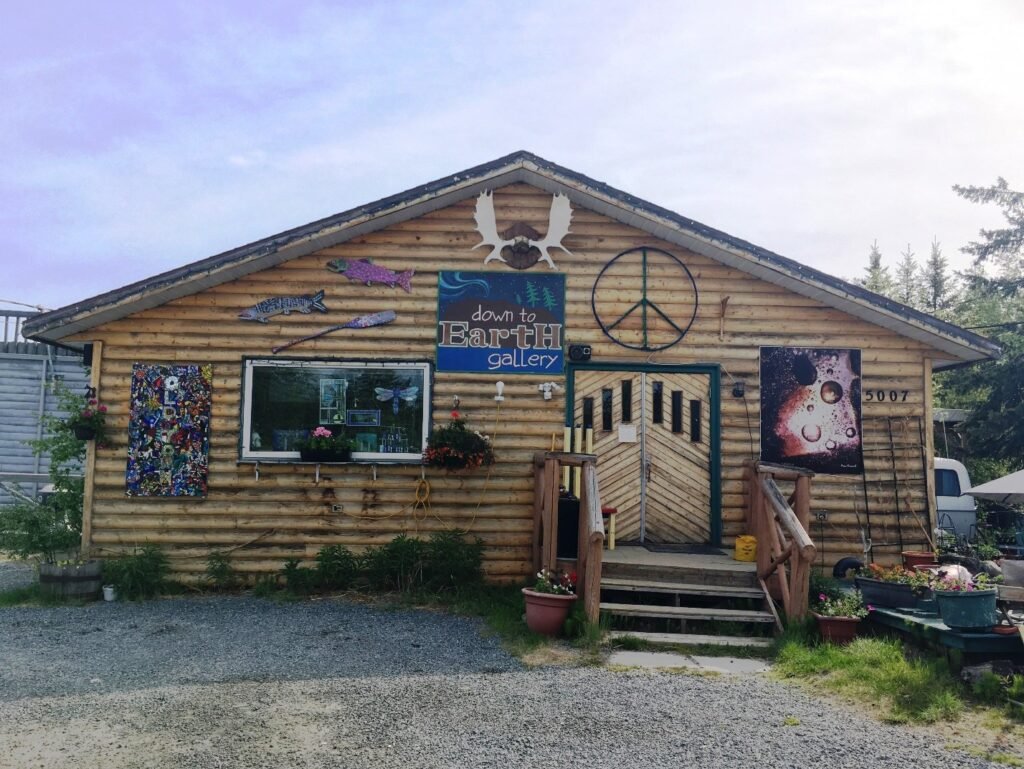
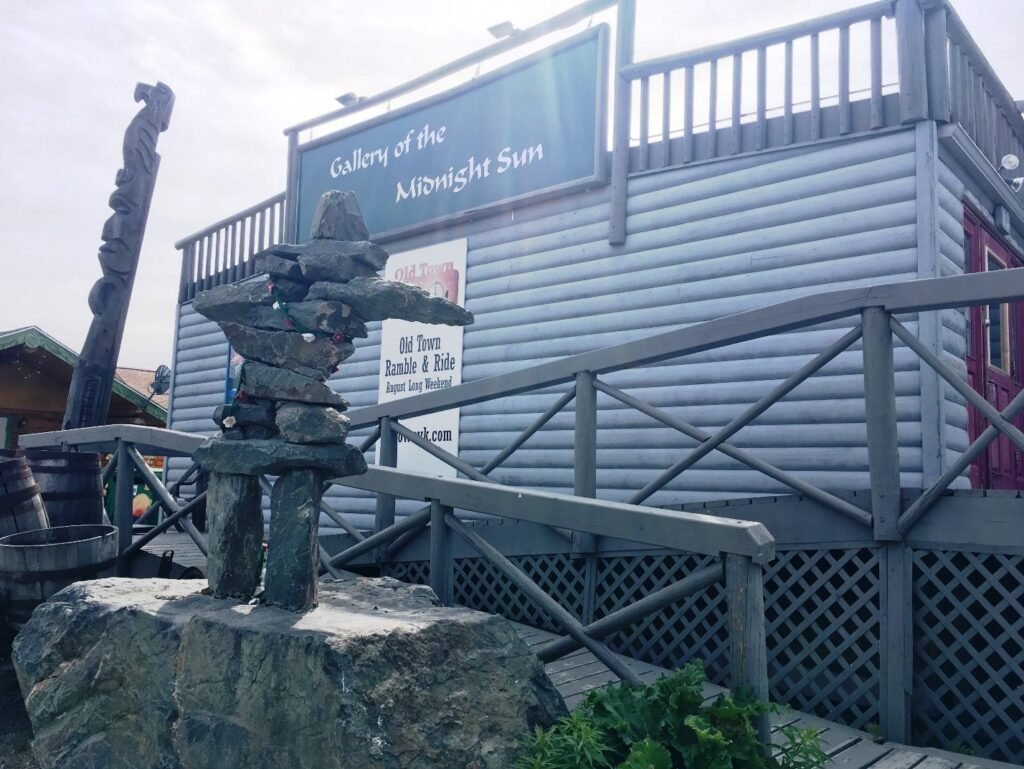
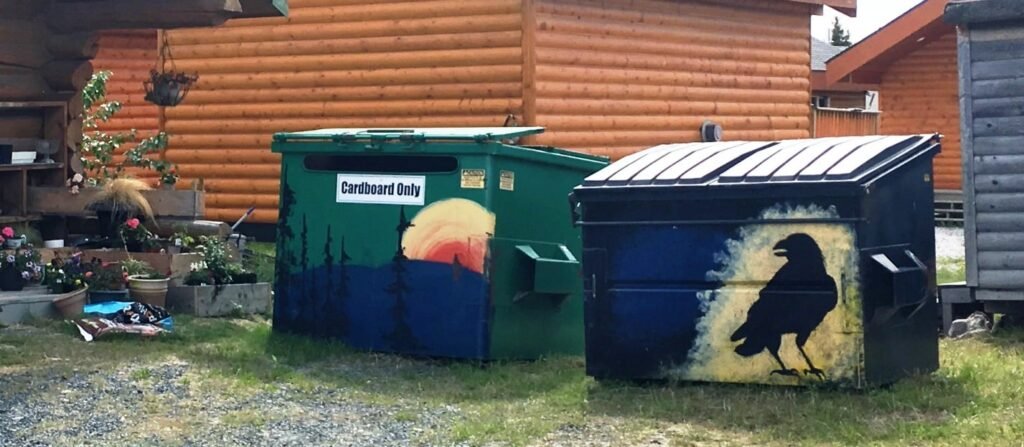
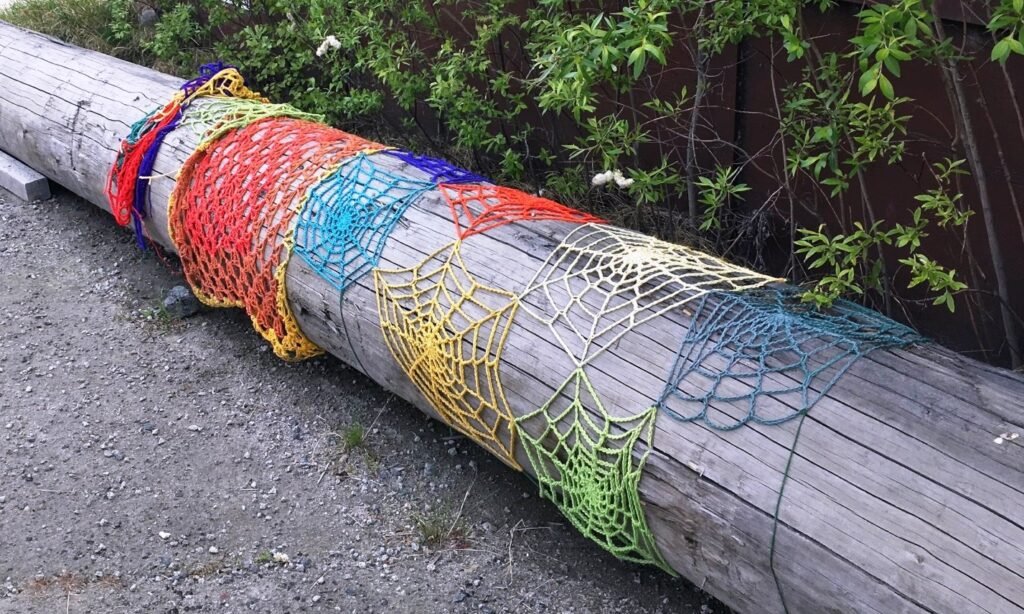
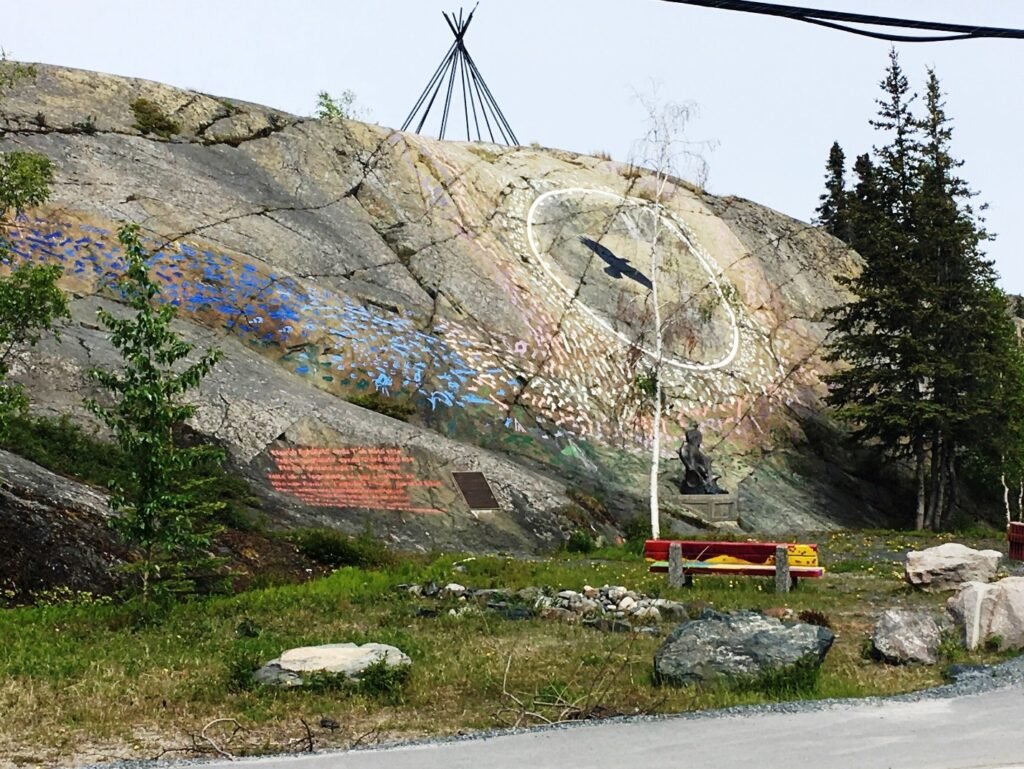
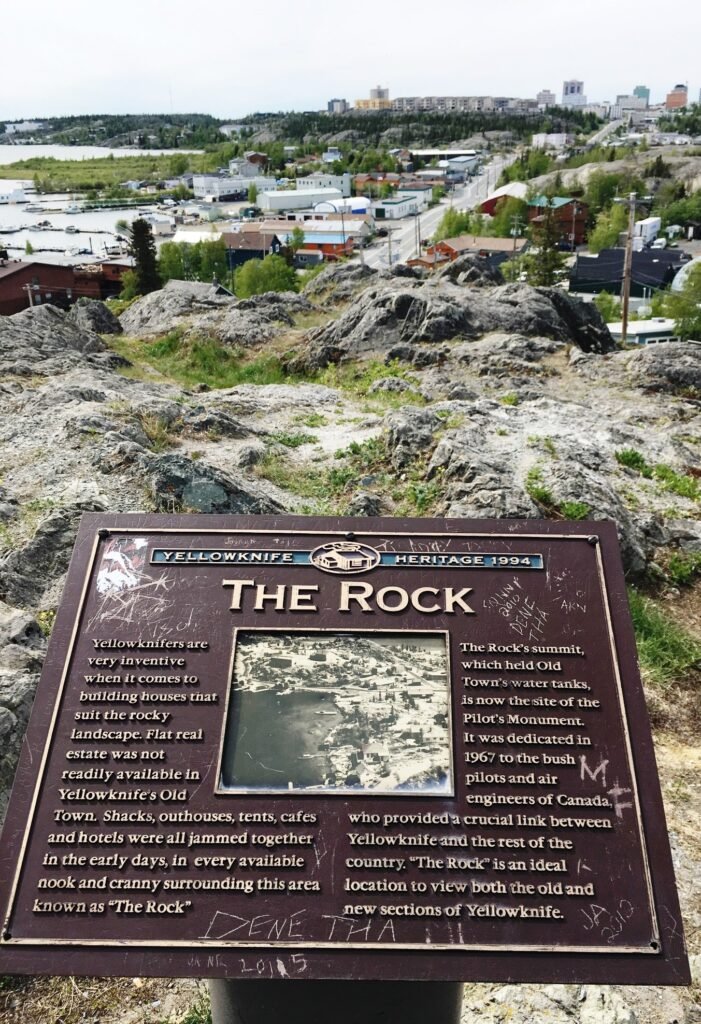
    Yellowknife consists of old town and new town. Modern part is the same as any other city – office buildings, coffee shops etc. But the old town is the true gem with a number of small art galleries, rustic eateries and random decorations on the rocks, logs, and even garbage bins!

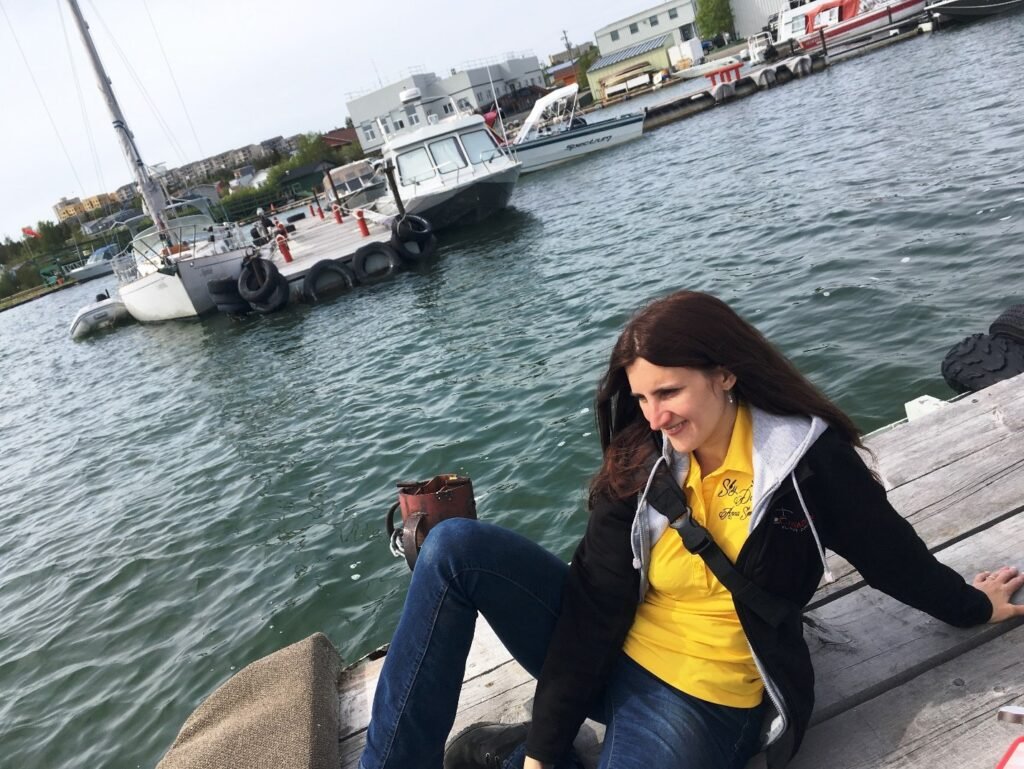
    We checked out the dock. There are quite a few floating houses here. I wonder how they do in local winter?

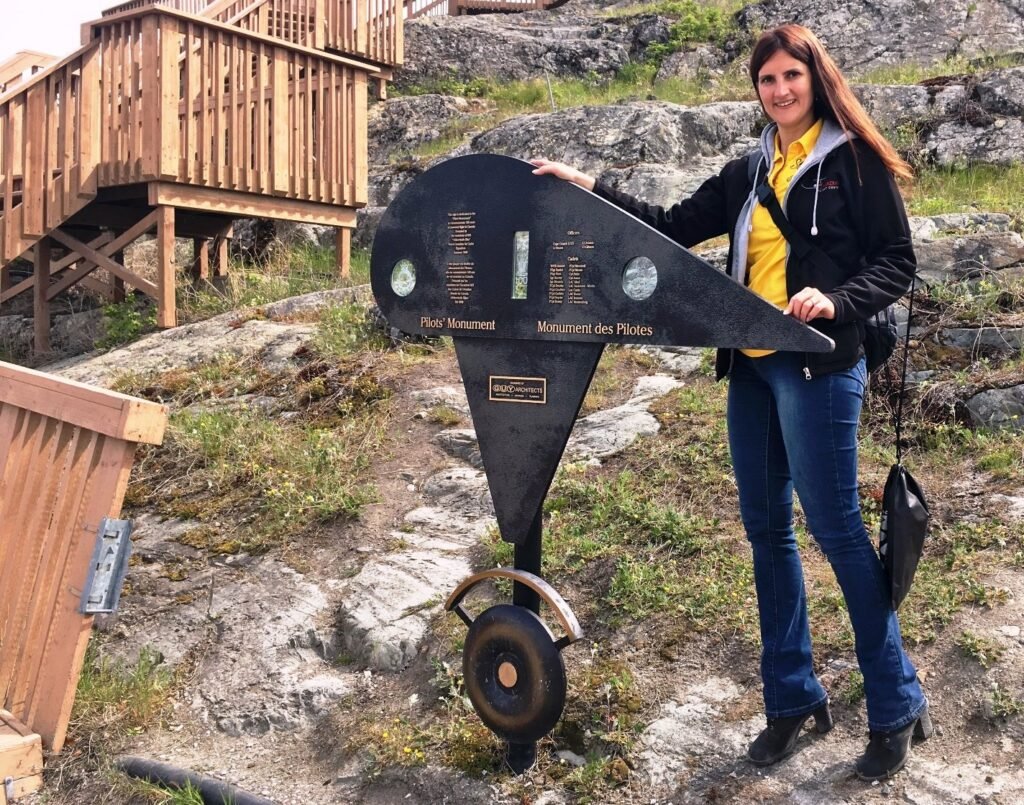
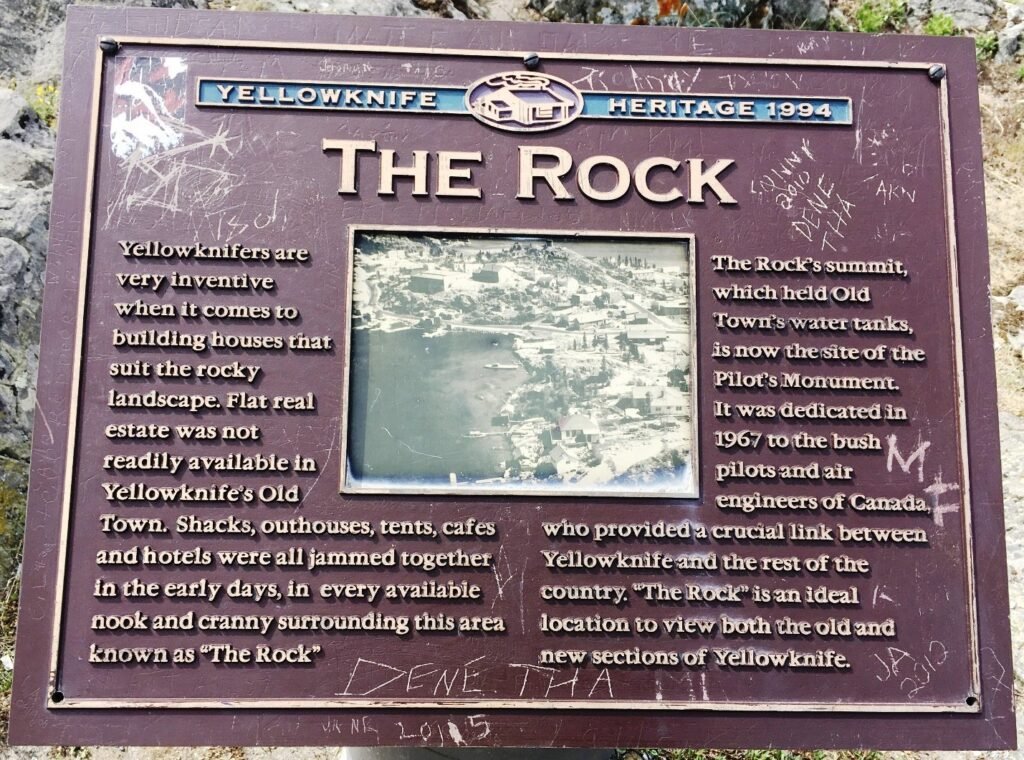
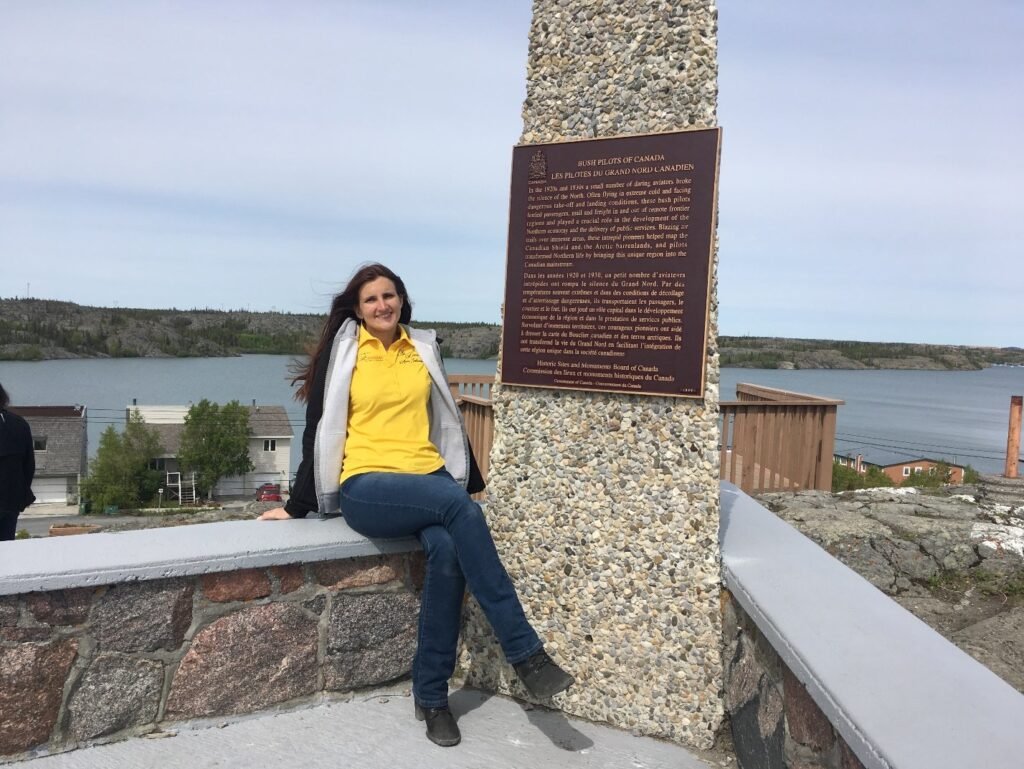
    A place not to miss is the bush pilot monument in the middle of old town. If nothing else, it opens a panoramic view of the old and new town.

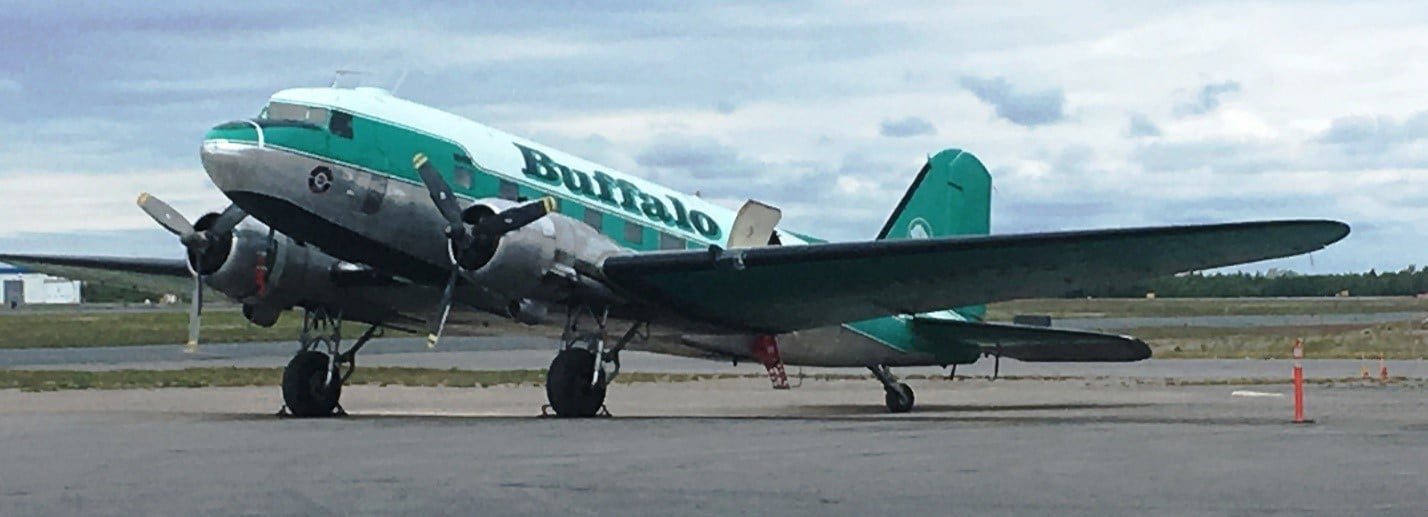
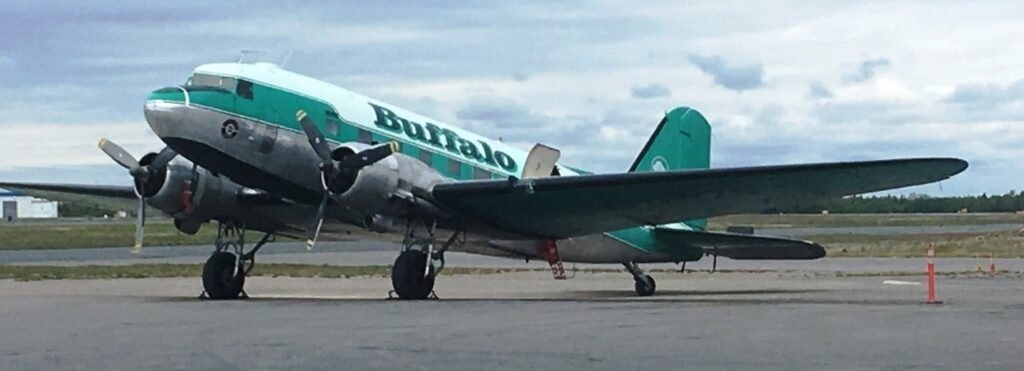
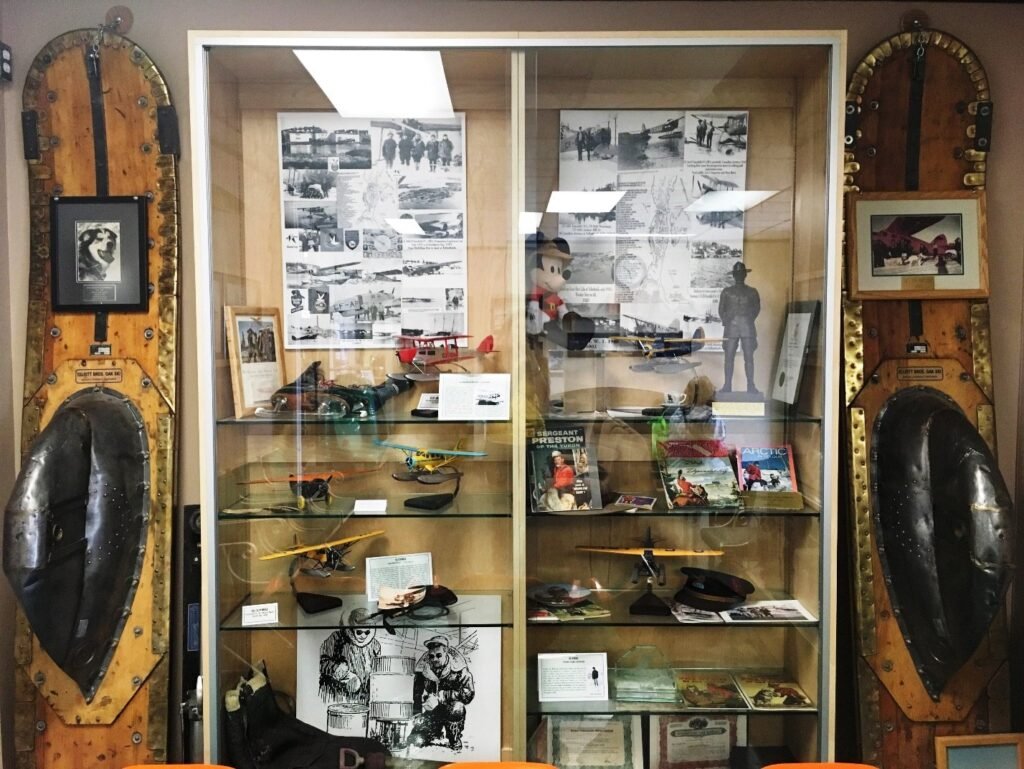
    Speaking of pilots. Have you watched “Ice Pilots” TV show? It was right here, at Buffalo Airways in Yellowknife. But visit this place not because of the TV drama, but for the history of actual bush flying they’ve done.

    For dinner, upon recommendation of the local guides, we went to Bullock’s for the true Northern experience. They serve only fish. And even if you have to wait in line, it’s worth it! The place is not the one that will attract you as you walk by it on the street.

    But the Arctic char filet was absolutely delicious! It tastes similar to salmon in a way, but more tender. Go for it pan fried, and it just melts in your mouth!
    Tomorrow is an airshows packed day – for many communities surrounding Yellowknife!

    Canadian Arctic Aviation Tour so far:

    Distance flown: 3916 nm (7252 km)

    Airshows flown: 39

  • Days 13 and 14. Fort Good Hope to Norman Wells, NWT

    Days 13 and 14. Fort Good Hope to Norman Wells, NWT

    Village barbecue followed.

    I thought that as we move “South”, temperatures would get warmer. But it was the opposite! I have never been getting ready for an airshow in light snow!

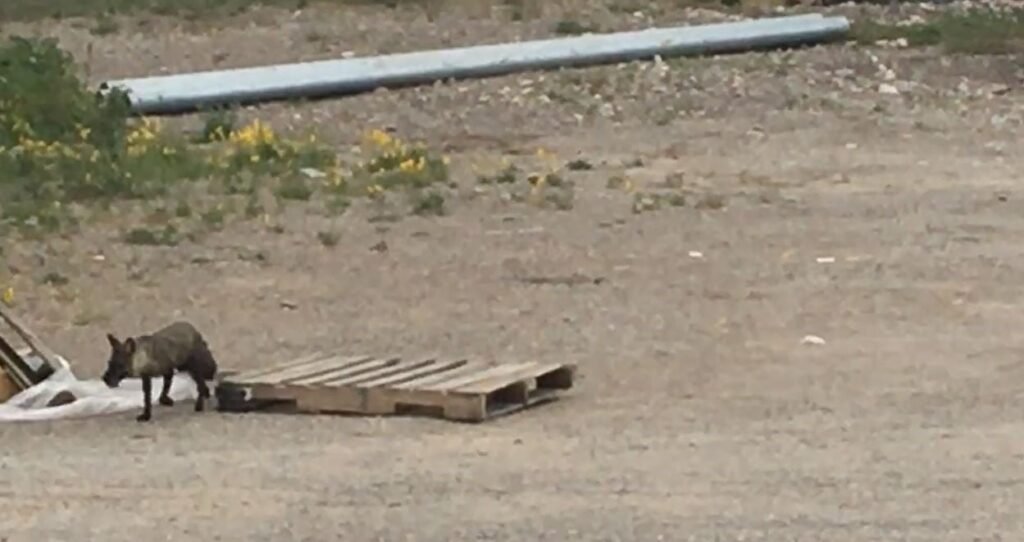
    A nosy local fox was checking out planes too.

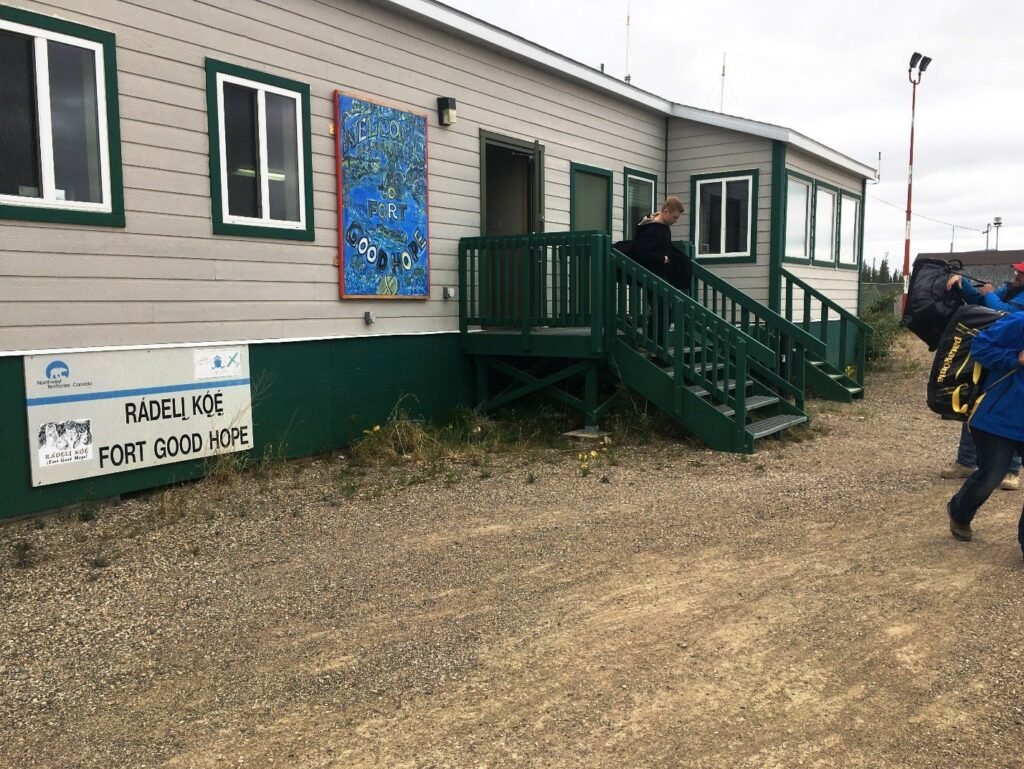
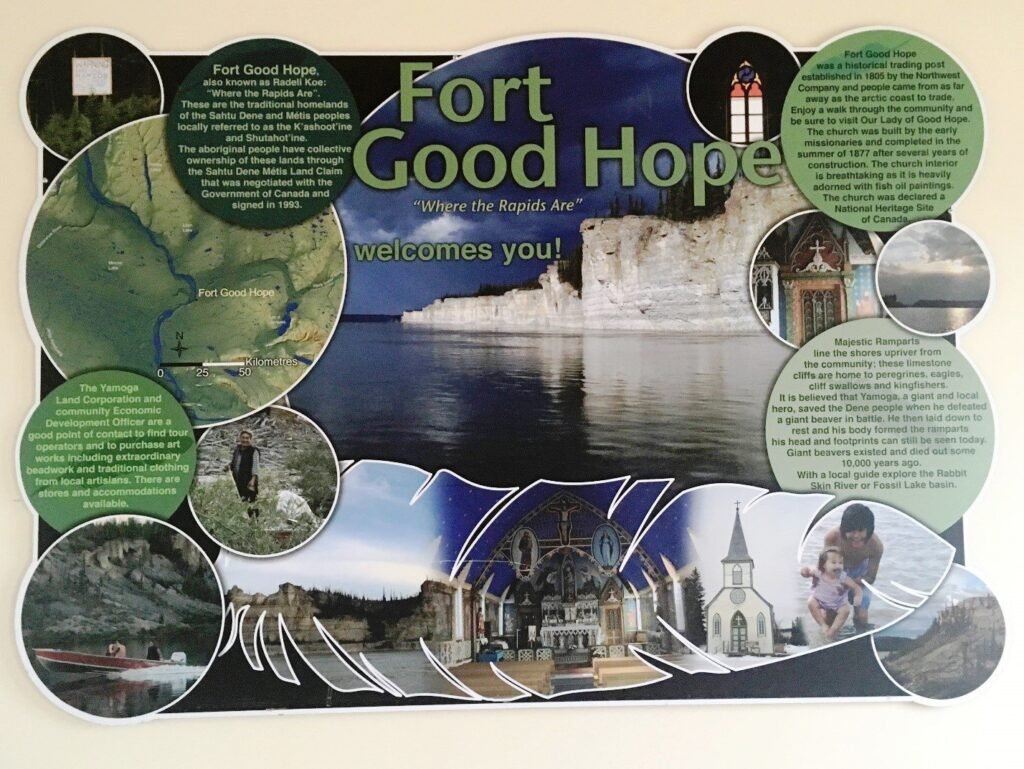
    Fort Good Hope is a town of appx. 700 people. The mission in Fort Good Hope we visited yesterday, was visited and blessed by pope. The community lives off the land, and the only access to it is by air or ice road.

    With the church as the show centre, and my Ave Maria music playing during the performance, it was a very special show to fly.

    And the warmth and the excitement of the crowd made up for every bit of cold we experienced!

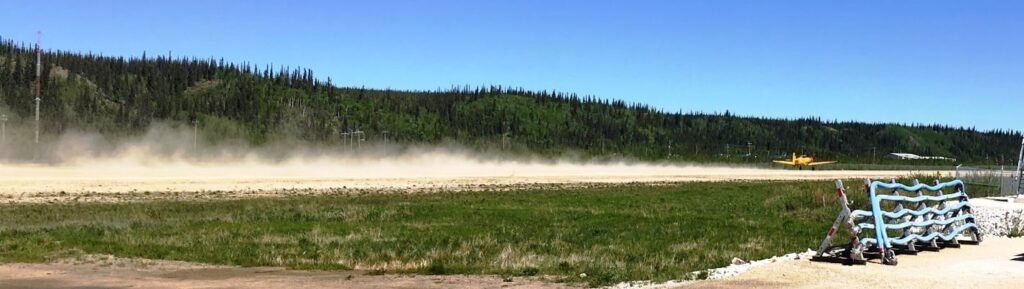
    The hop to Norman Well was short half-hour hop, and there we were up for a treat. In fact, more than one. First is a paved runway! Never thought I’d appreciate it so much. After a few dings in the prop and never-ending dust, it felt really good.

    But the main one was the dinner invitation for the team from the North Canoe Adventures. This family owned company operates fully guided river canoe tours. An average trip lasts two weeks, and takes you to the most remote areas of the Yukon and Northwest Territories. Very much recommend checking it out! I personally got excited about coming back and doing one of those trips.

    Their log house on the river and a couple of float planes on the back yard could not have been a better setting for pilot dinner.

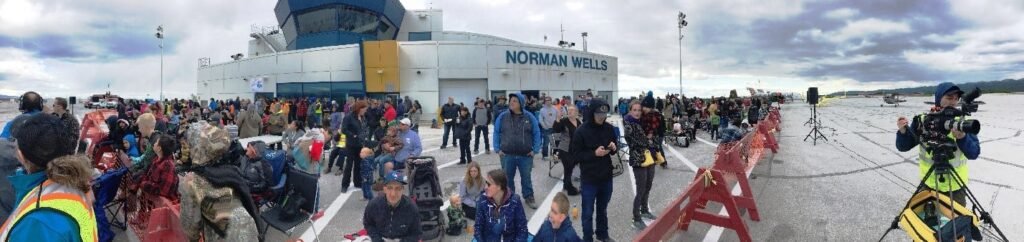
    The next day started between North Wright hangar and the main terminal. For a community of only about 800 people, Norman Wells has an international quality main terminal.

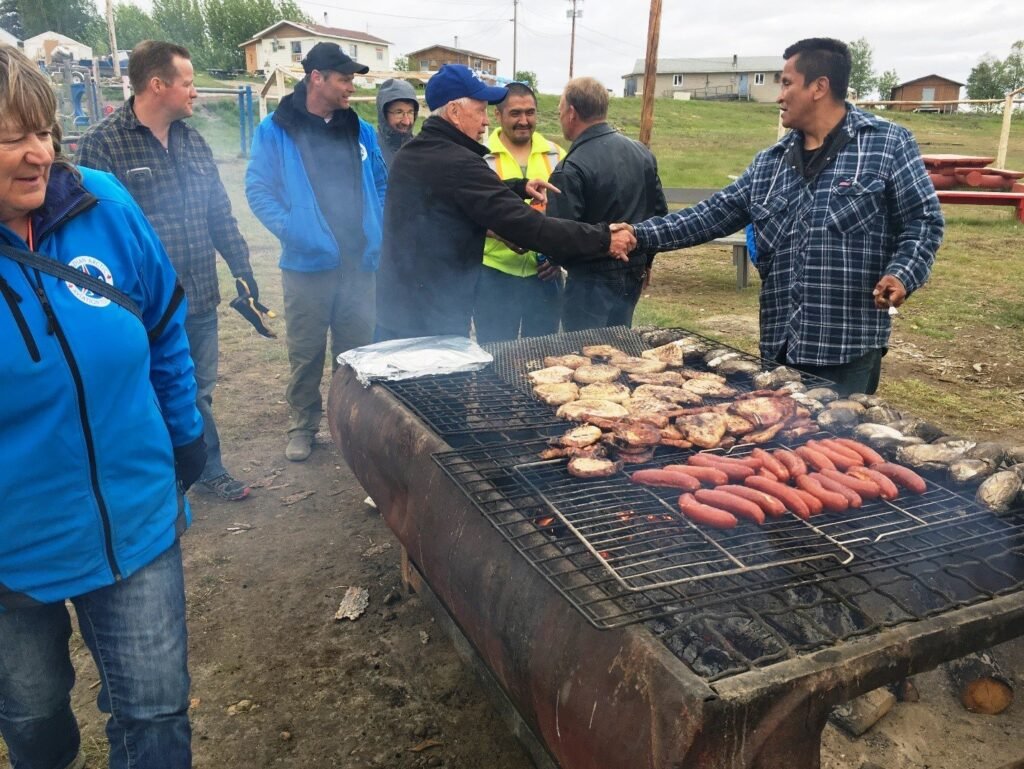
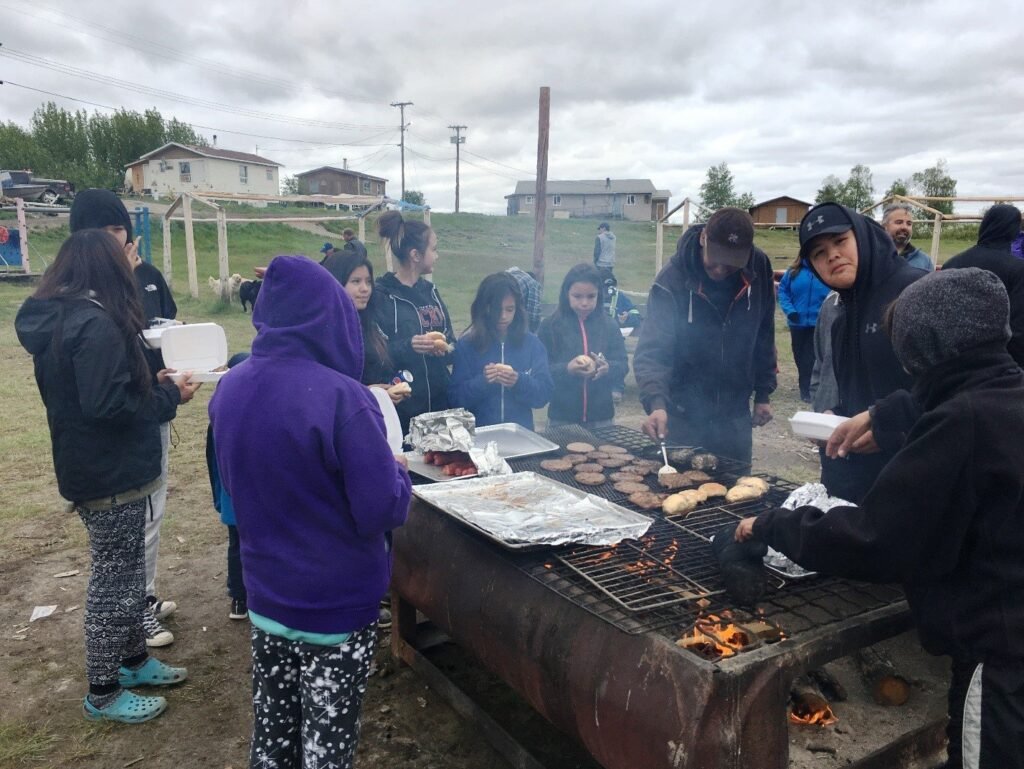
    North Wright is an airline and charter serving Northern communities. They gave barbecue to the entire community on the occasion of the airshow. So anyone from Norman Wells who shows up for the airshow today, also gets a free burger or hot dog and a drink.

    Interesting that we are used to see people bringing umbrellas and sunscreens to airshows. We are now used to people bringing blankets, parkas and hot drinks in mugs.

    Flying out of Boundary Bay, I am used to a number of birds flying around the runway. I have however never had the same encounter as on my take off for Norman Wells airshow. As I was just getting airborne, there were two adult geese were walking across the runway, with two little ones between them! And they would not even turn their head for the plane flying right over them!

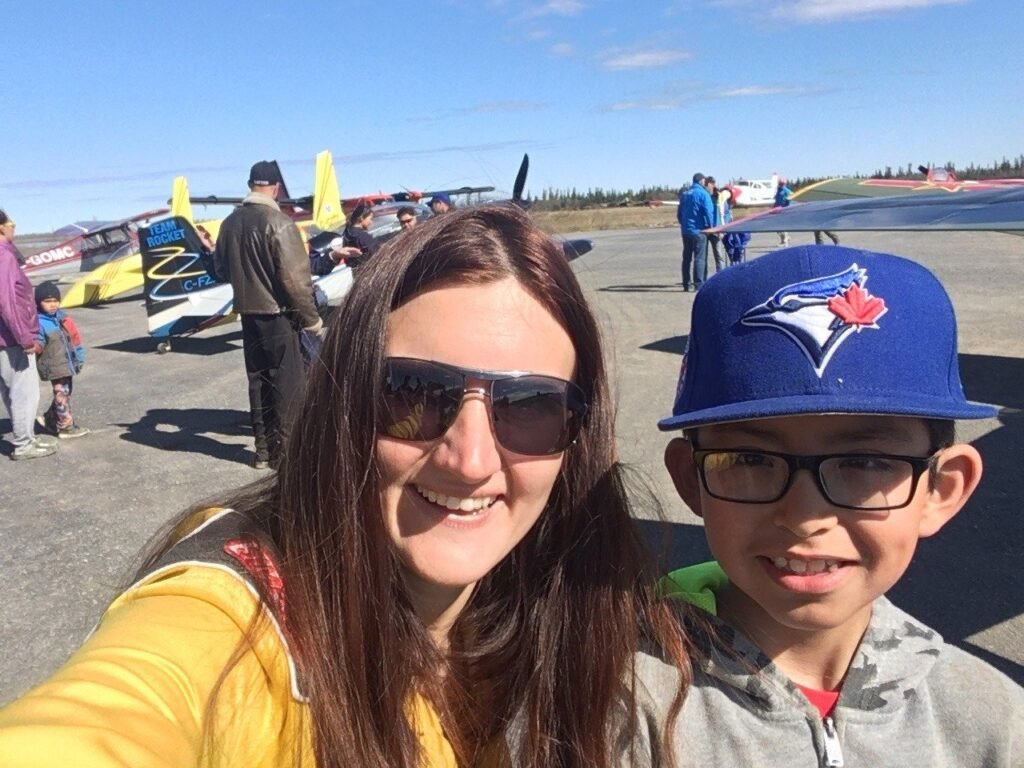
    The public was the most excited about the airshow, and everybody loves selfies!

    Nathan is the mayor, coroner, and the airport manager. The coolest airport manager we have seen – ever! He pretty much handed over the airport to us, moves everyone out of the way and was personally greeting people coming in to the show!

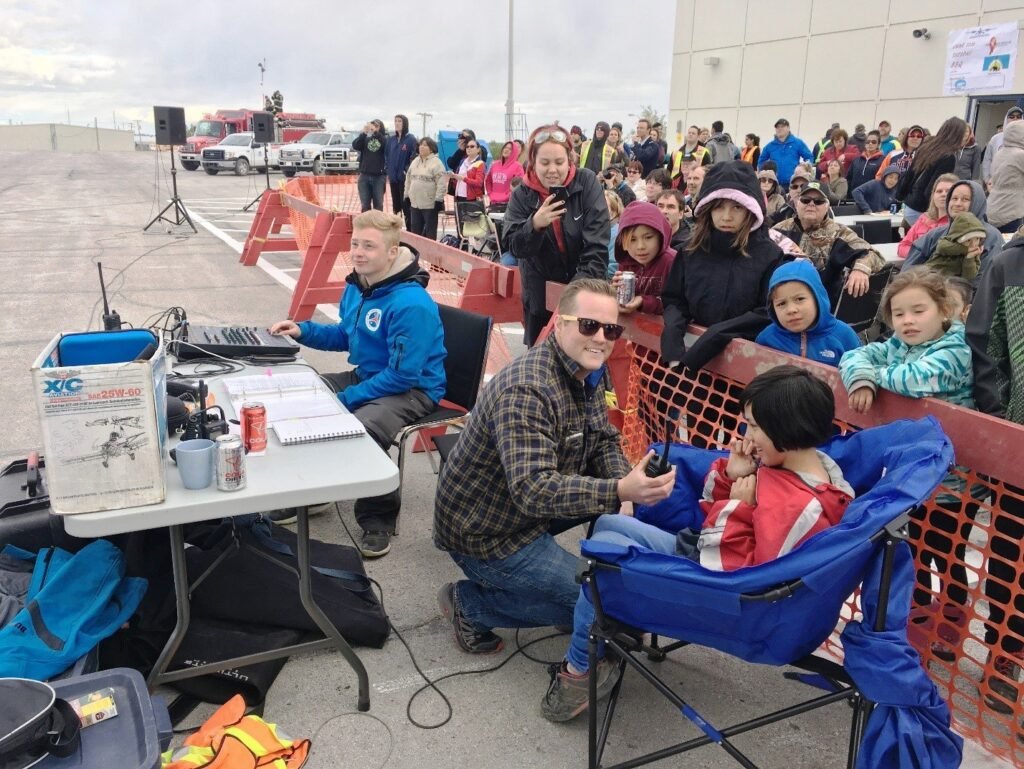
    CAAT lost its announcer for a few days. Gavin got the sad news about the death in the family, and had to urgently leave. So Nancy and Kyle volunteed and turned the airshow into an interactive event. Towards the end of each performance on the kids from the crowd got to talk to the pilot live in the cockpit.

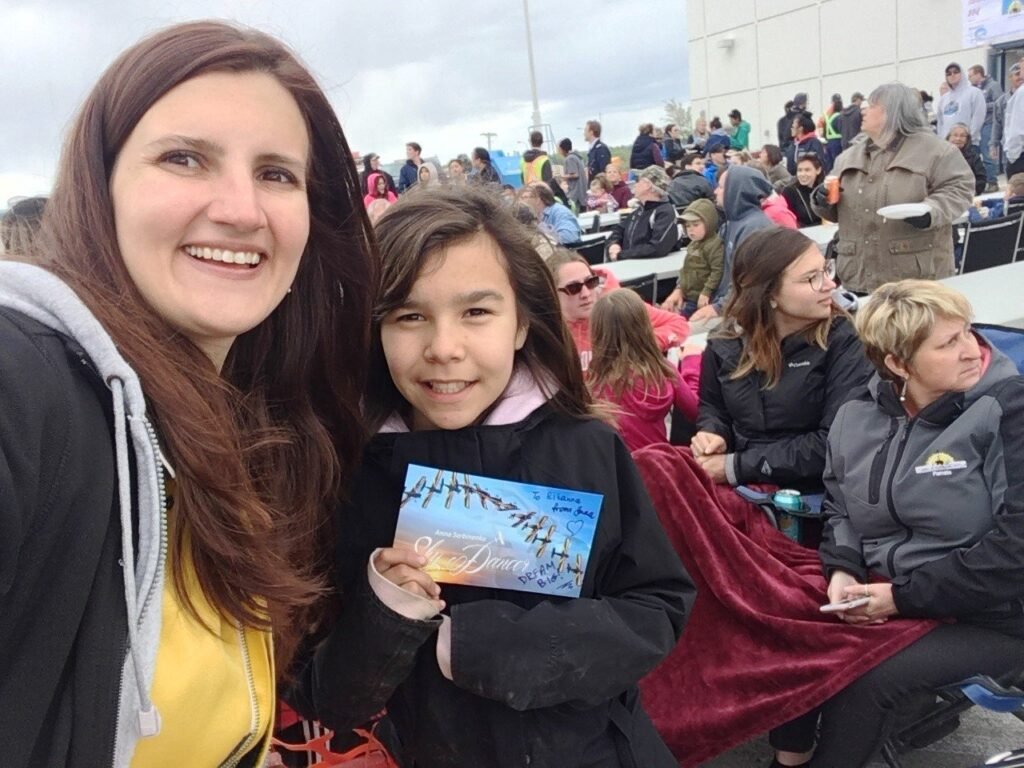
    Rihanna was the one who got excited about girls flying, and was the one who talked to me. She is still figuring out what her dream is, but she knows that she can do whatever she decides to!

    Something tells me that after we left Norman Wells, there will a few kids who will never look at the sky the same way again…

    Canadian Arctic Aviation Tour so far:

    Distance flown: 3399 nm (6295 km)

    Airshows flown: 33

  • Day 12. Tuktoyaktuk. Fort Good Hope

    Day 12. Tuktoyaktuk. Fort Good Hope

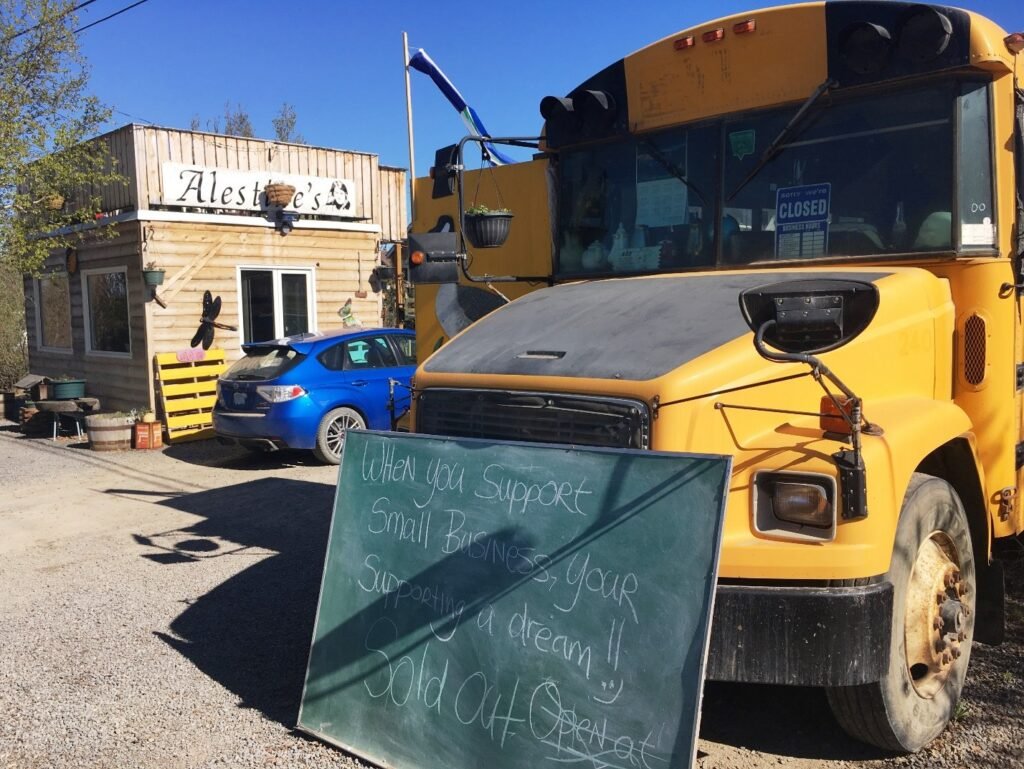
    Having the unexpected waiting time, we decided to maximize on touristic activities before departure and checkout the local cuisine. The local most recommended place, Alestine’s, is cooking on a school bus on the front yard, and serve in an authentic looking cafeteria.

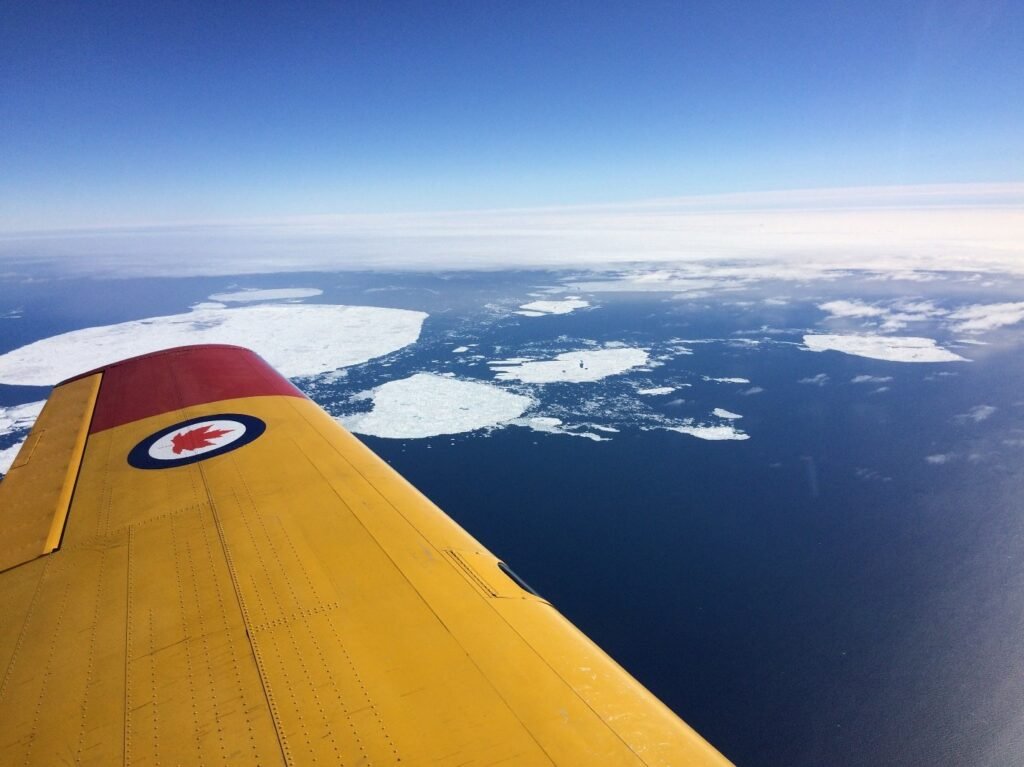
    Ken Fowler with his Rocket and Jim Hrymack with his Harvard (longest range planes) headed off to Sachs Harbour for the airshow. The ice was just breaking off on the ocean, and the views could not get any more Northern!

    Waiting a little longer around Inuvik, part of the group gave it a shot and went North towards Tuktoyaktuk.

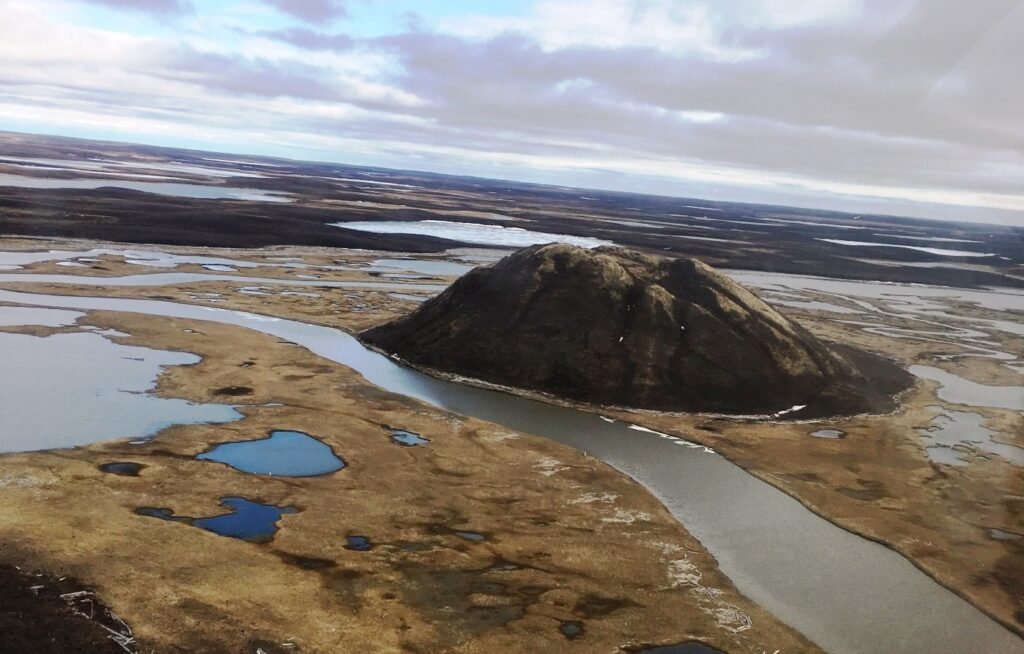
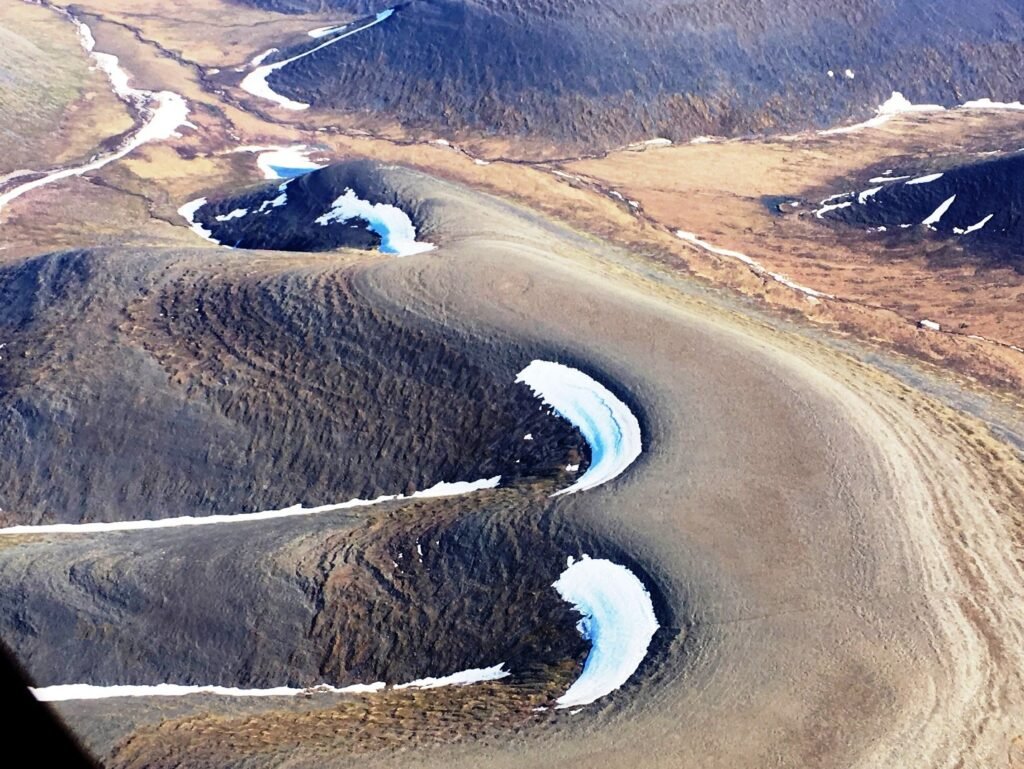
    On the way, there were a couple of ice pingos – ice dome hills.

    The attempt paid off, and Tuktoyaktuk got its first ever Tuktuyaktuk Airshow!

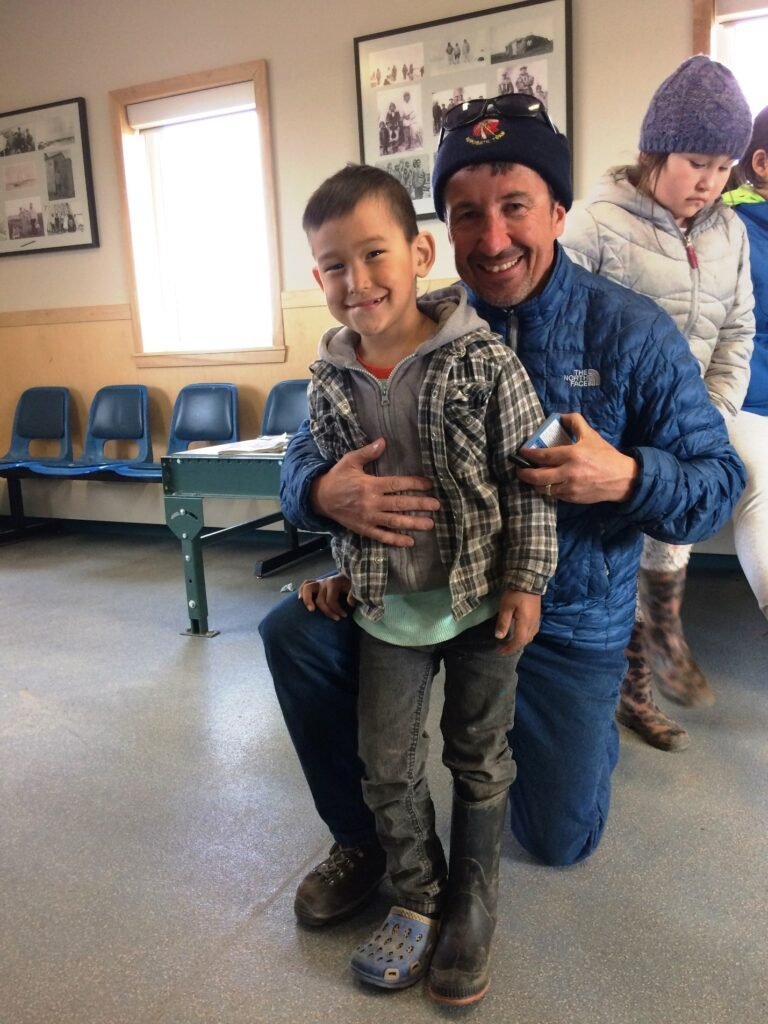
    One boy was so excited when he heard the planes coming, that he ran out of the house in one croc and one boot!

    The team got a tour of town, incl. underground freezers… polar bear pants making…

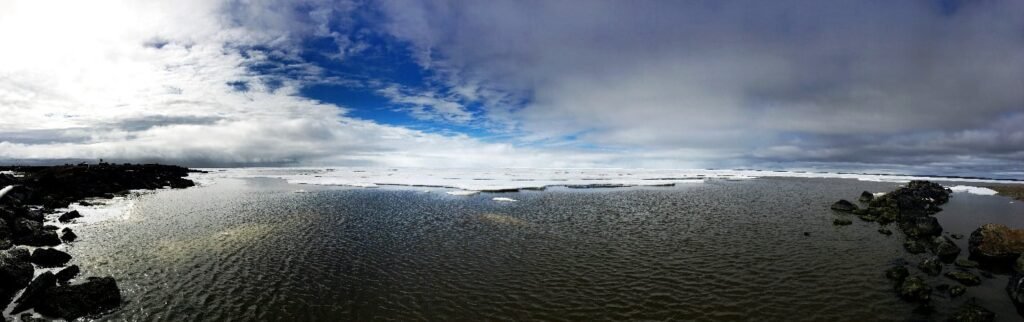
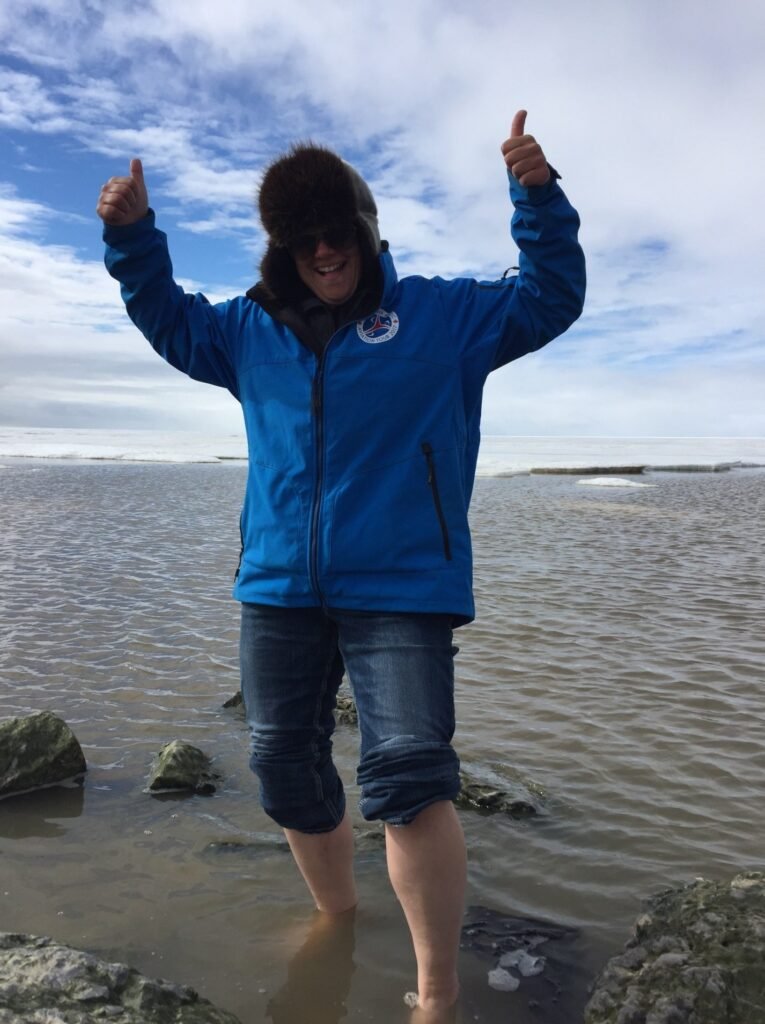
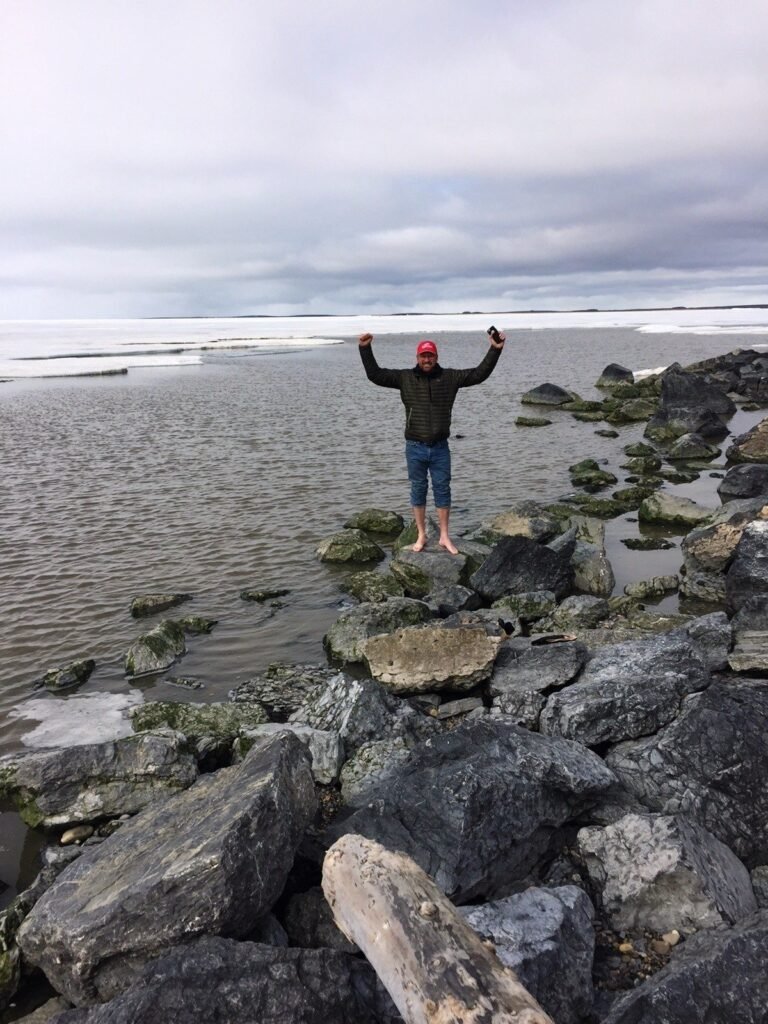
    and topped up with dipping the toes in the Arctic Ocean, although the ice was only about 20 feet off shore.

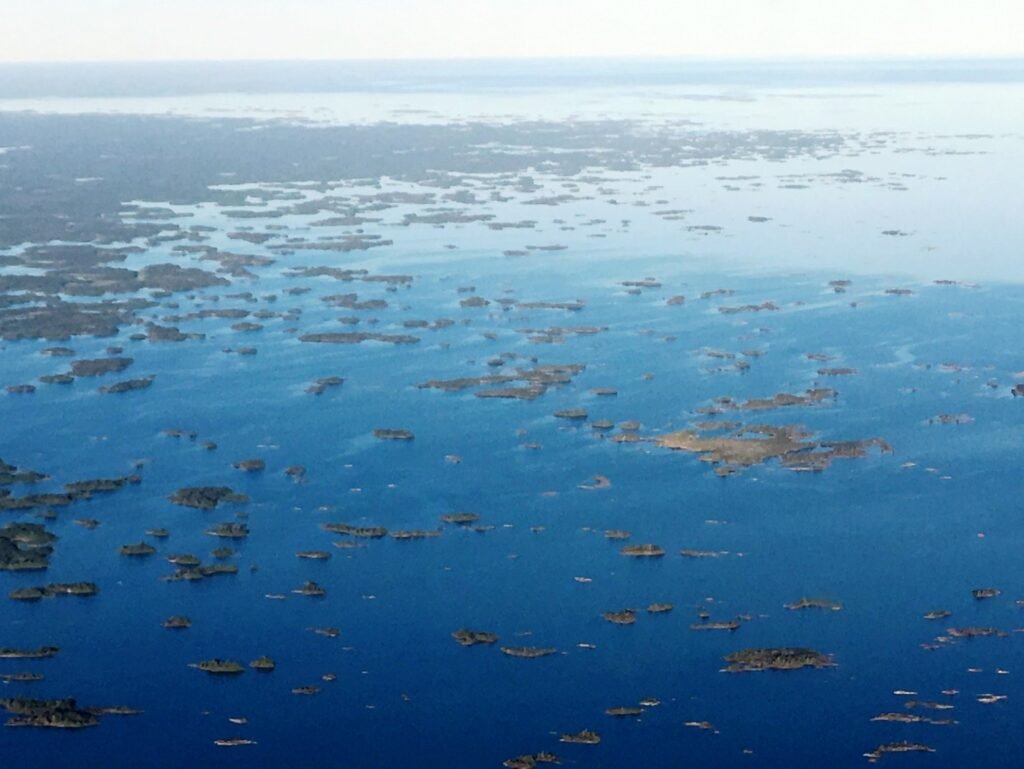
    Our next airshow is in Fort Good Hope. The route to it was beautiful. And in ratio of land to water started being in favor of terra ferma again.

    Upon landing, we were greeted by free roaming muskox at the end of the runway. The nature here is… undisturbed.

    We arrived with a school bus to town, and checked out the airshow box for tomorrow. The site is wonderful, and we are looking forward to flying here tomorrow!

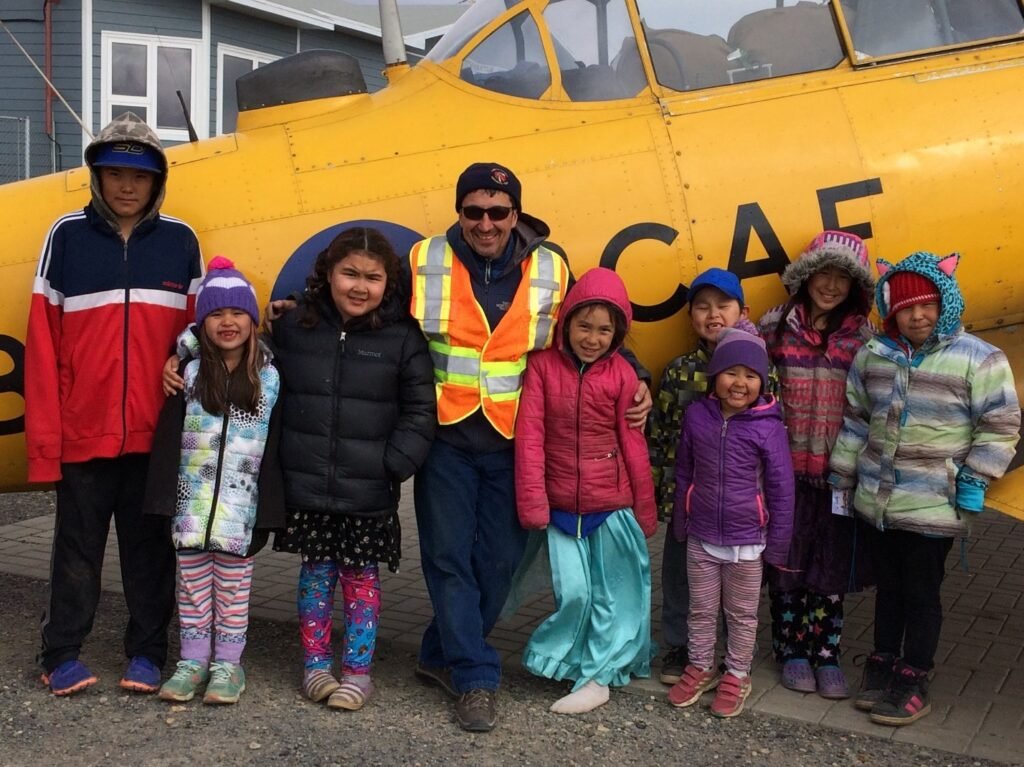
    We were warmly greeted by excited kids. And a girl Ivy right away told us she wants to be a pilot!

    We had home-made dinner of soup and garlic toast in the local community centre.

    And then Richard gave us a school bus city tour.

    During the tour, we stopped by the Chief’s house and bailed all the 200 school kids out of school tomorrow early, so that they get to see the airshow at 1 o’clock.

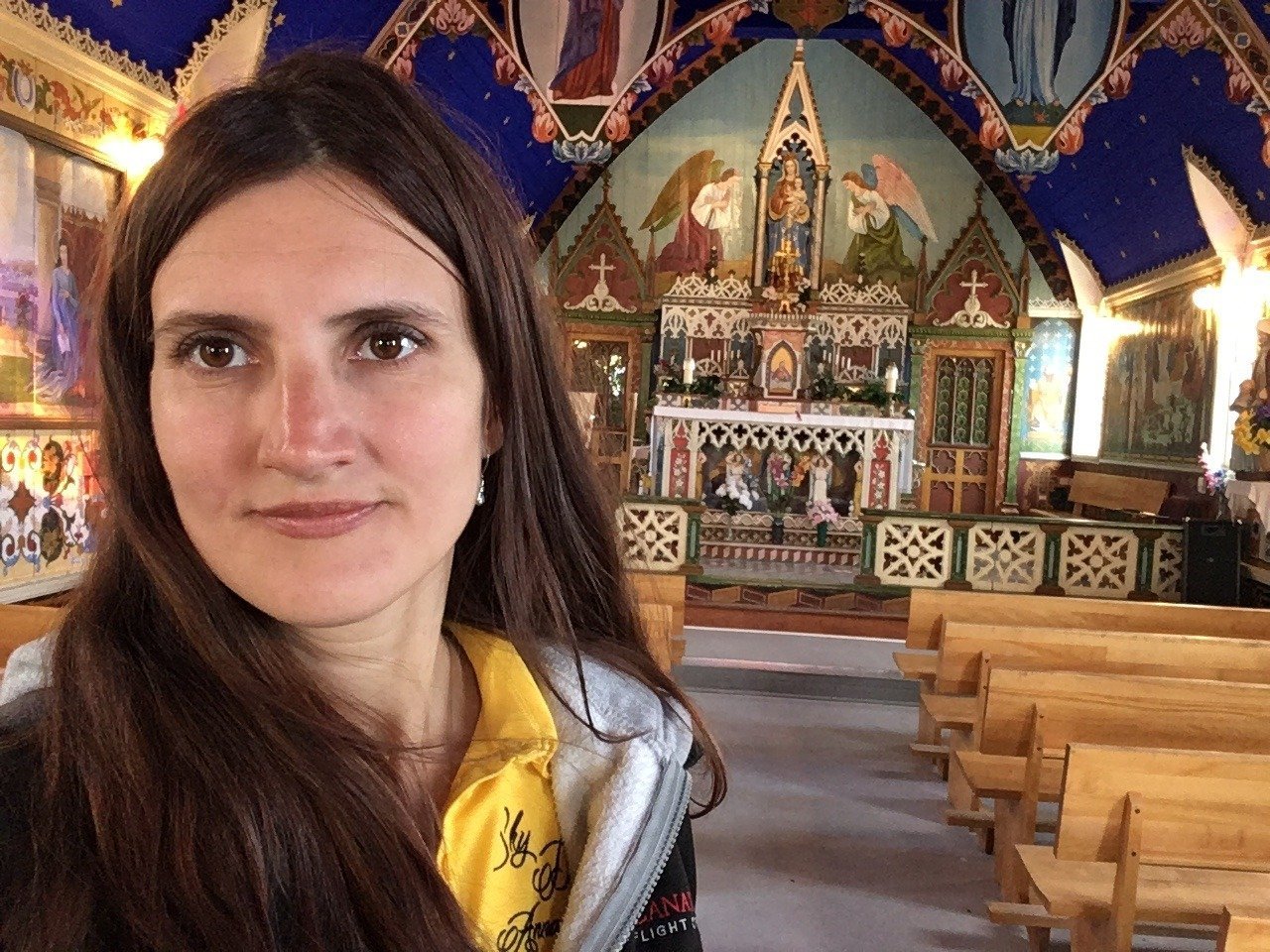
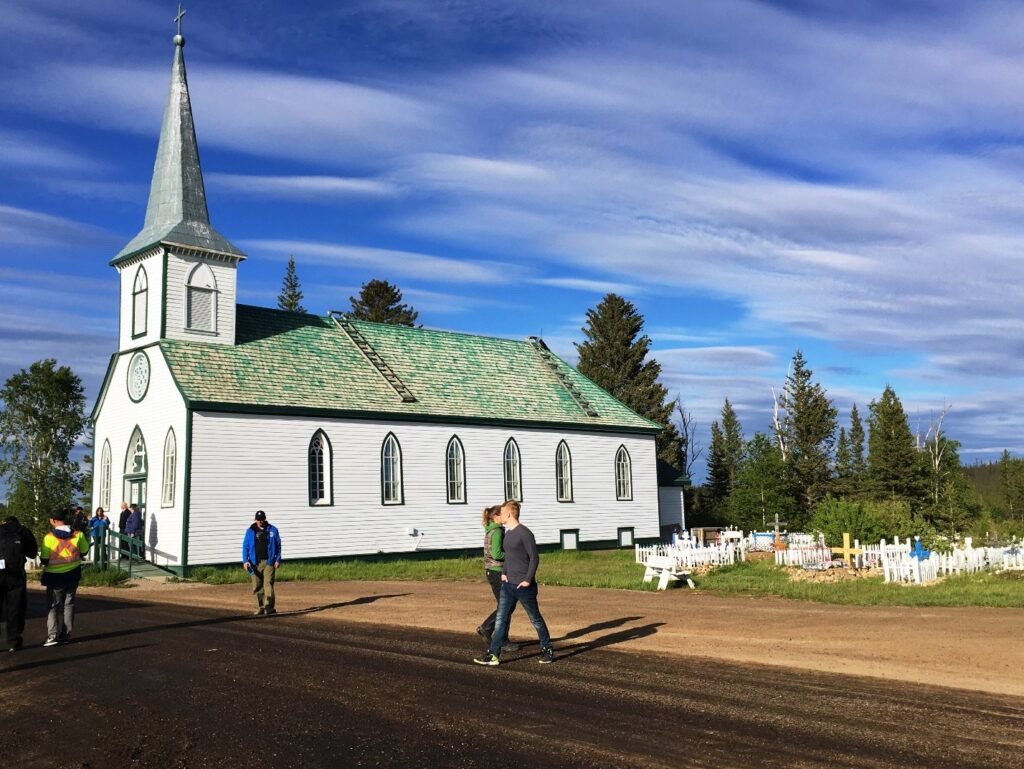
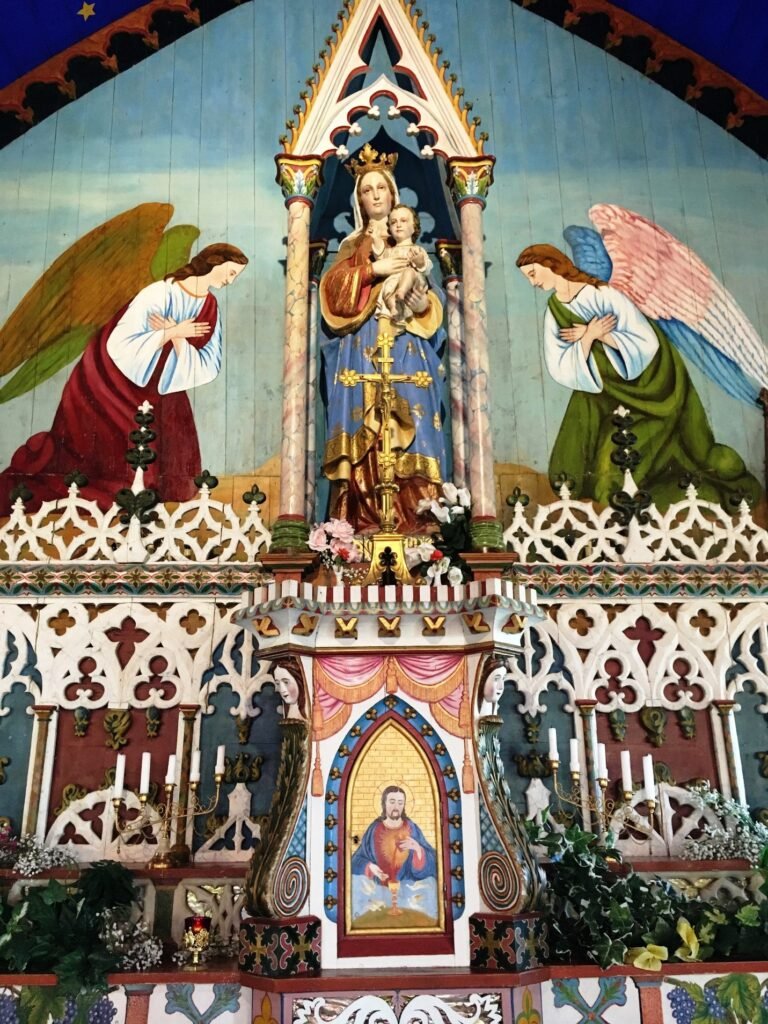
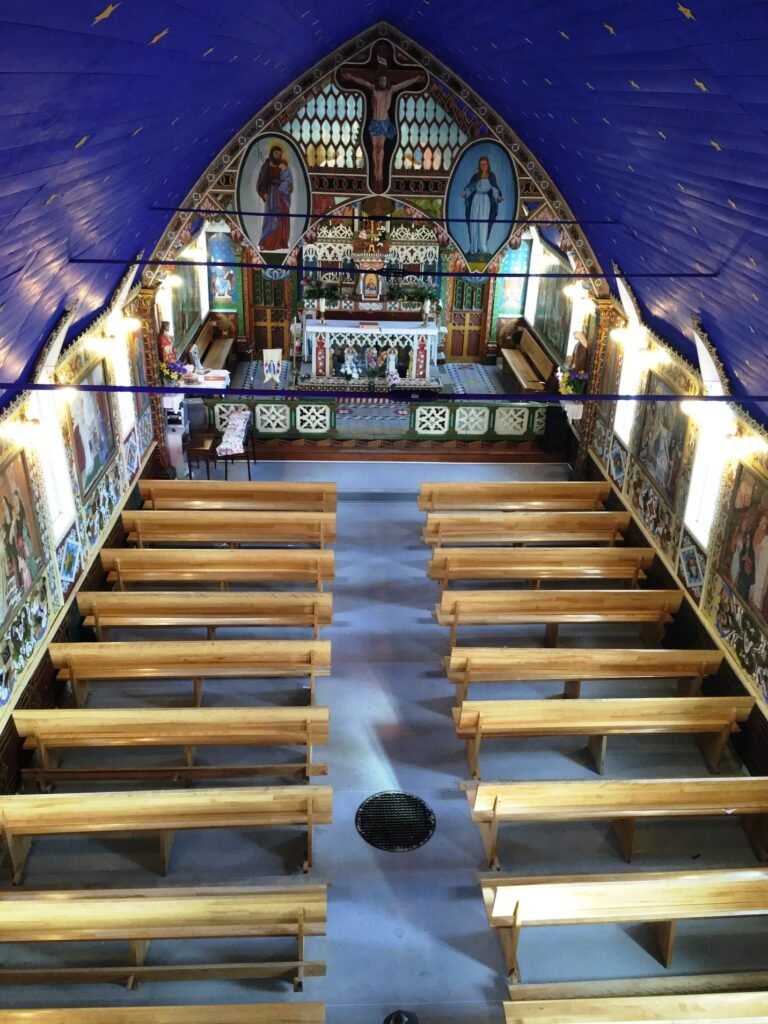
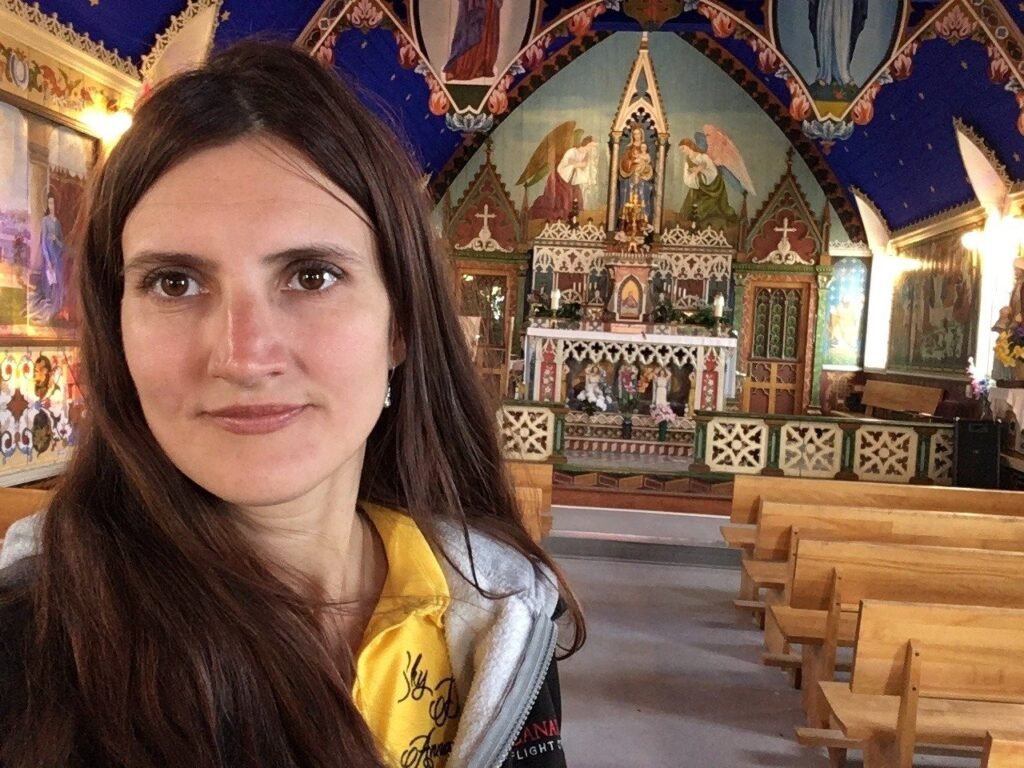
    The most unexpected highlight of the tour was to find the most beautiful catholic church. The church looked pretty modest from the outside.

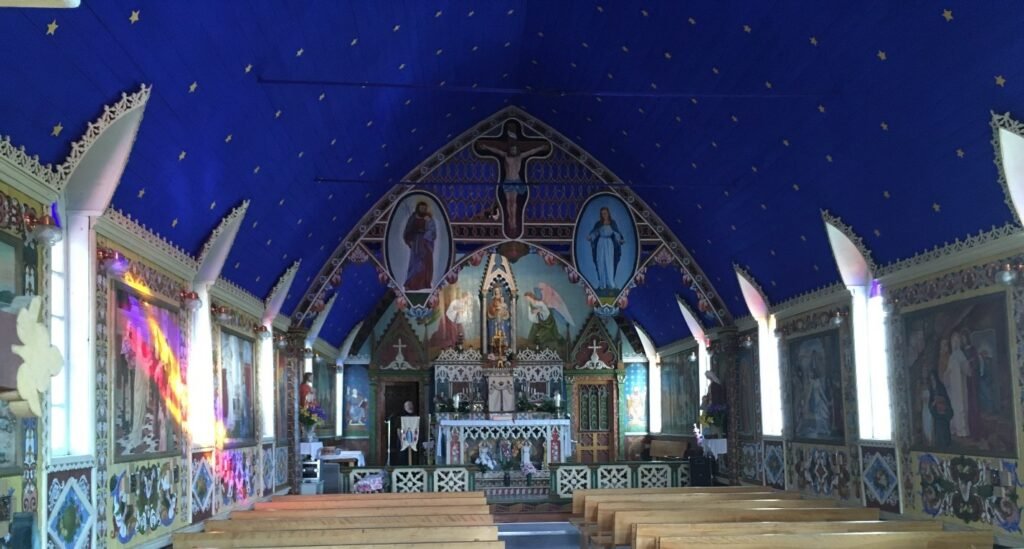
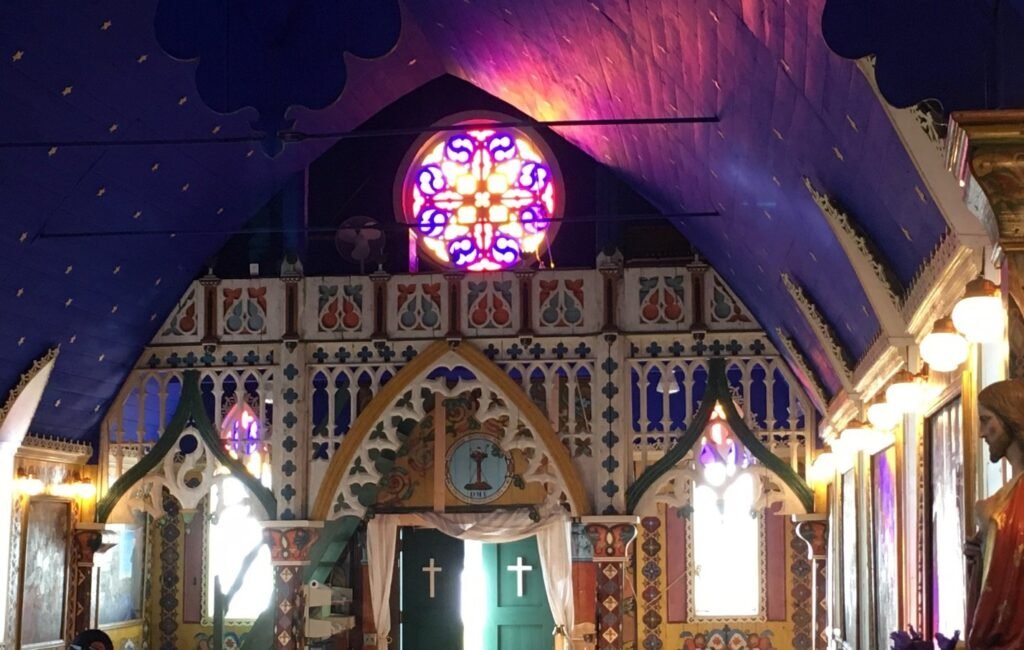
    But once we stepped inside, the beauty was absolutely breathtaking!

    The light coming from the colored windows is magical.

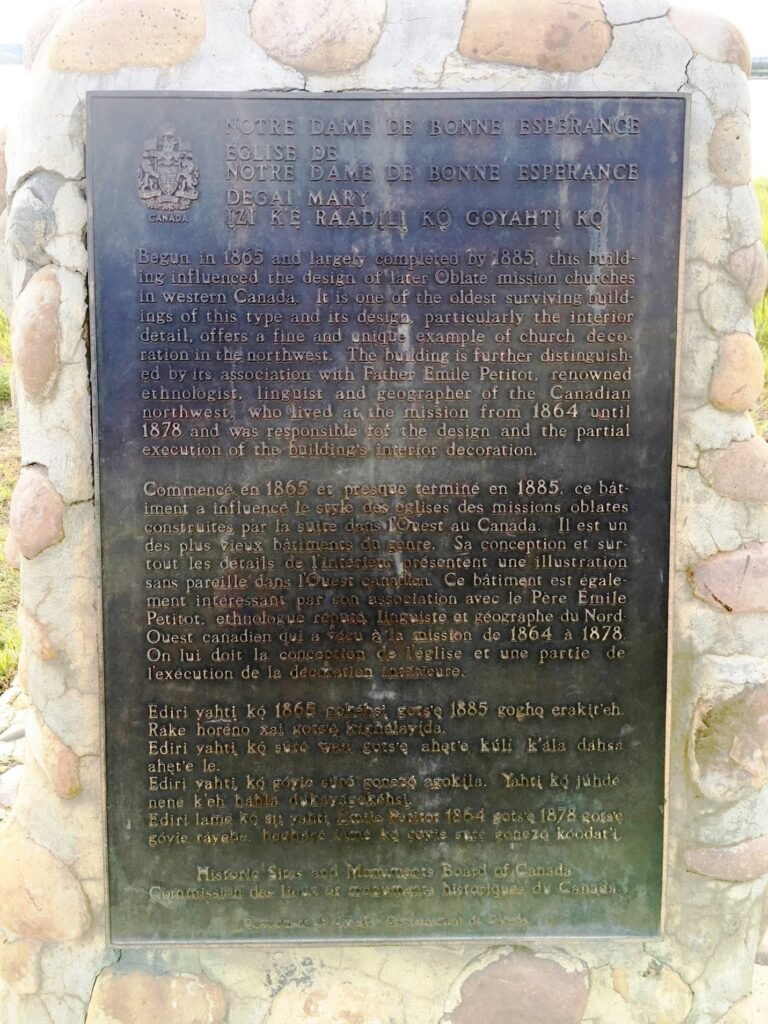
    Painting of this church started in 1864 and completed in 1878. Paintings on canvas is conventional oil painting. But the painting that is right on the wood was made all with fish oil paint and local natural colors only. The most amazing part is that it has never been repainted since. It is the oldest church in the North.

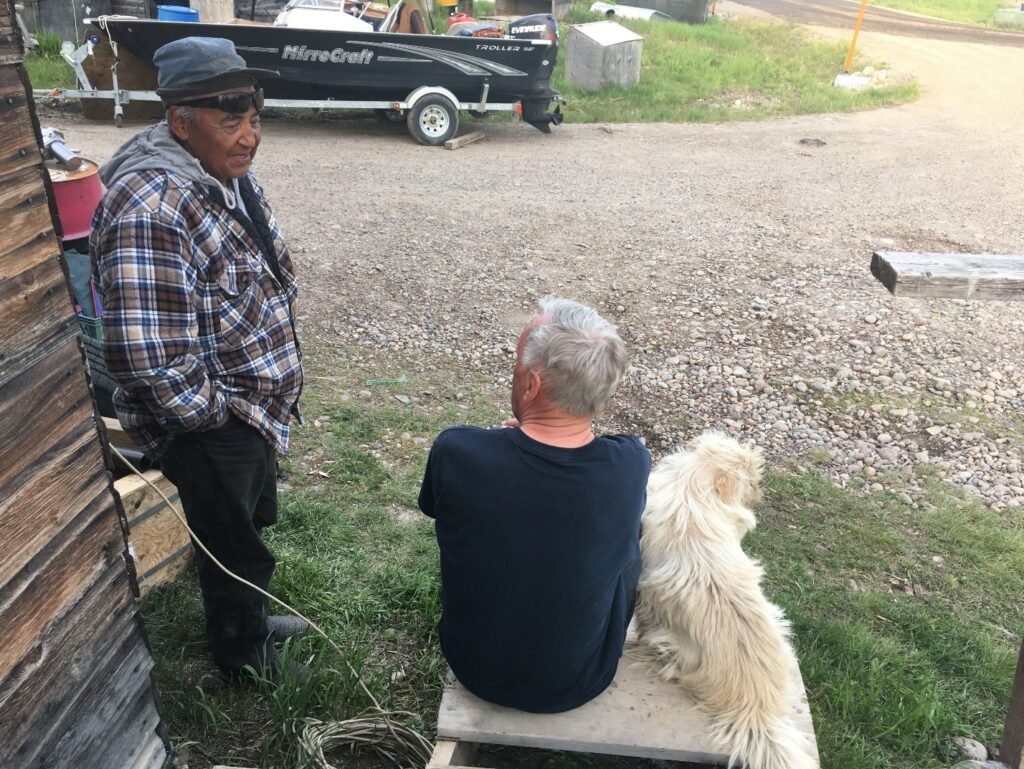
    When the time came to go to bed, a hotel was not on the menu. Accommodation arrangements consisted of names of people and numbers of beds. Bud, Ross and myself were dropped off at a house on the river. When we asked if there were any rules, the Ann (hostess) said “It’s your house!”.

    It felt very cozy and homey. My “office” tonight even has a river view.

    Distance flown: 3215 nm (5954 km)

    Airshows flown: 28

  • Days 10 and 11. Inuvik, NWT

    Days 10 and 11. Inuvik, NWT

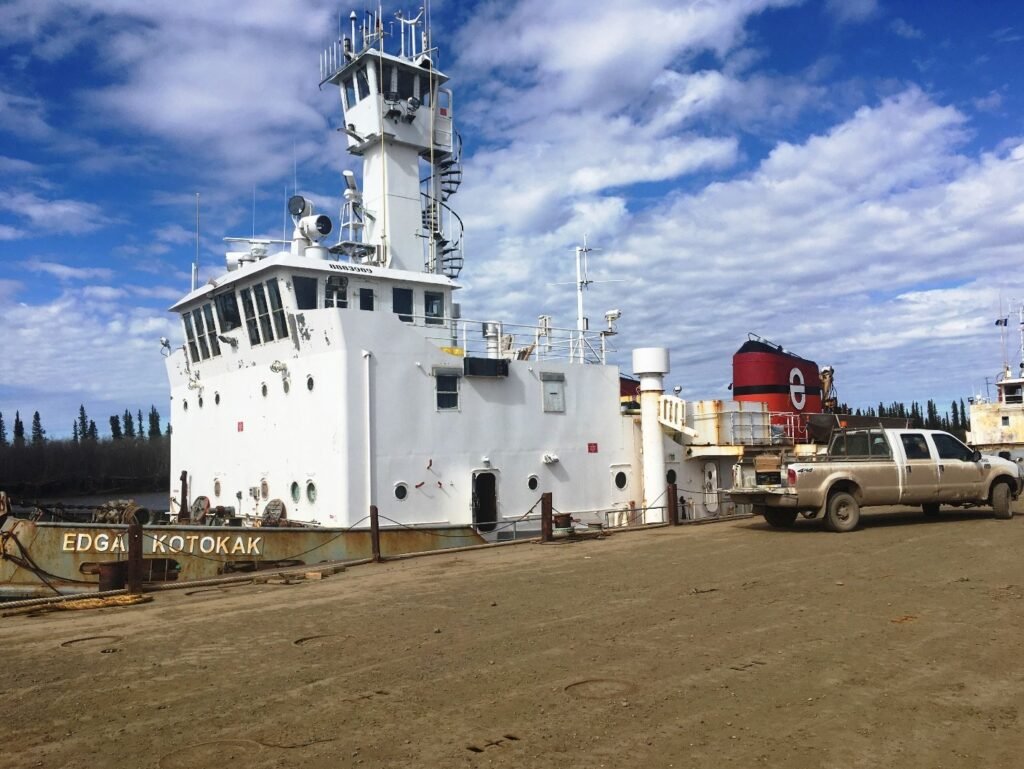
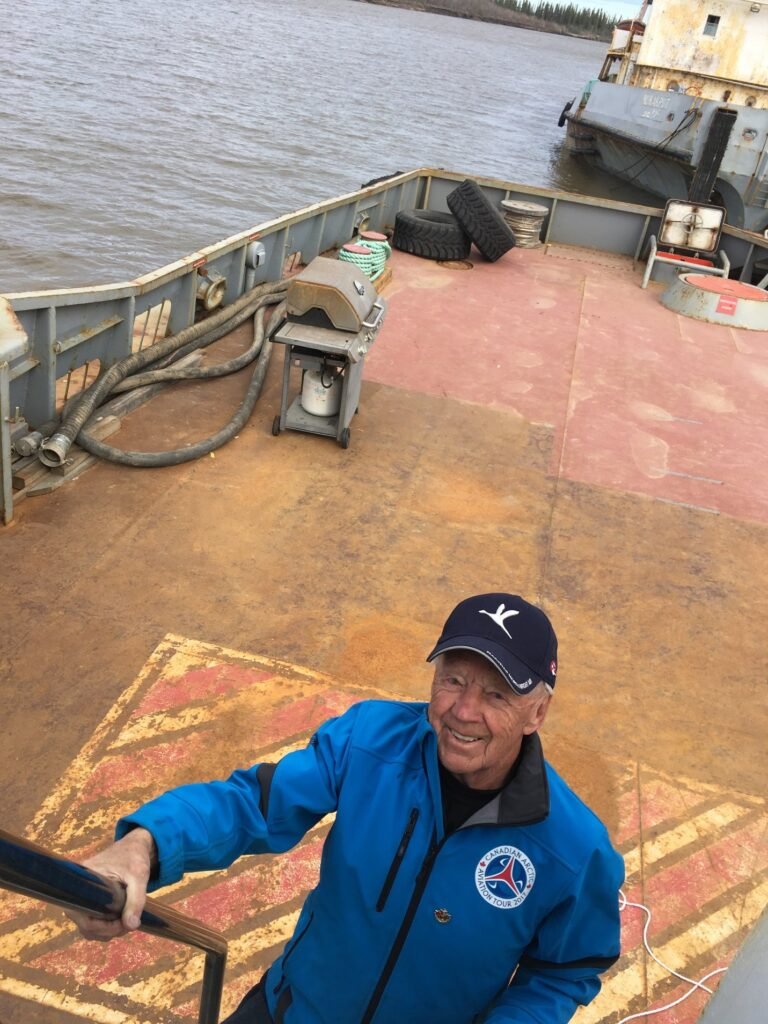
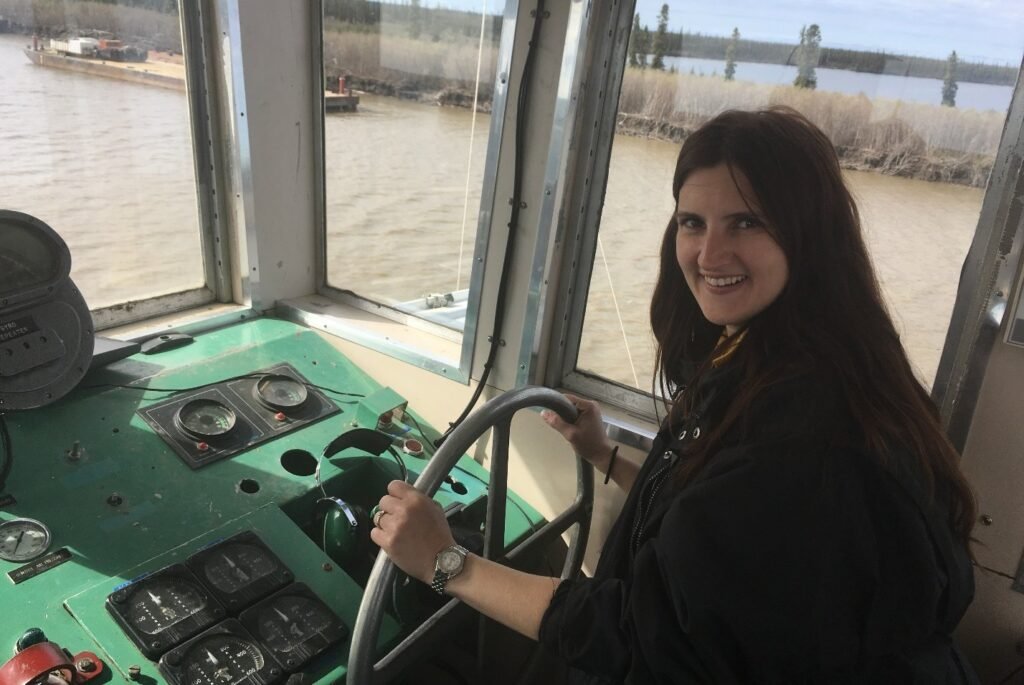
    By now, we started getting used to the Northern hospitality. Local sailors whom we met last night at the Legion, invited us on their boat for a tour and lunch. So we headed their way soon. We were totally expecting some small river cruiser, so to find the actual huge vessel took us a moment.

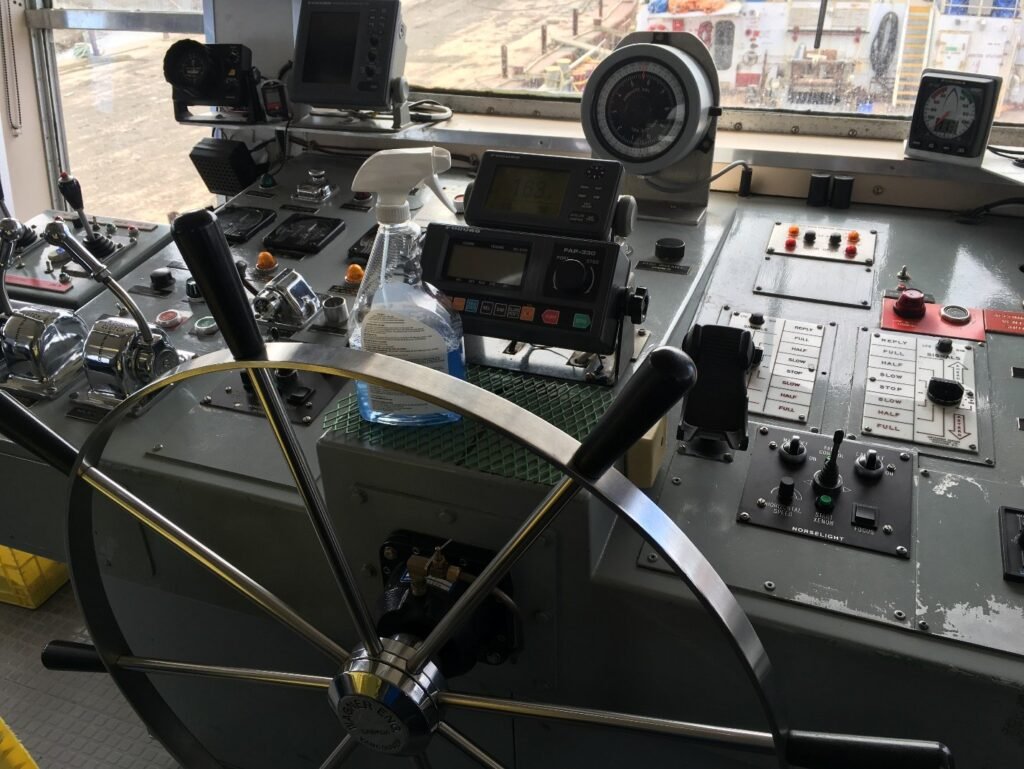
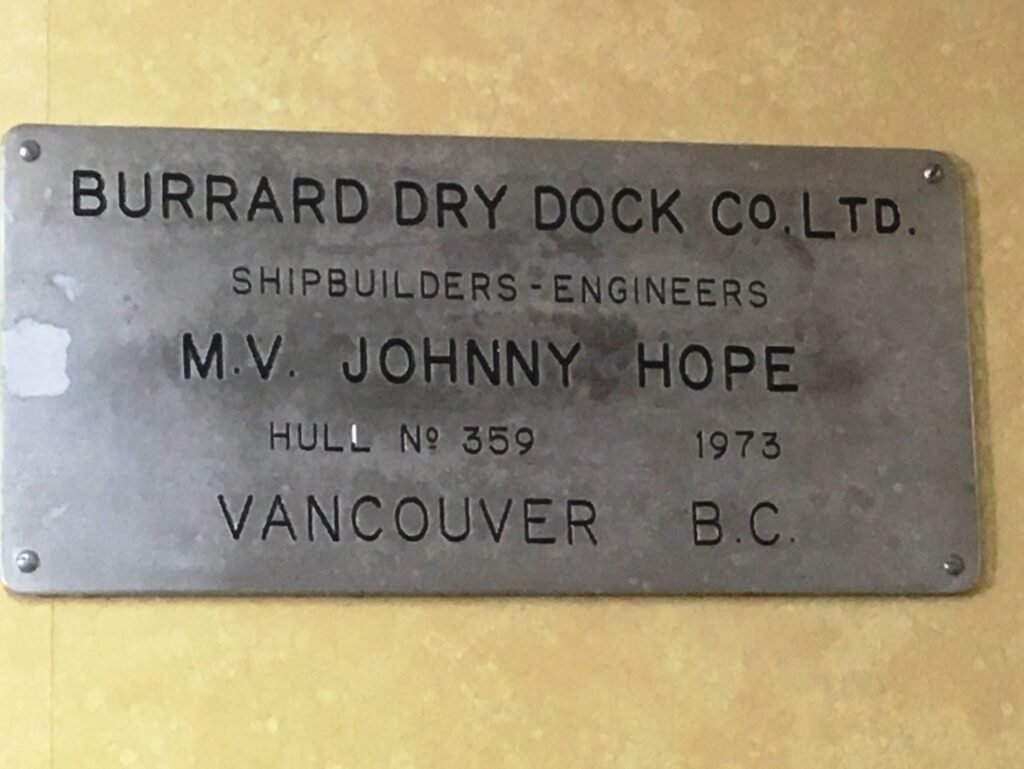
    Here the calculations of fuel are not made in gallons per hour anymore. This 1973 ship’s four engines burn 6 gallons per mile! It can go on the river, and some “light icing”, but is not certified to breaking tick ocean ice. Therefore the sailing season in these waters is only about 4 months per year.

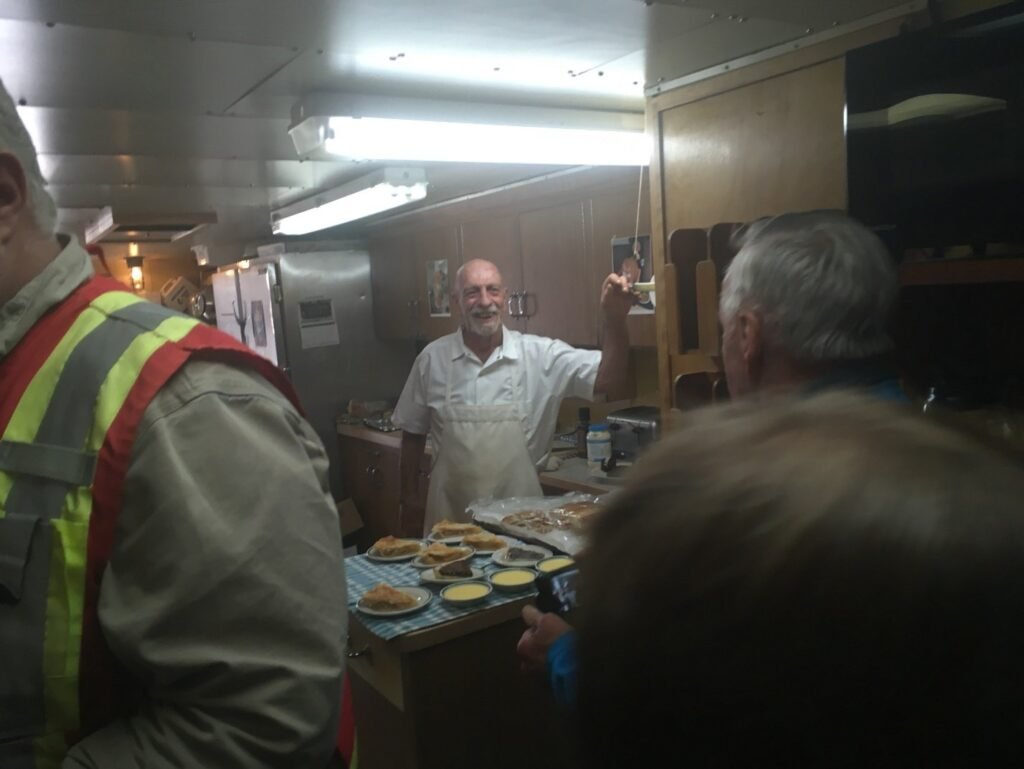
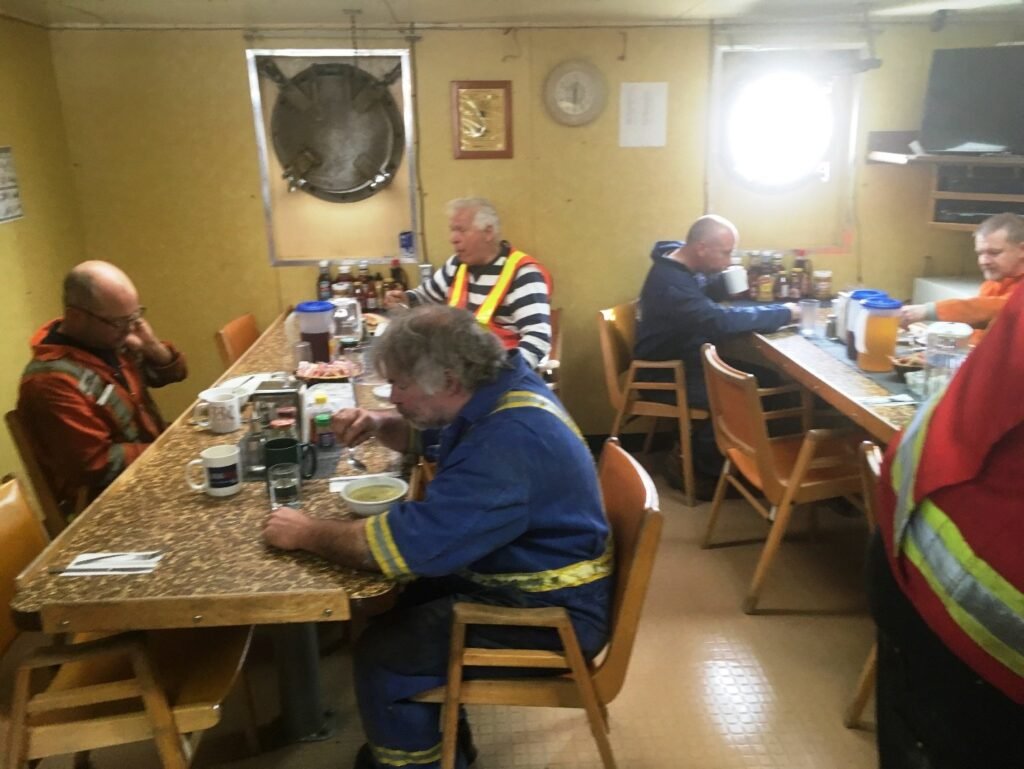
    We also learned that the tug boat hard working right nearby, can push up to eight barges on the river. But once in the ocean, there’s towing only. But more importantly – the boat has its own chef. The seafood soup, sub and desert were absolutely delicious.

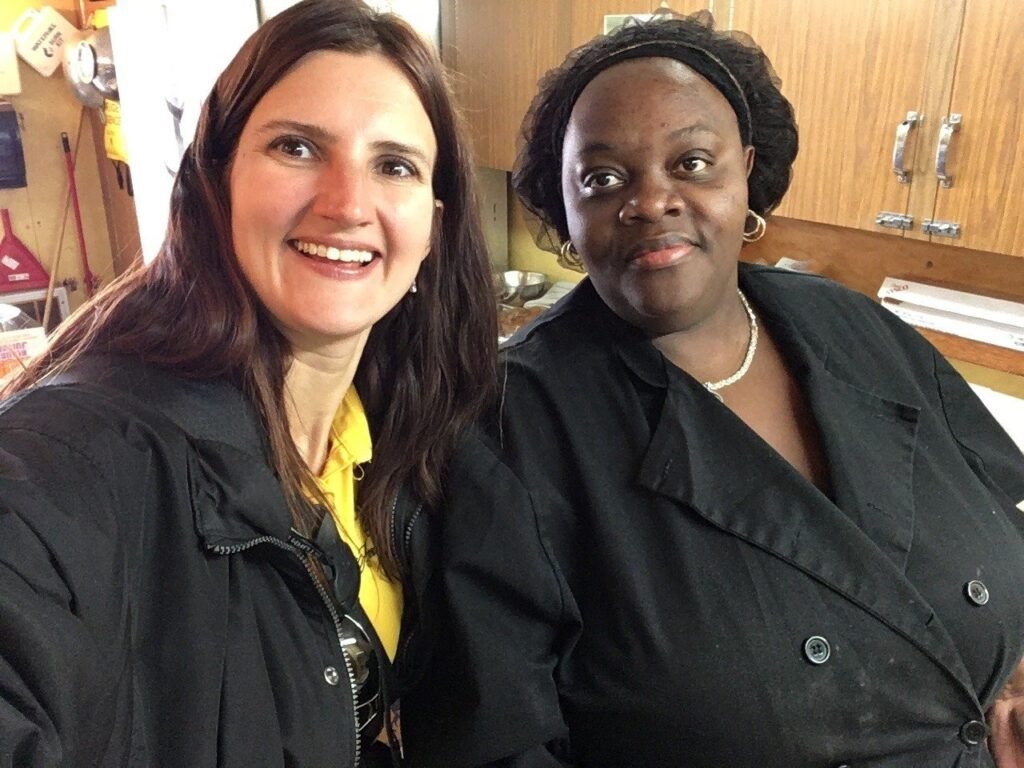
    Janet helps in the kitchen and sails 6 months every year. Which in a wonderful way leaves her the other 6 months to travel the world. Last year, she visited 6 countries, incl. Asia and South America.

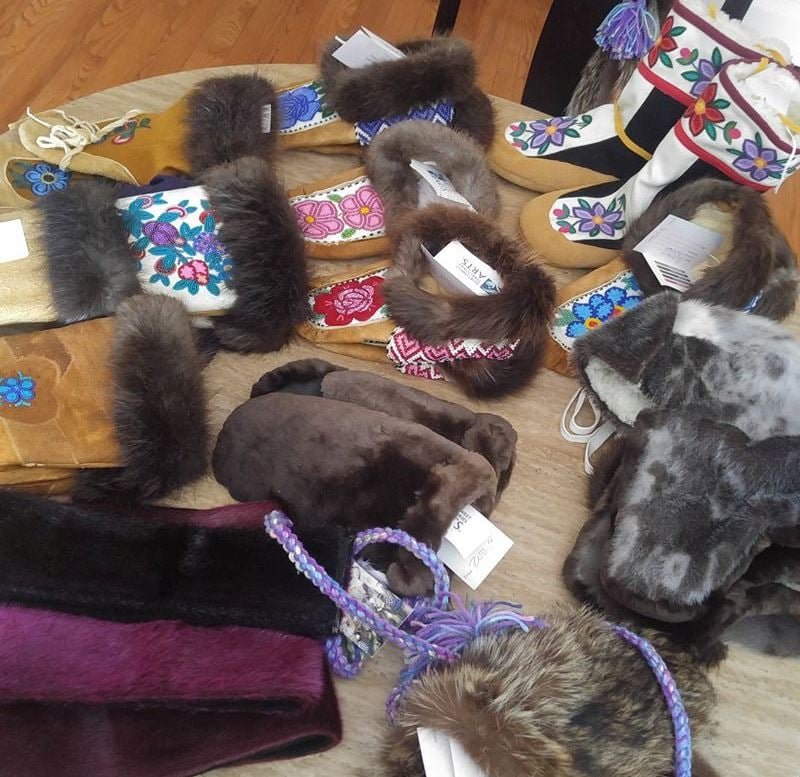
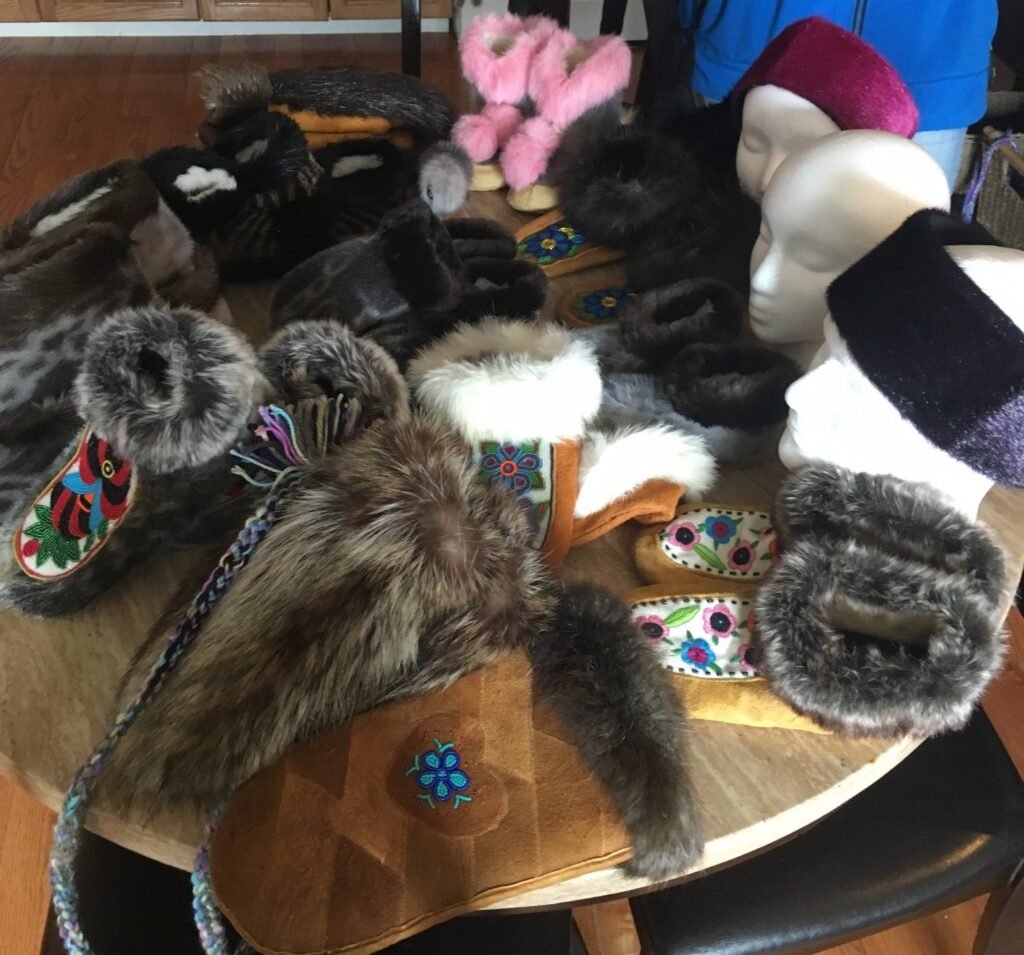
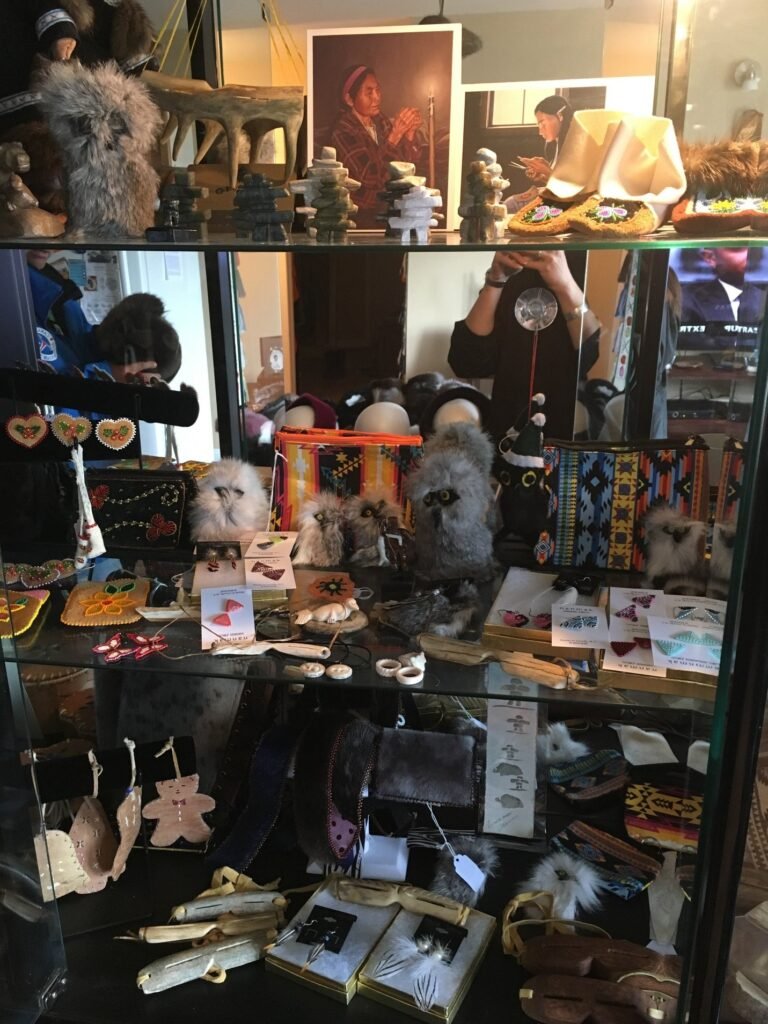
    Now it’s time for retail therapy! Tanya and I were interested in local arts, and collected information for the last couple of days. The most well known items to bring and souvenirs and gifts from Inuvik area are:

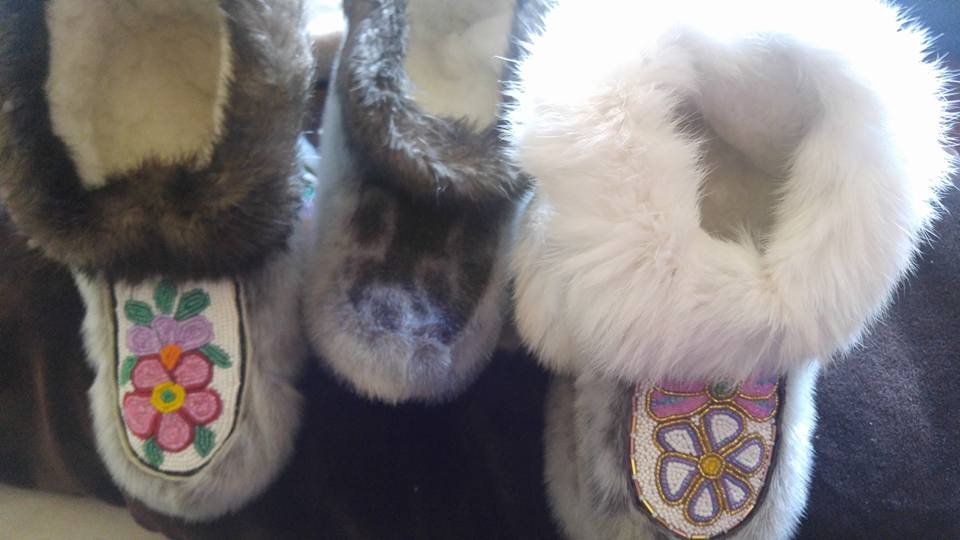
    1. Shoes: mukluks and moccasins. There’s a huge variety of those. There are indoors and outdoors versions. The moose hide sole seems fragile, but it’s totally appropriate on the supercooled snow powder of Inuvik’s winter. Besides, soles can be changed, keeping the rest of the artwork of the item intact. Both can be custom made. If you are buying pre-made ones, if in doubt – go for the smallest size you can squeeze in. They will soften and become bigger.

    The design varies between stitching, embroidery and beading. Or a combination!

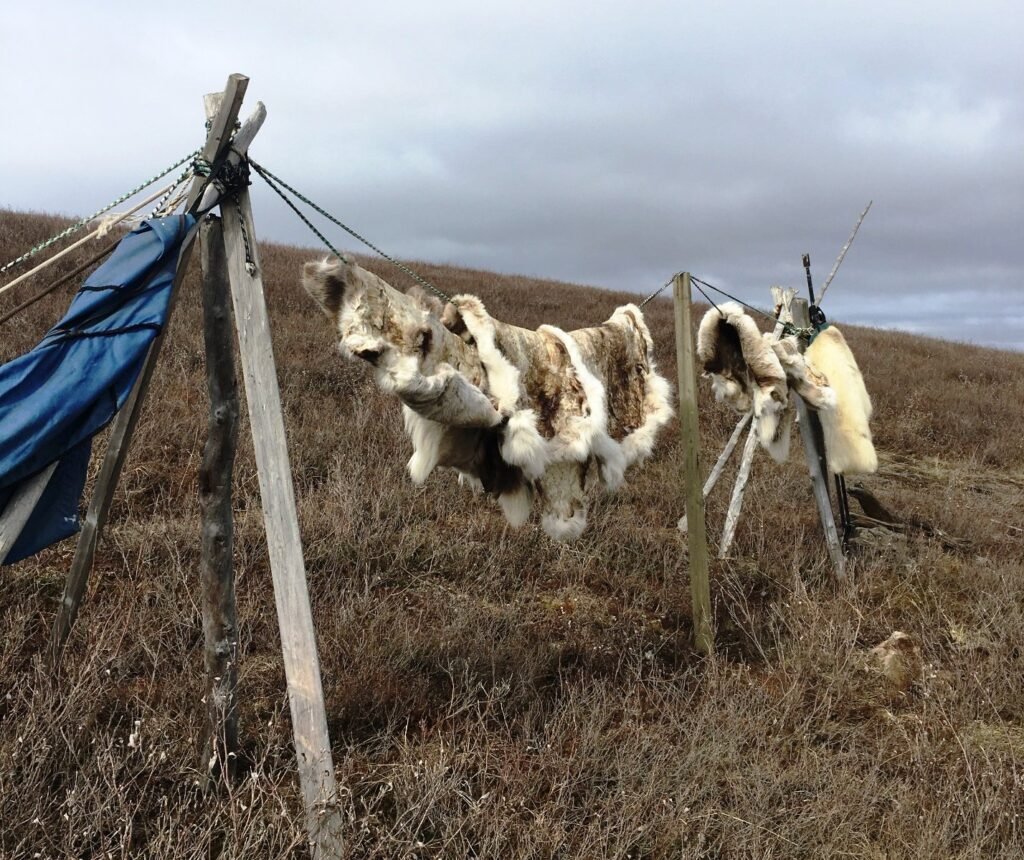
    Most used materials are moose hide for the sole, wool or fur for the top. Fur can be beaver, rabbit, racoon, wolf. The warmest items are made of seal.

    2. Everything else furry. Shoes come with matching scarves, hats, mittens etc. Many of them are died in bright colors, others are left in beautiful natural combinations.

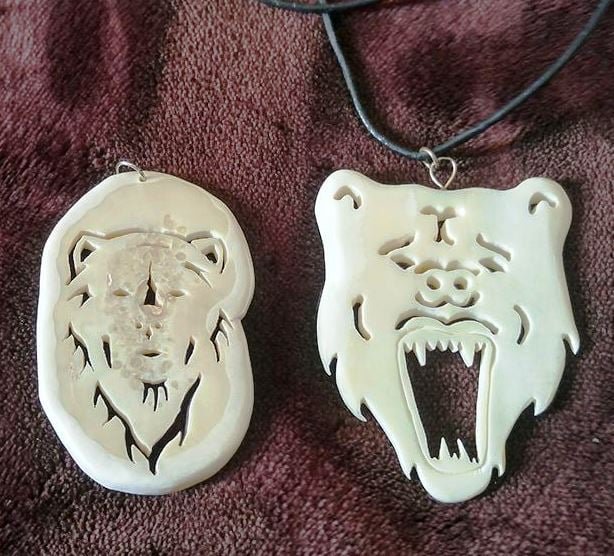
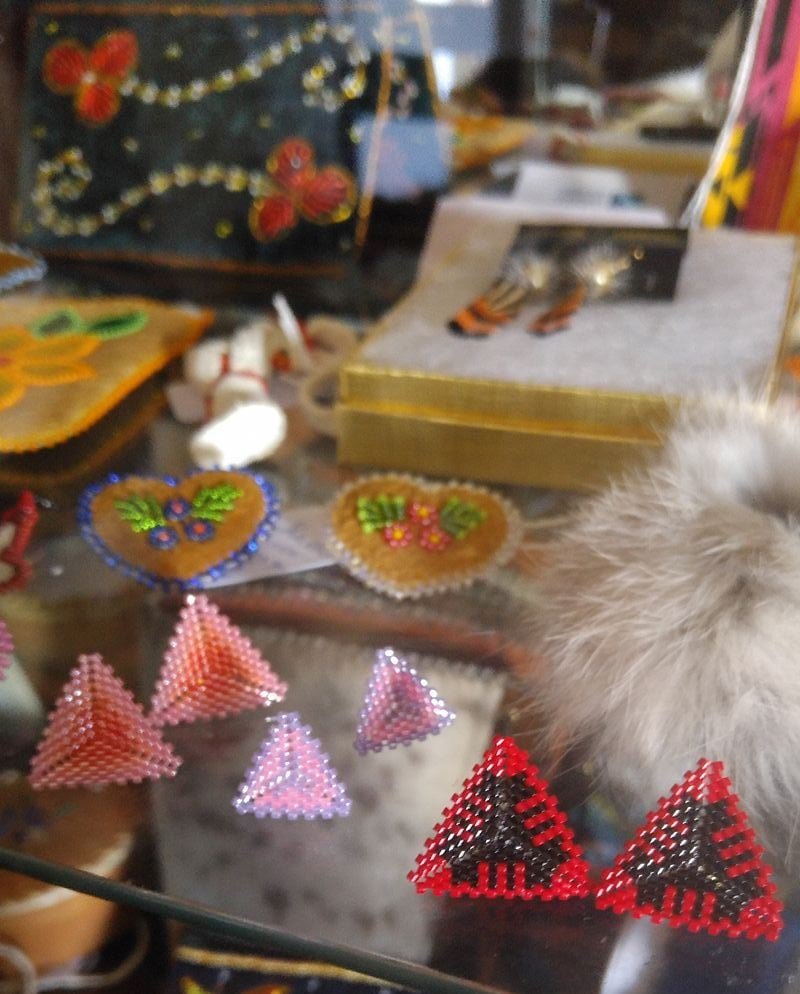
    3. Jewelry. There are a few main themes: beading, carving and other natural materials eg feathers.

    The choice is vast, so it’s good if you decide ahead what exactly you want. Carvings are most of the time made out of caribou (lighter color, more transparent) or moose (more ivory color) or muskox (grey-ish color) antler or mammoth ivory (solid ivory color, very beautiful and very solid – and most expensive).

    I was first surprised to hear about mammoth, but it is in fact the most ecological option in a way – we can’t extinct them anymore 🙂 But in these frozen lands, there’s apparently a number of them found. And following the local tradition of never wasting any part of the animal, all parts are used.

    Beading is another beautiful jewelry option, especially if you are on a budget.

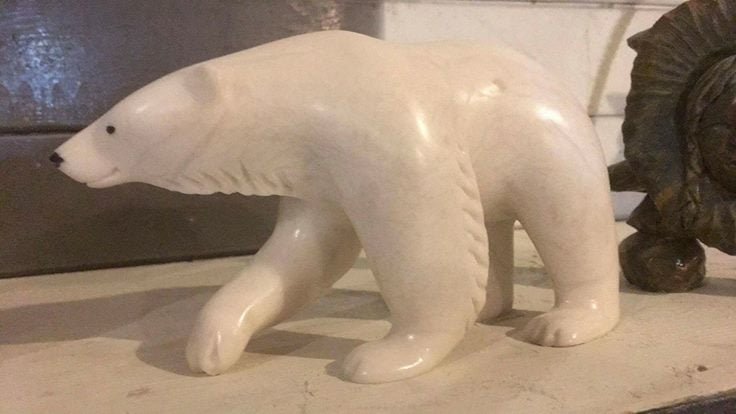
    4. Carvings. Continuing the jewelry tradition, there’s a big number of traditional animals and entire life scenes (hunting, fishing etc.) carved out of antlers, rocks or ivory.

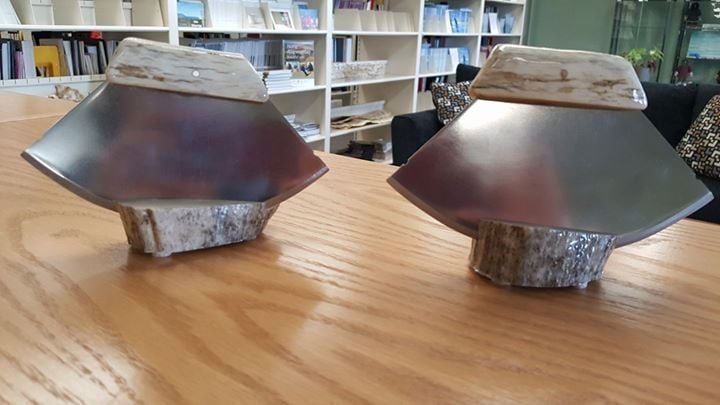
    5. Knives. If you are into knives, look for an ulu (ulut). Ulu is a local traditional meat and fish knife. It has a weird shape, but once you take it in your hand, it makes so much practical sense. Best handles are made of a moose or caribou antler, sometimes engraved. Check the quality of steel.

    6. Reindeer meat. Although it’s not exactly a souvenir, it’s another special thing to bring for the loved ones home if your travel is short. Meat is usually sold frozen. Best recommended way of cooking is roast: 300 degrees for 4 hours. If your path home is longer, you can order the meat to be shipped to you later.

    7. You name it! In the research process we came by pretty much everything: from custom made parkas, to drums, baby belts, snow goggles, etc. Keep your mind open!

    Shopping experience is another big part of it. We started “traditionally” in one of the local touristic stores “Originals”. We found there a couple of standard items, and lots of industrial made “stuff”. Another store not much bigger selection (although more authentic) of what we were looking for. But the manager Janet was extremely helpful – she gave us hints to the local “Inuvik buy and sell” facebook page, and gave a few hints about what to look for quality-wise. She even made a post on our behalf, mentioning what we are looking for.

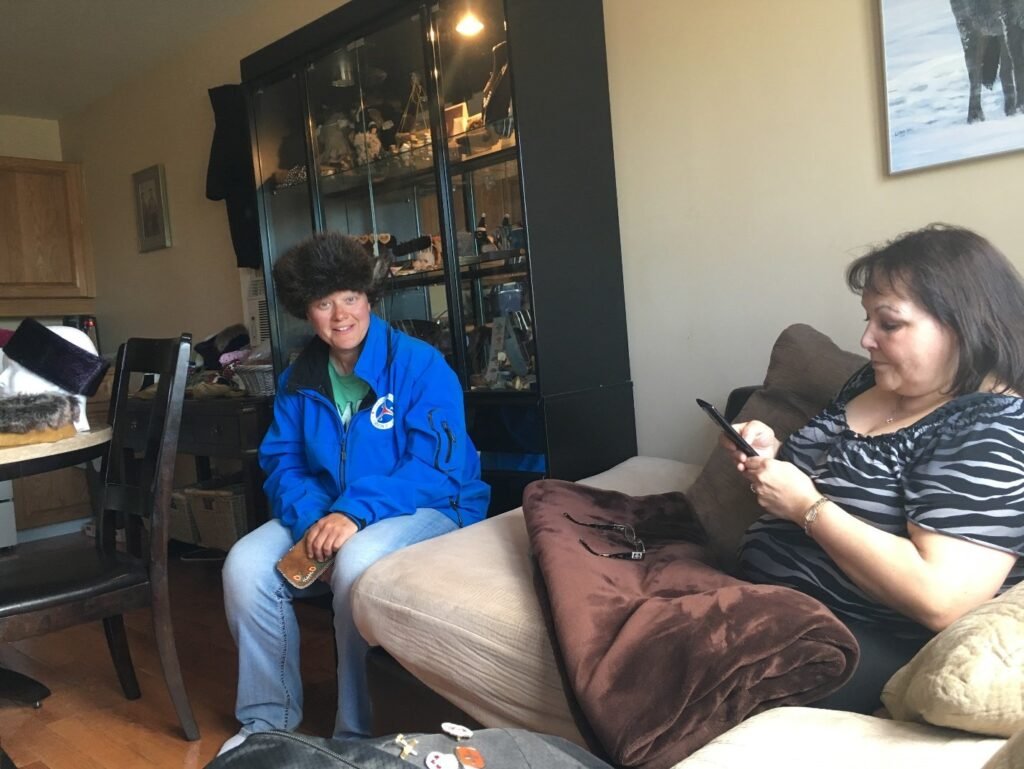
    We also heard several times the name of Mavis Jacobson who sells a lot of art out of her house.

    Back at the hotel, I went on the facebook page, and one of the first items there was our “catch of the day” (ulus). I messaged the seller, Beverly Amos, and shortly after we met. She asked if we were driving. So if not, she could come our way. I said that we were on our way to Mavis, but we were still looking where she was. Beverly said, not a problem, we’ll pick you up and bring to Mavis. Now, this is totally NOT big city. Tanya and I are jumping on the street in the truck of a person we just met through facebook, so that she brings us to another person’s home, unannounced, while we buy an ulu from her on the way there! Totally not weird! But Beverly was super nice, and shared that the ulus are made by her son-in-law. And Mavis had her door and arms open to the uninvited guests. I’m loving the North!
    Half an hour later Tanya had her new seal and beaver hat, and a drum on the way. Mavis made a couple of calls to friends to get a necklace I was looking for, and the “reindeer guy” was just at the kitty-corner! Everything was with a smile and a big Northern heart, while learning more stories and culture.
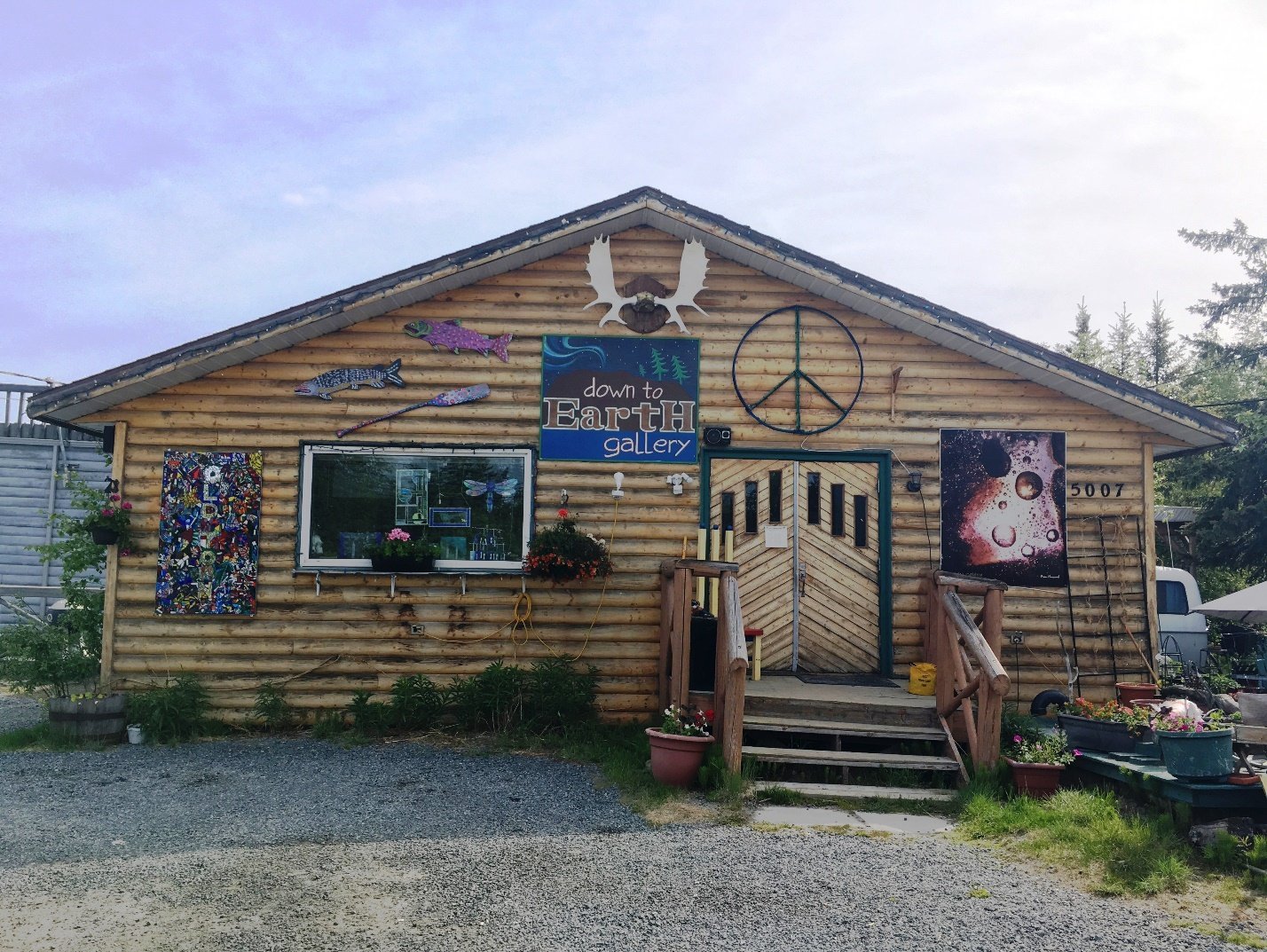
    So for those interested, here is our little contact book for local Northern Arts:

    – Variety of arts and souvenirs store: “Originals” https://www.facebook.com/Originals-on-Mackenzie-304309749616658/

    – Another variety store:

    – Beading: Shirley Kakfwi (Old Crow) – can be found through facebook

    – All arts and lots of local connections: Mavis Jacobson (also found on facebook). If cannot find anything else or have questions – just FB message Mavis!
    – Drums and sewing: Elizabeth Drescher (Inuvik) – can be found on facebook

    – Reindeer and cariboo meat: Lloyd Binder 867 777 6340

    Most artists are willing to put your package on Air North and have it delivered to you. So you don’t need to travel up North to enjoy the art – although you should to really get a feel for it. Many people here are also willing to trade. Simple civilization items like coffee are extremely expensive here, so instead of cash, you can send your preferred art supplier a package from Walmart, and you will both end up richer than you were.

    Ok, let’s get back to why we are here:

    After this relaxed day off, we were all excited to fly what now felt already a “home” show for us. Morning was typical low overcast, but by the show time 1 o’clock, we had pretty much clear skies. After deconflicting a few scheduled airline arrivals, we had lots of fun in the Inuvik skies and the excited spectators!

    With some of the team members also having flown Paulatuk airshow, Canadian Arctic Aviation Tour so far:

    Distance flown: 2344 nm (4341 km)

    Airshows flown: 22

  • Day 9. Aklavik, NWT

    Day 9. Aklavik, NWT

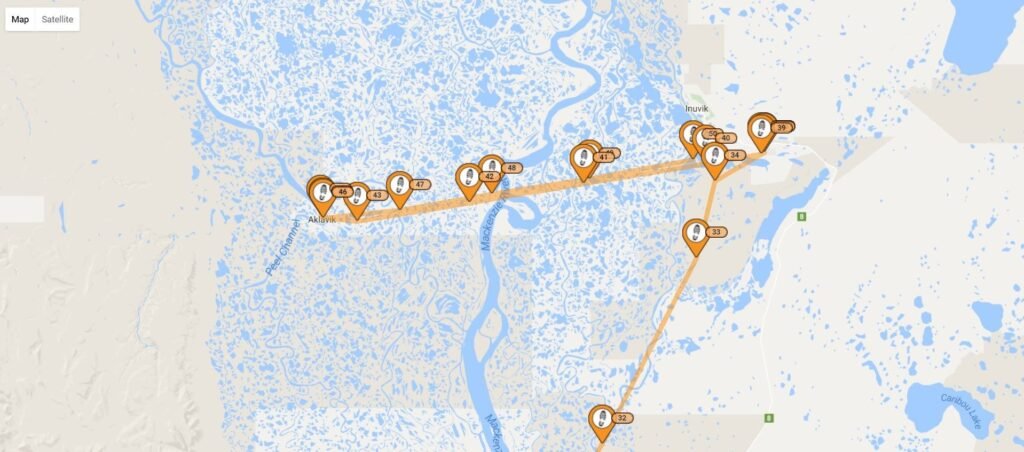
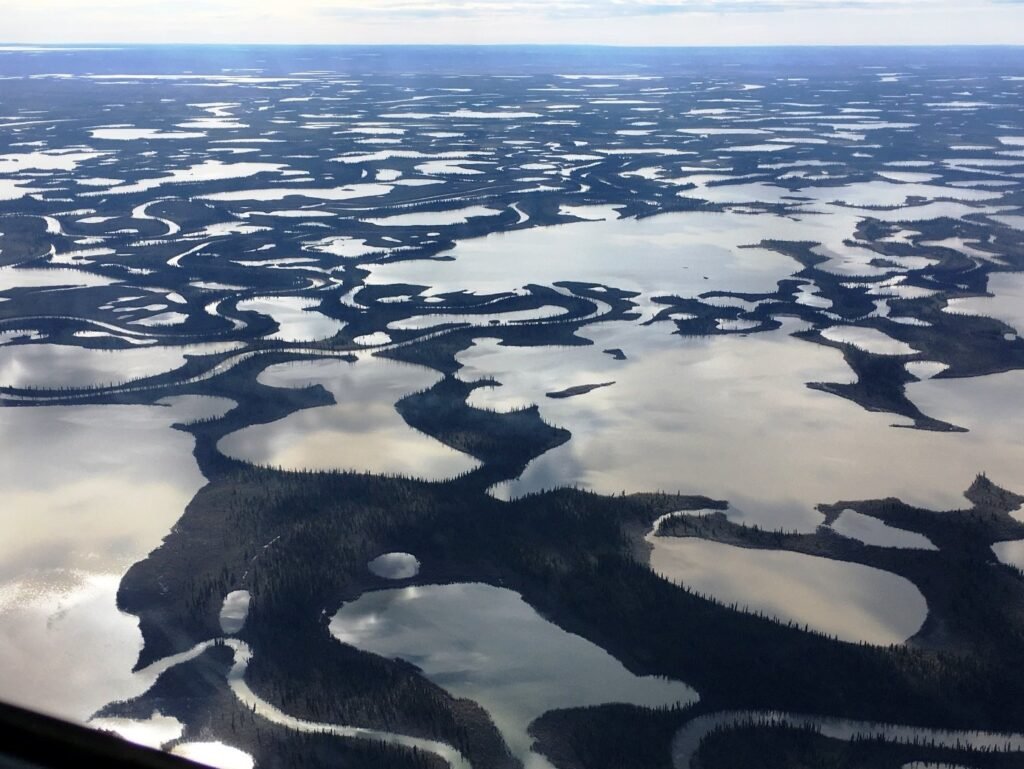
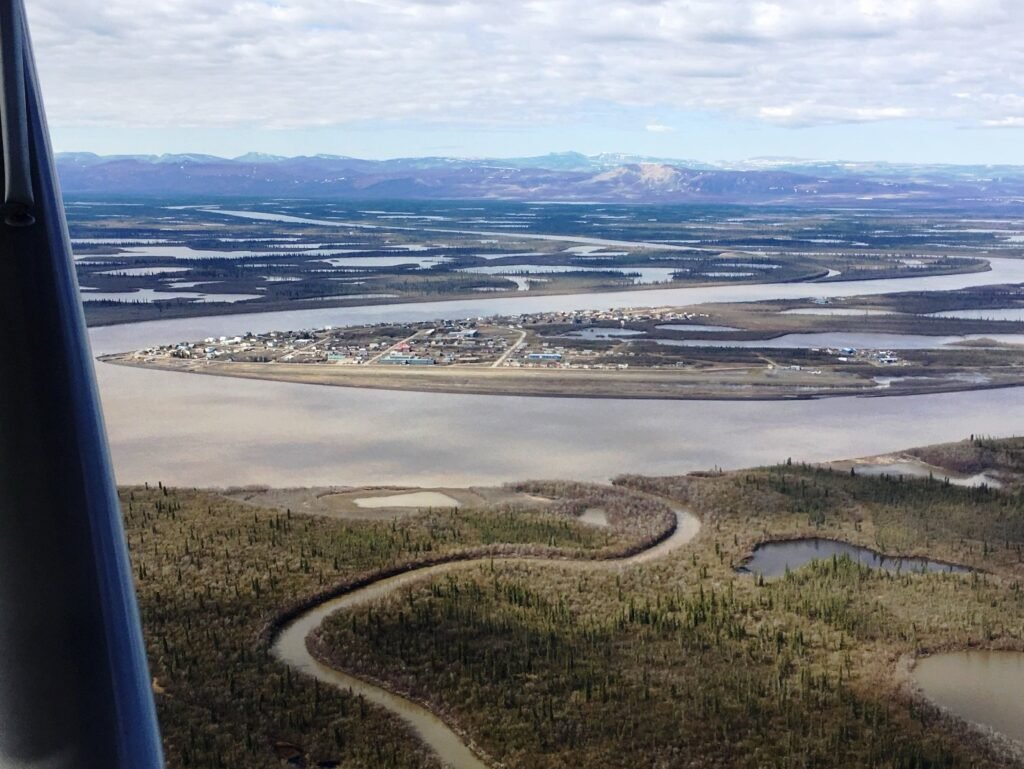
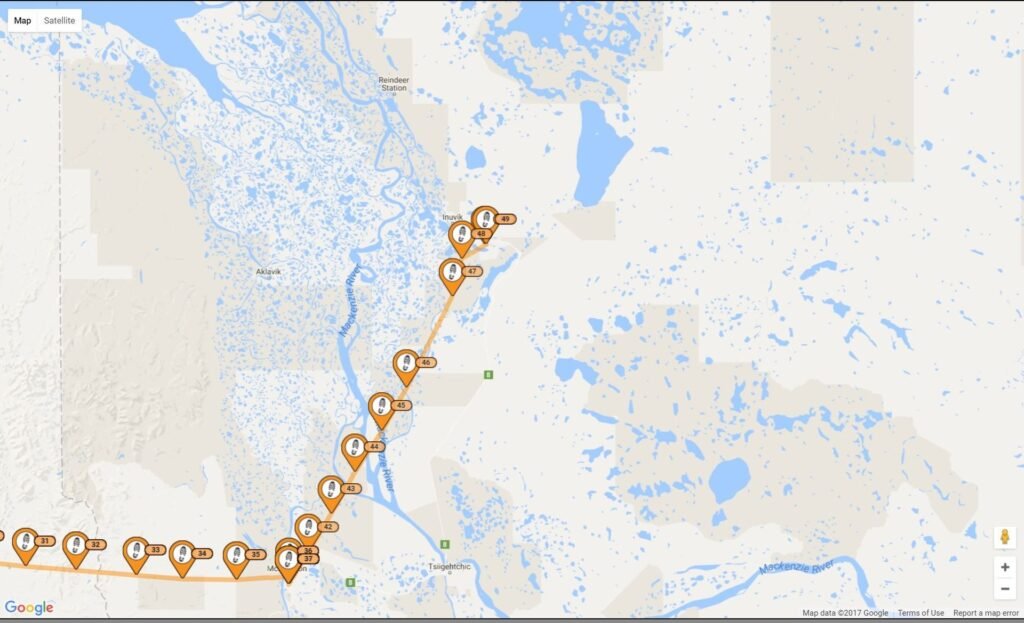
    The flight to and from Aklavik is only 15-20 minutes over the same delta of MacKenzie.

    Aklavik community is served by a twice-per-day commercial flight to Inuvik. Often these flights are cancelled, because there is obviously no precision approach here, and the weather is often below VFR. And if you get on the flight to Inuvik, be prepared to pay for these 15 minutes in the air an air face comparable to Vancouver to Toronto flight.

    But what we found out soon from the people from Aklavik, that these river waters are actually navigable. You can take your own boat from Aklavik to Inuvik or a “bus”. In winter, it turns into ice road, when you drive on solid ice over the river. When the ice reaches certain thickness, even big trucks can go on it! But the hard time is in-between: when the ice is not strong enough to support cars, but still does not let boats to navigate. With the global warming, the window when ice roads are usable shrinks every year.

    This is particularly important for us in the Canadian Arctic Aviation Tour. CAAT is the only Canada 150 project officially certified “Carbon Zero”. We are blessed abundantly by the mother nature in Canada. And one of the goals of the CAAT project is to make aware and educate, so that we can all together preserve it for tomorrow.

    Aklavik is actually the old/new Inuvik. Today it is a hamlet of appx. 700 people. But it used to be quite a bit bigger, and was the centre of the area. One day, government decided to found Inuvik, and moved people, schools, churches, hospital etc. from old Aklavik to Inuvik. But people loved Aklavik so much, that some of them returned right back and make Aklavik all over.

    This is not the only occurrence where the government did not quite think things through (or did they?). Grise Fjord community is another example. In 1952, politicians decided to exercise their sovereignty as far North as possible, and moved a number of inuit people to Grise Fjord, Nunavut. People were told that this was a temporary move, for a short period of time. But after the move, the government just left, and inuits in Grise Fjord had to survive on their own in the middle of the High Arctic wilderness. Since then, it’s the most Northern community in the country. What about Alert? Yes, it is further North, but it is a military base, not a community – so does not count.

    Another example? Residential school system. This is a system of boarding schools for indigenous people funded by Canadian government and administered by Christian churches. The official purpose was to assimilate children with Canadian culture and lifestyle, and give them the chance to have good education and career opportunities shall they choose to do so, incl. (primarily) contributing back to their own community. The sad truth was that often children were permanently separated from parents, and a culture foreign to theirs was forced on them.

    On the other hand, there are communities that have done pretty well for themselves. Old Crow’s 250 people are entrepreneurs and investors. They took a settlement from the government for their land, and currently own 49% of Air North airline. With this, they became self sufficient.

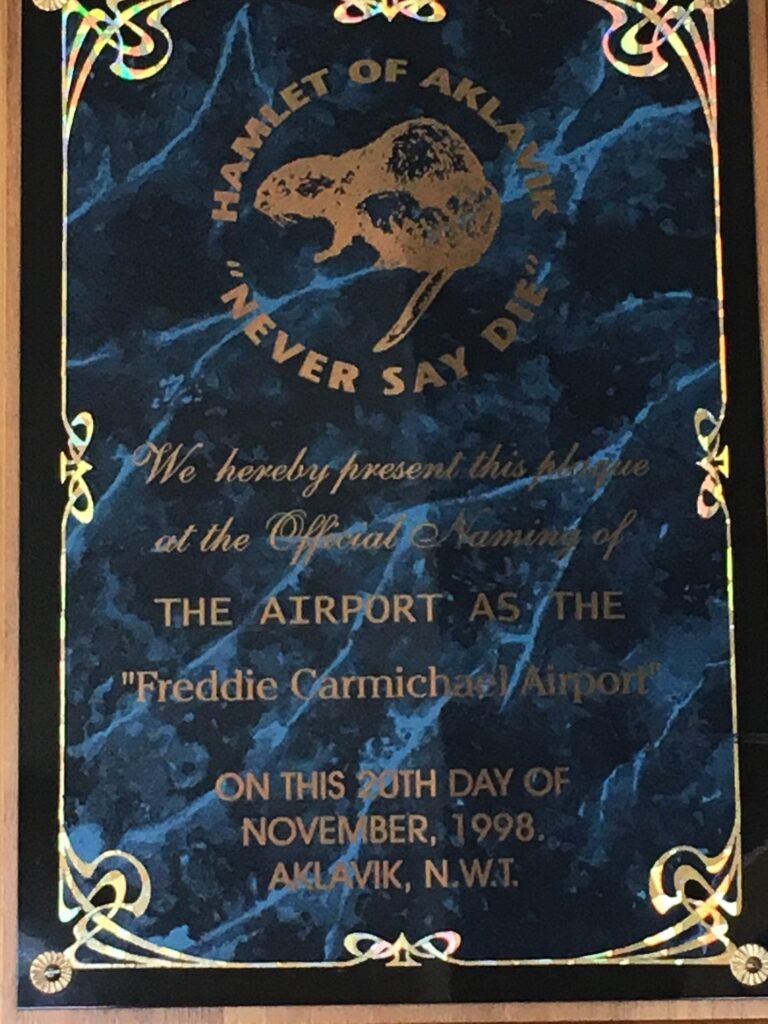
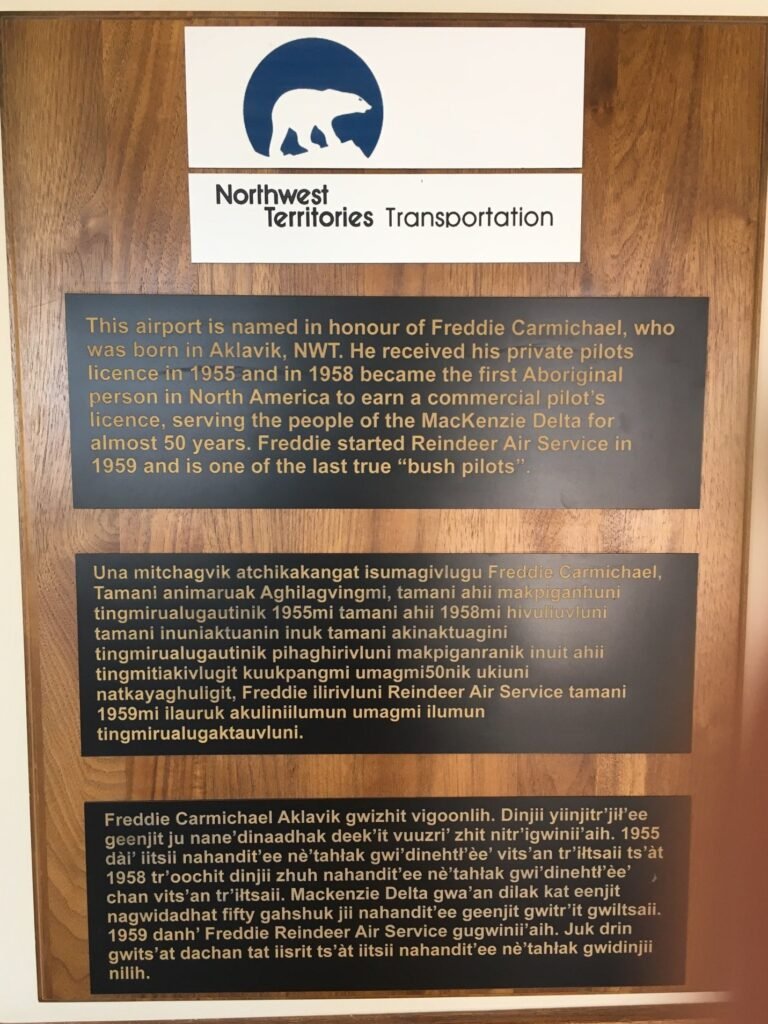
    The airport in Aklavik is named after Freddie Carmichael, the first indigenous pilot to ever get his commercial license – who came from Aklavik.

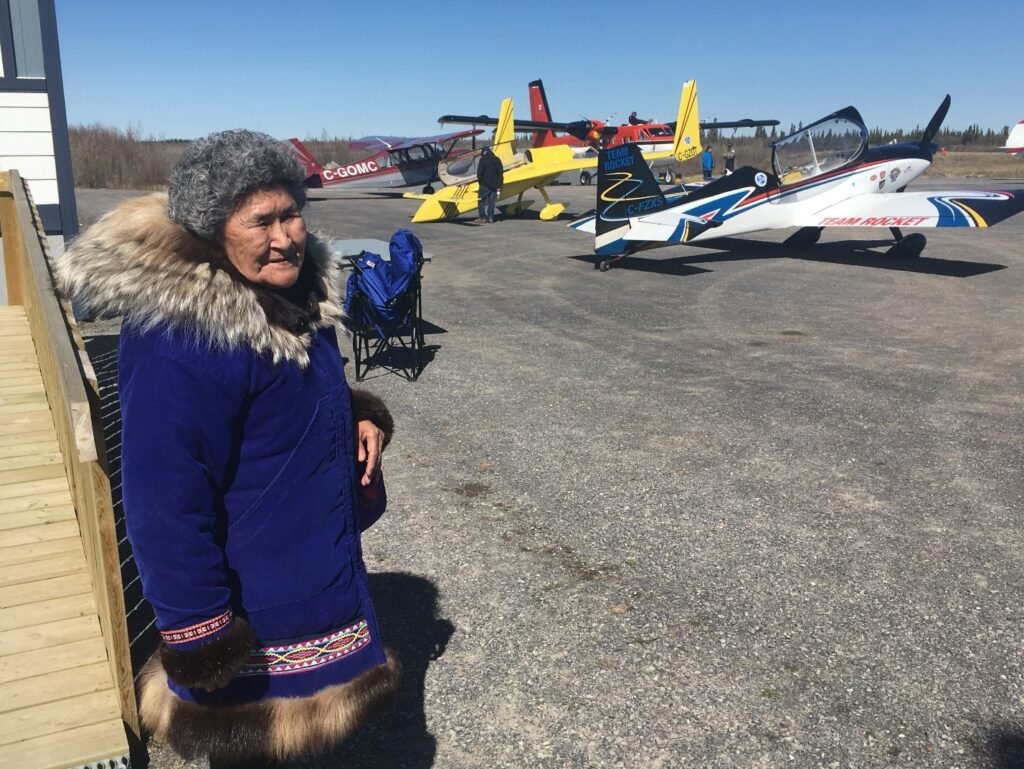
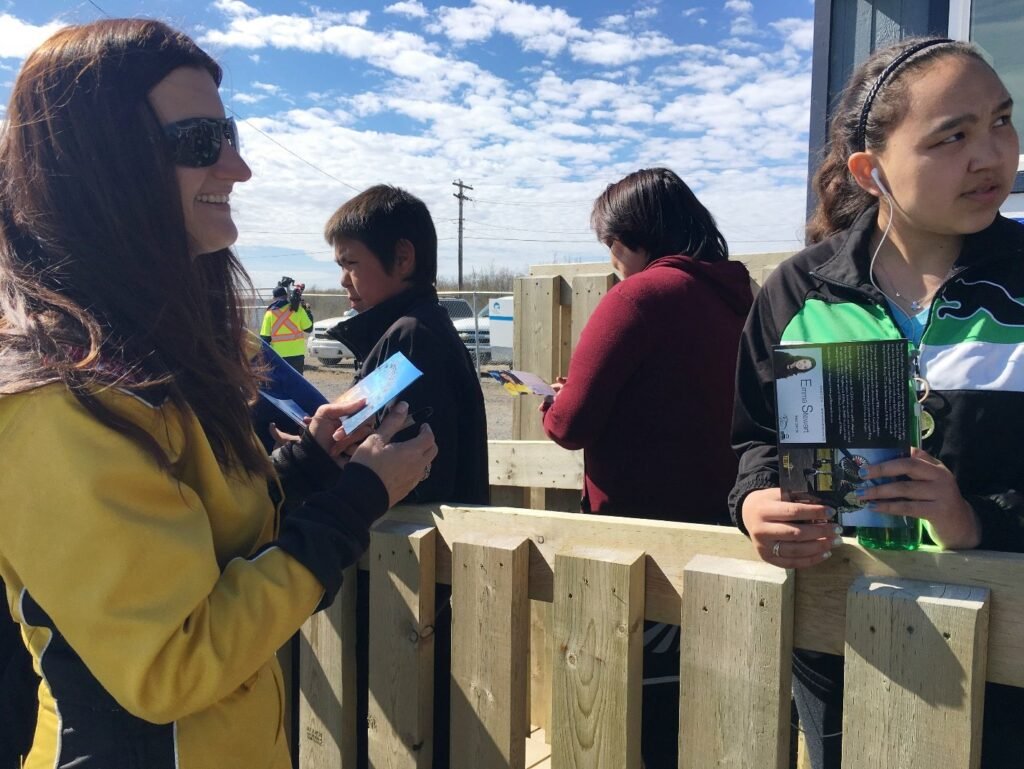
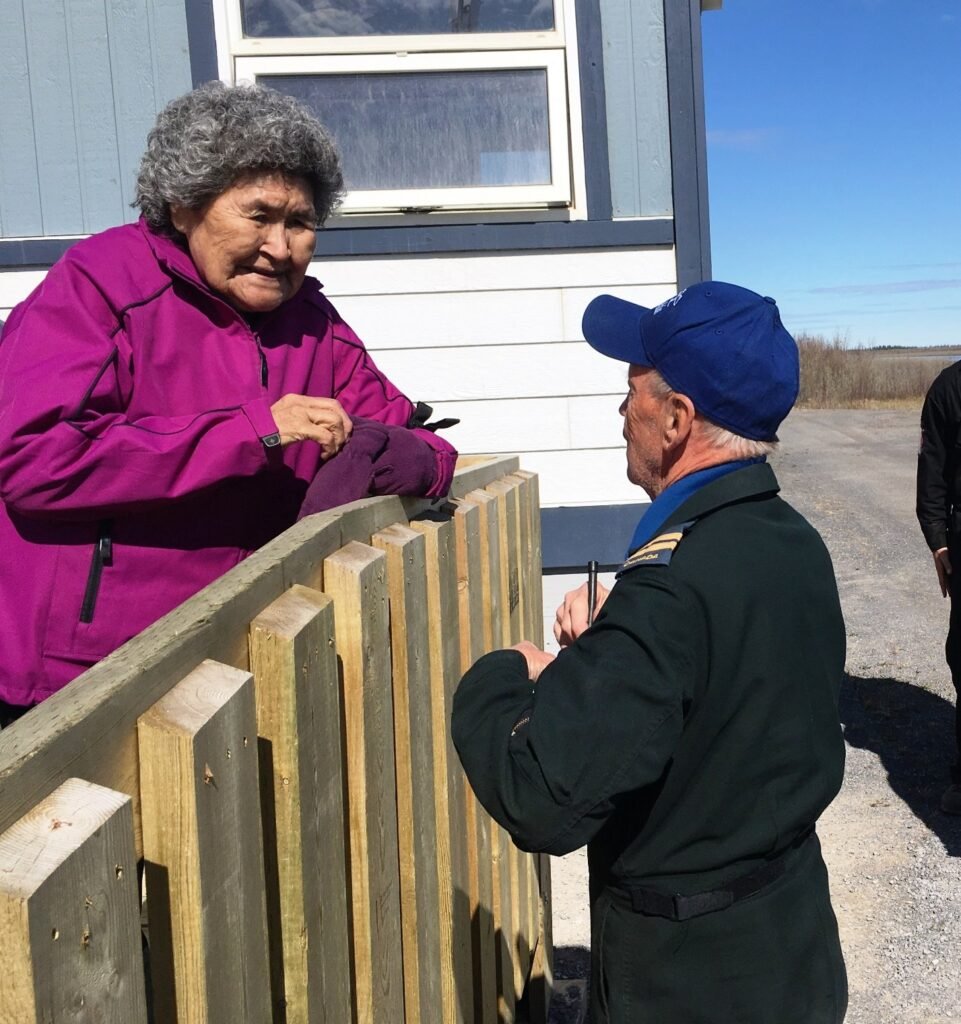
    The first person to greet us upon arrival (around noon) was Annie B, an elder. She was so excited about the airshow, that she was waiting for us since 9am. She shared with us that she has 14 children (10 of her own and 4 adopted), and she said that she has no idea anymore how many grandchildren she has.

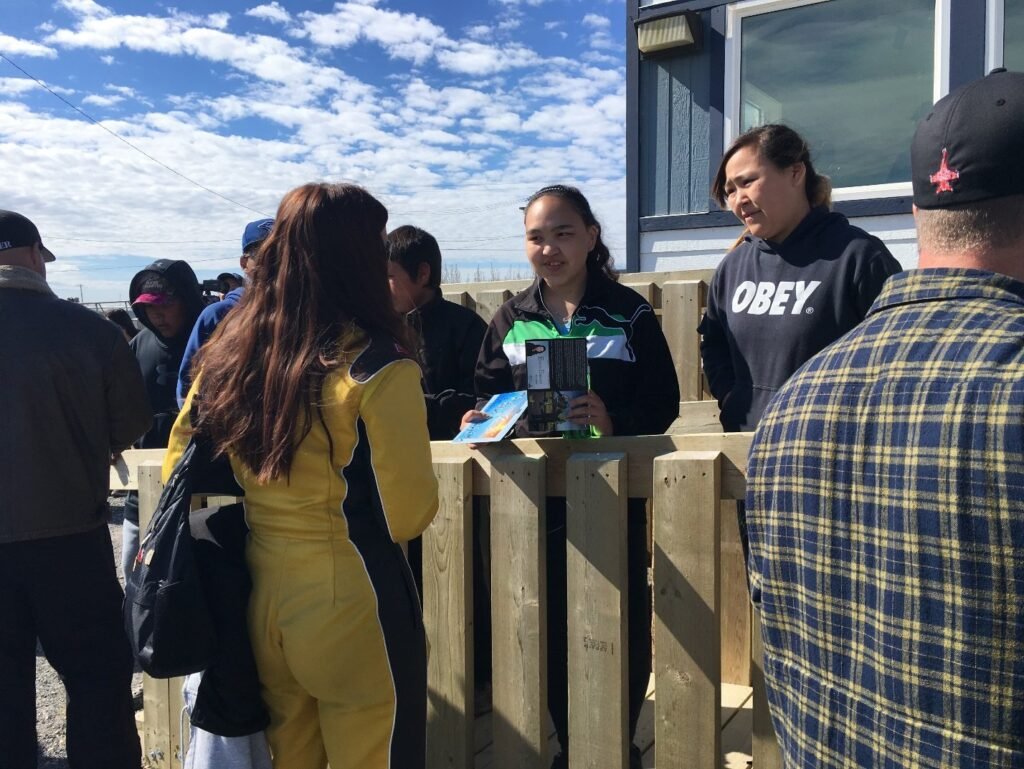
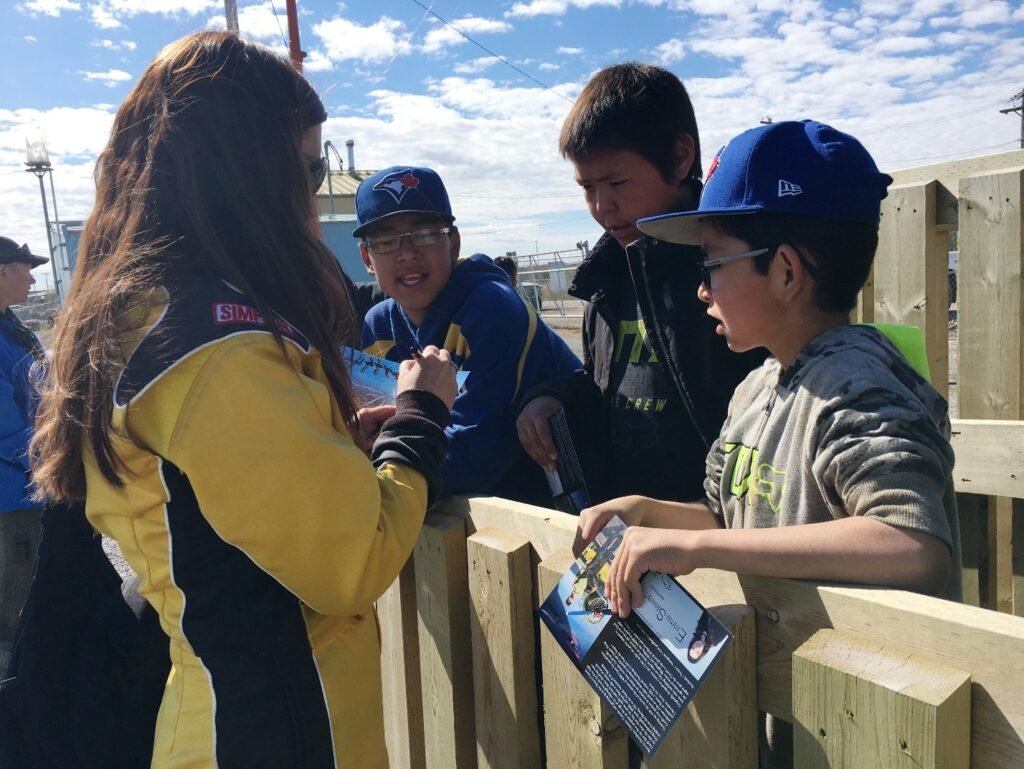
    Everybody else came to the airport shortly after they heard the planes coming.

    Annie B said right away that 80-year-old Bud is way too young for her!

    People are also here much more relaxed. Mario asked one of the local guys what time it was. That person replied: “I don’t know. I threw my watch away 20 years ago. I just know it’s early June”.

    Before the airshow begun, Annie B sang a prayer for the safety of all pilots.

    Eagle is a symbol of strength in the inuit culture. As Anna Sky Dancer as opening the airshow with the graceful sky dance, an eagle come and shared the aerobatic box, as if guarding and dancing wingovers in sync.

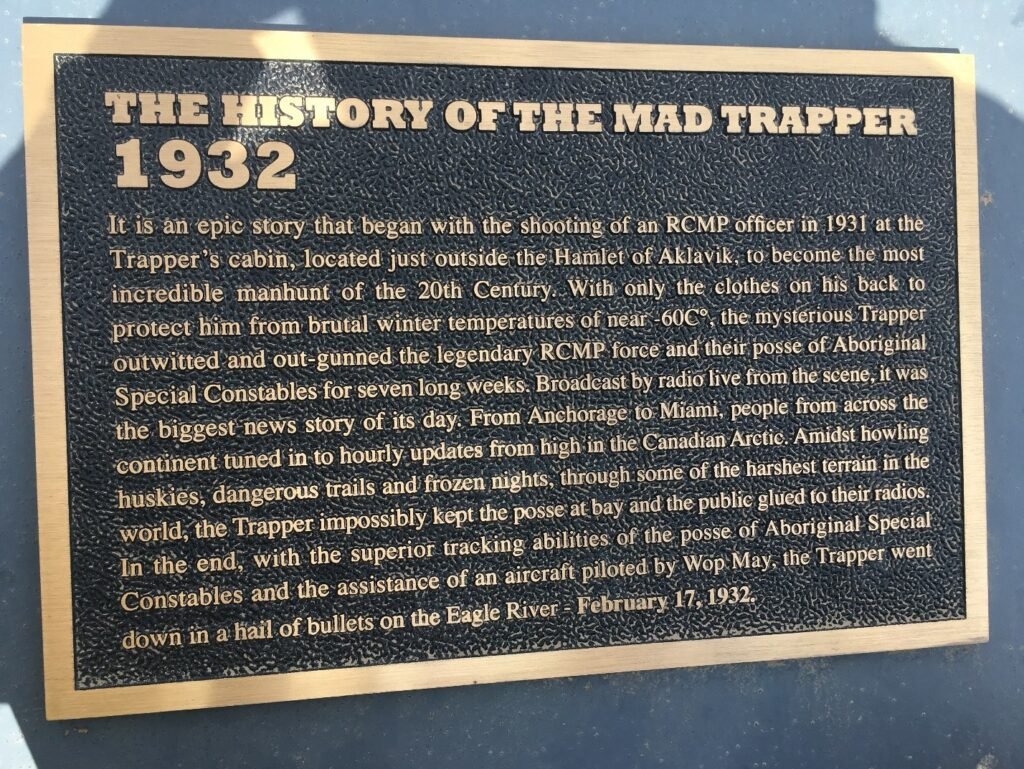
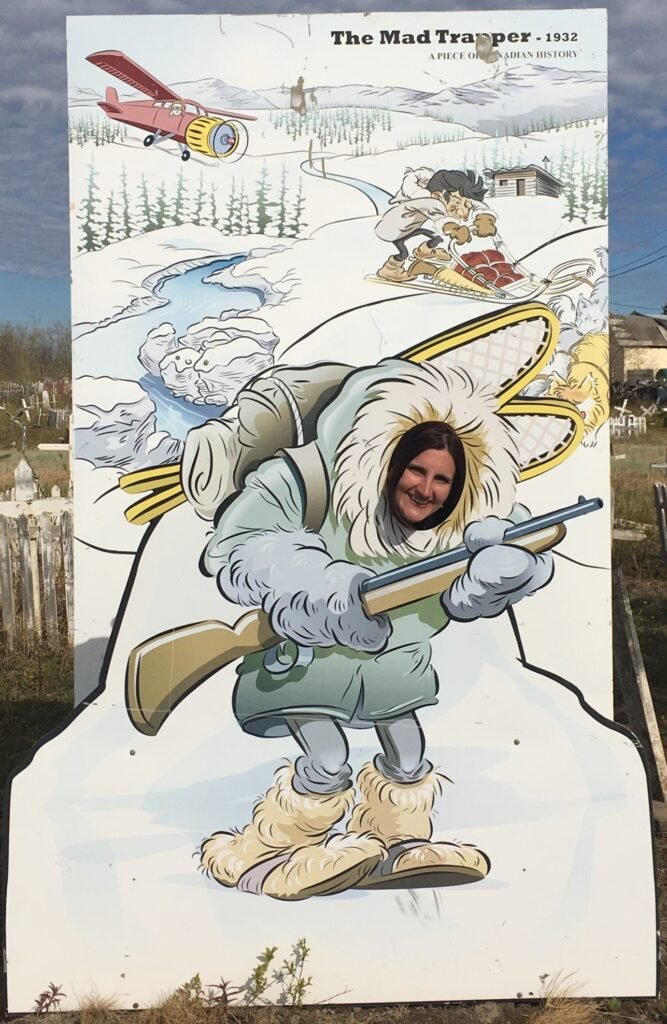
    Prior to departure, one of the local people invited us to drive around in his truck to show the town. For a small community of 700 people, we were surprised to see that they have a school up to grade 12, community centre and sports centre incl. swimming pool and hockey rink, health centre and 3 churches – Anglican, Protestant and Catholic. And a neat story of the mad trapper!

    It would be very true to say that when we returned to Aklavik that night, we left a piece of our hearts with the people of Aklavik. Ha ai! (“thank you from the bottom of our hearts”)

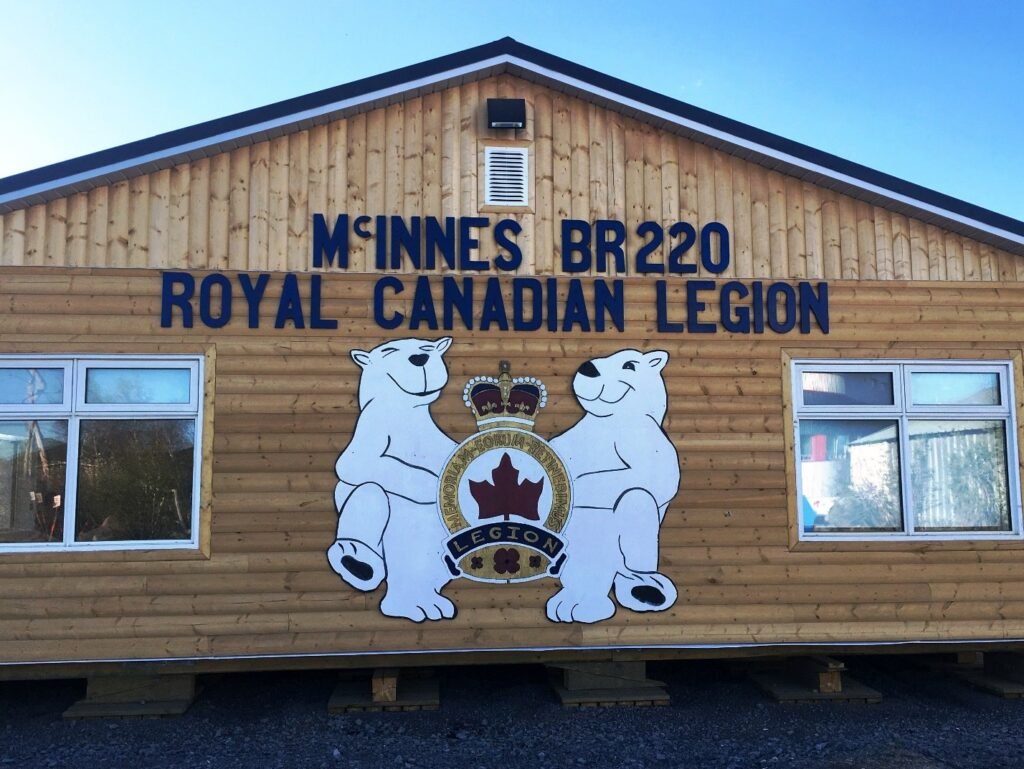
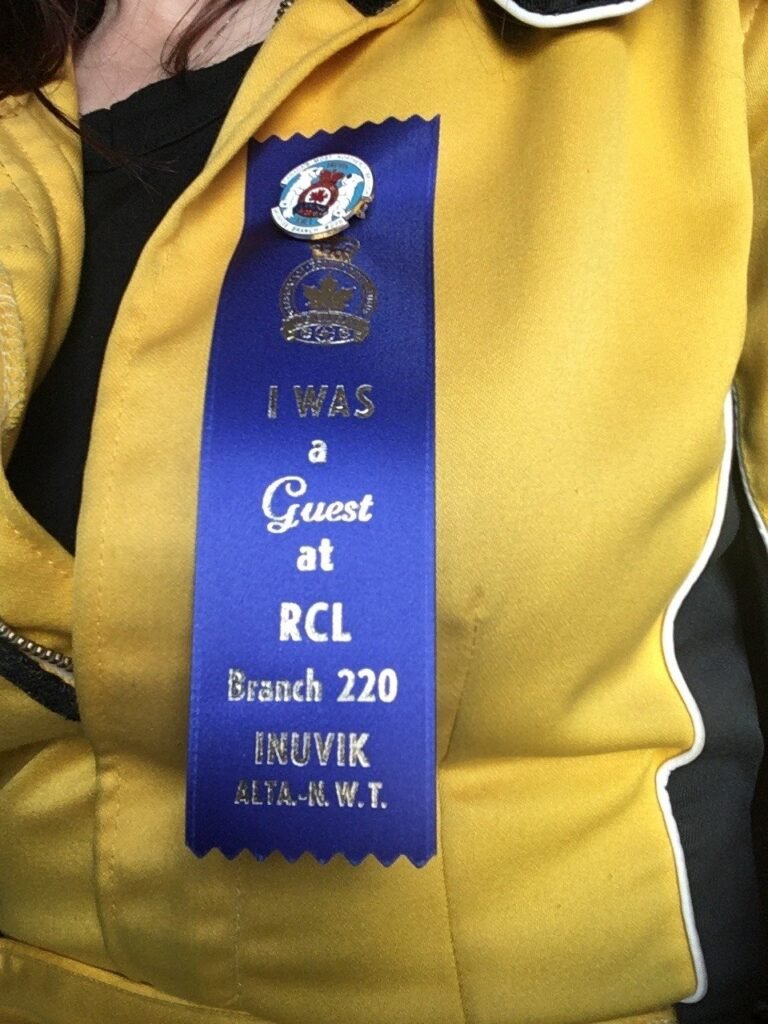
    Of course, all nights are young when the sun never sets. The CAAT team spent the evening at the most Northern legion in the country.

    David was the most welcoming host, and it was neat to hear some war stories. We also met at the legion some local sailors – read tomorrow’s blog on how that developed! 😉

    Canadian Arctic Aviation Tour so far:

    Distance flown: 1922 nm (3560 km)

    Airshows flown: 20

  • Day 8. Fort McPherson to Inuvik, NWT

    Day 8. Fort McPherson to Inuvik, NWT

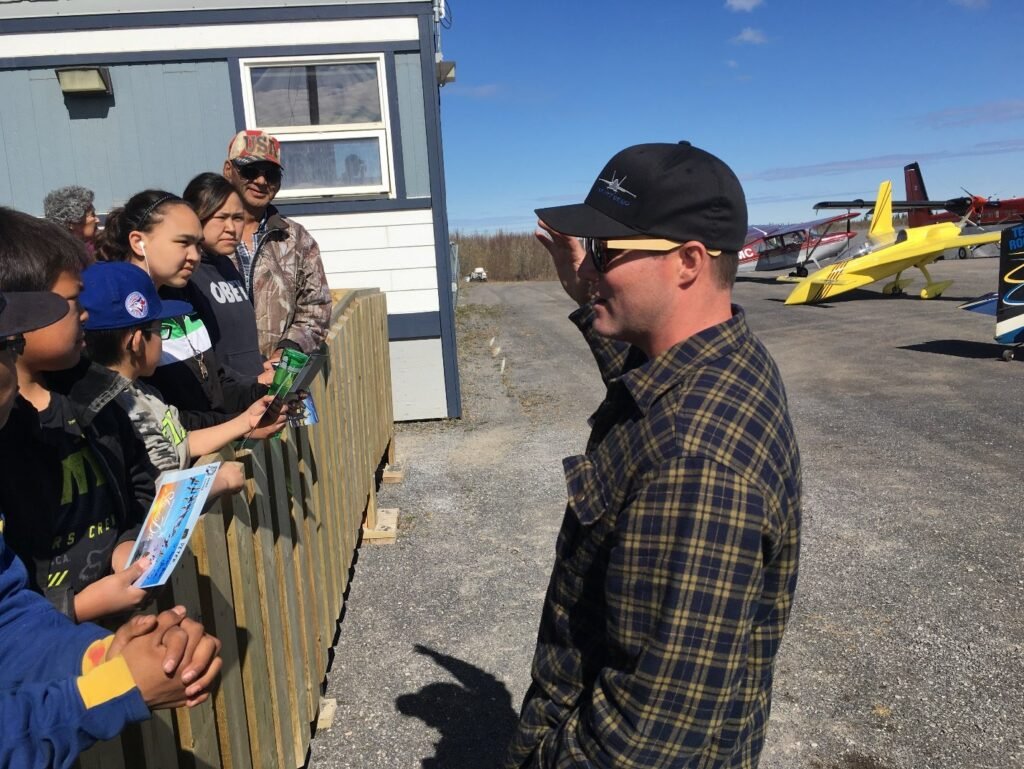
    Students asked questions about aviation, about jumping out of the plane, about how fast we fly and what years our airplanes are built.

    Even in a small community like this, the school goes up to great 12 and provides “graduation”, but often the technical knowledge and skills are not sufficient to pursue a chosen career. So to catch up, students often end up taking additional courses after school. Northern Lights College came up as a frequent post-graduate school choice.

    Later we also learned about the variety of population of Fort McPherson. It might seem mostly “native”, but it’s actually a mix of Gwich’in and Inuvialuit people. These two groups have lost-lasting tradition of not getting along, especially when inuvialuits were starving and had to steal the others’ stashed meat.

    But the past is the past. For the last 15-20 years Fort McPherson is actually the place where the two groups of people now peacefully coexist.

    On our next couple of stops, we will meet more inuvialuit people, especially in Tuktoyaktuk, who are famous for their throat singing.

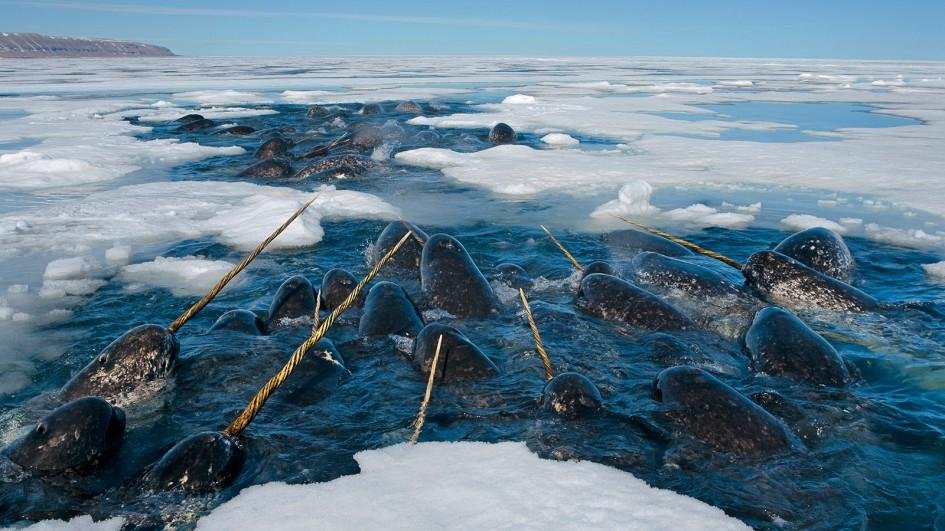
    And another priviledge they have in Tuk: only natives are still allowed to hunt nahrwhals. Nahrwhals (unicorn whales) are pretty much the underwater unicorns. They use their long and strong horn to wack the fish, that they will shortly after leisurely catch and eat.

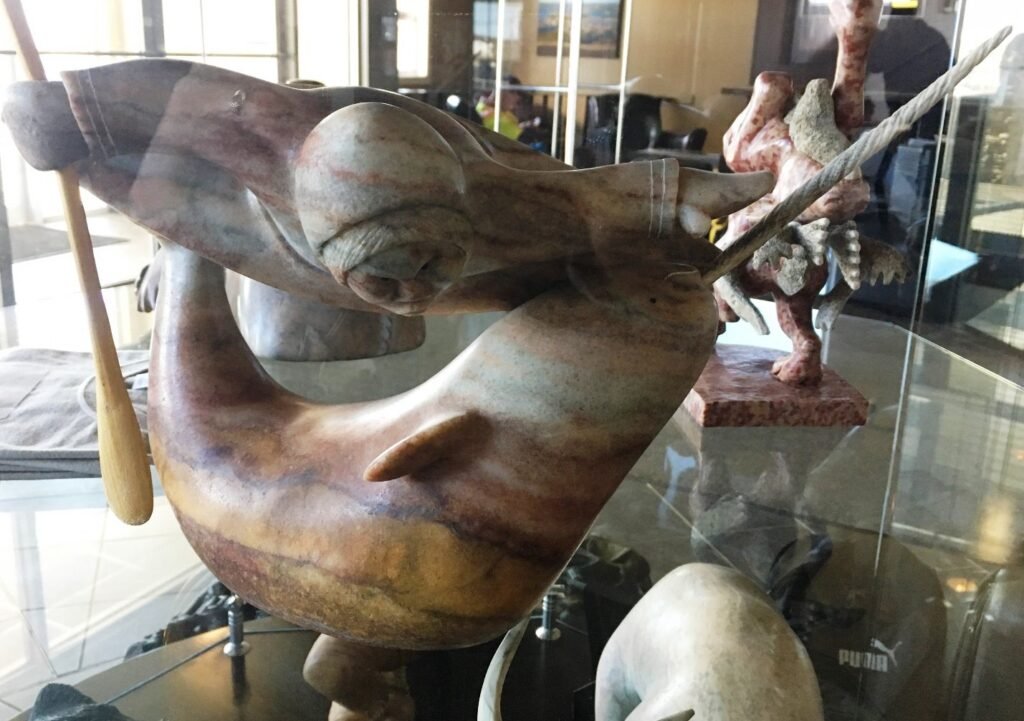
    Nahrwahls live in the Arctic Ocean. They are beautiful, rare and protected. But the natives are still allowed to hunt them – but in a traditional way only: spear fishing from their kayaks. Considering the size of Nahrwals, it will be quite a challenge. Our hotel lobby in Inuvik had a beautiful carving of this hunting scene.

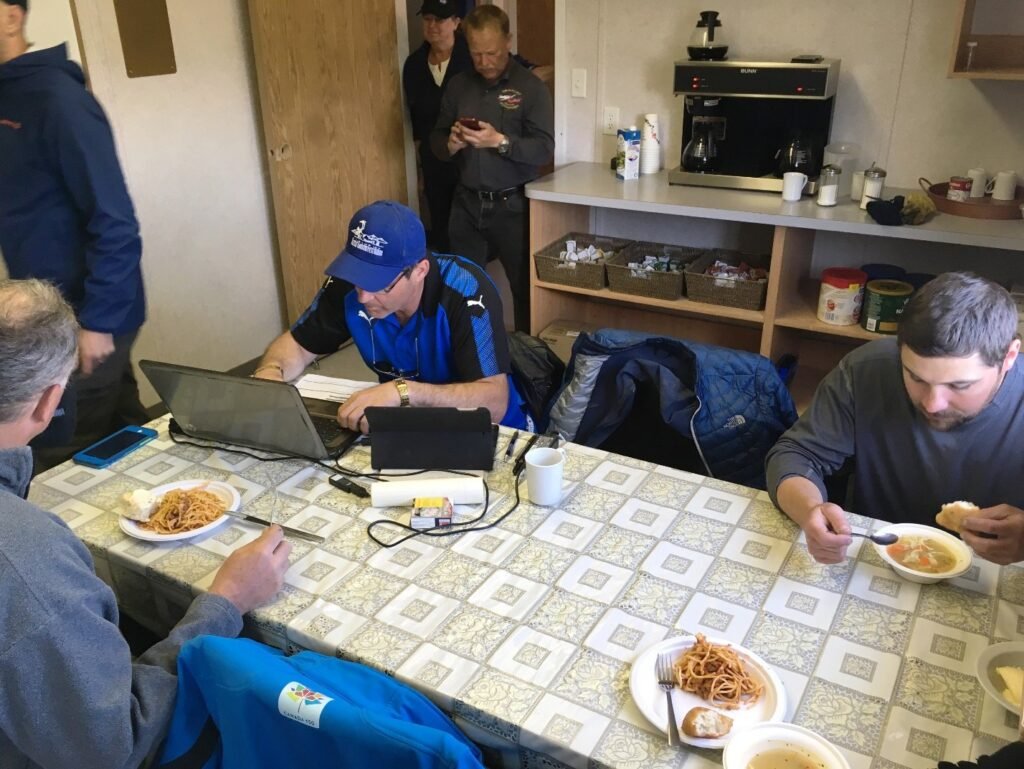
    Local man camp in Fort McPherson invited us for lunch. The highlight of it for me was discovering the delicious “banik”. What looks like a simple bun, is the most delicious fried thing that can go with a warm soup – especially when it’s +2 degrees outside and strong wind!

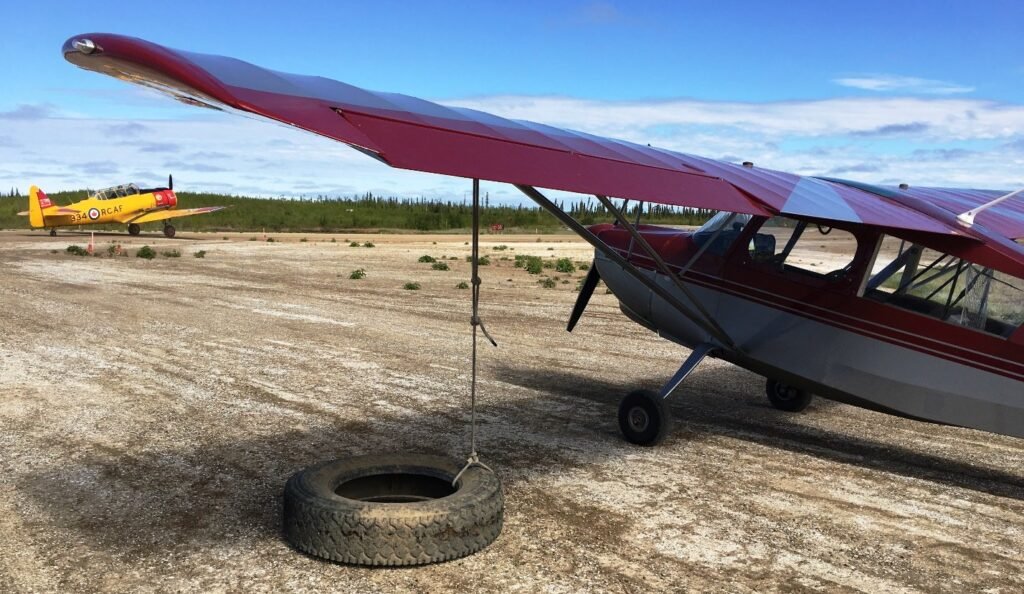
    We shortly after commenced the airshow. As you can tell, in the absence of tie downs, never hurts having a spare tire 🙂

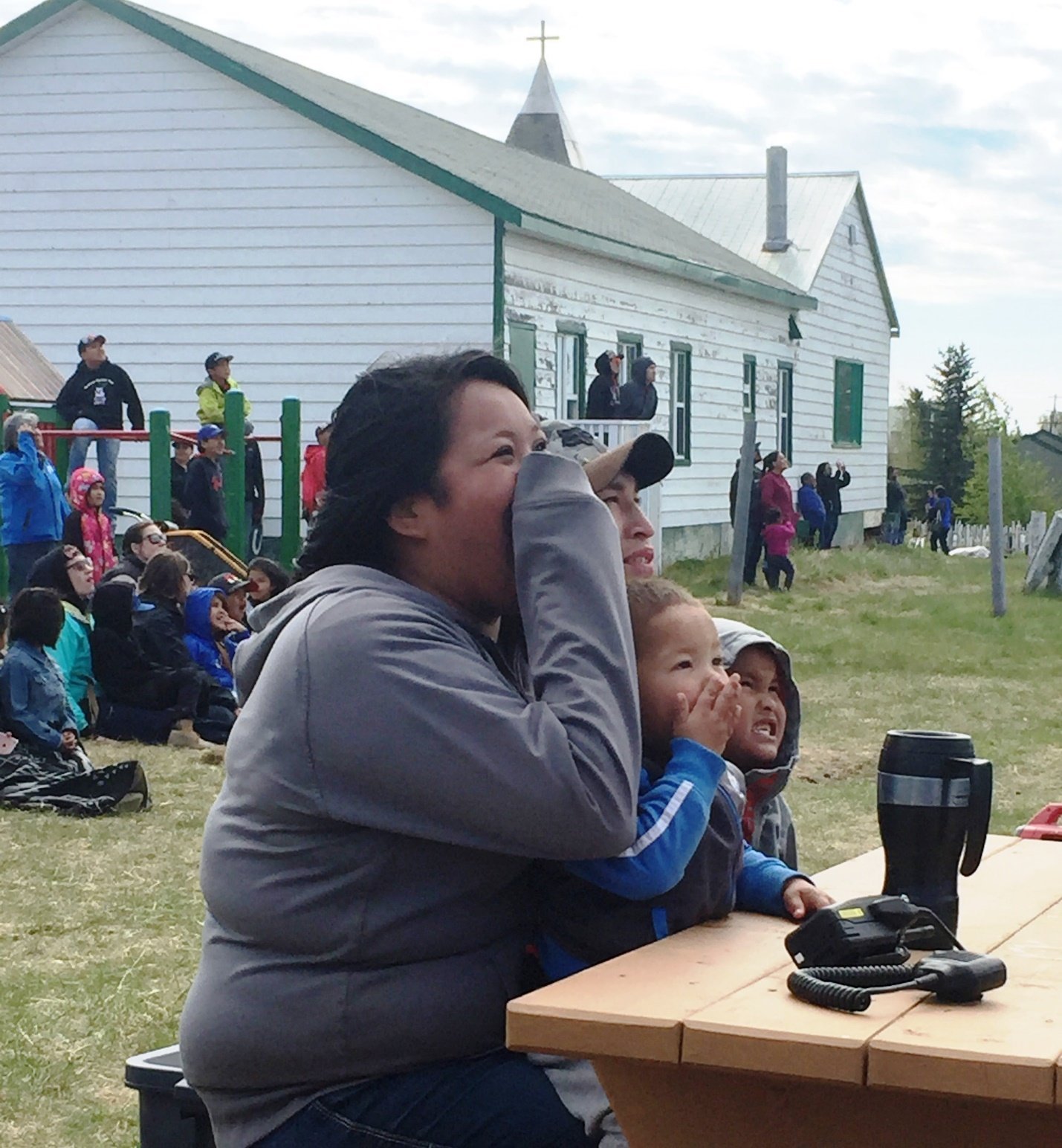
    The show was over the river, and – as usual – we had 100% attendance. The excitement was unstoppable! And – who knows! – maybe there are a couple of air bosses that we will soon see coming from here!

    Thank you Fort MsPherson for a very warm welcome! Mahsee Cho! Shortly after, we took our “Flying Circus” back on the road. Pardon, in the air. By the way, we figured that we are probably the first flying carnival since the 1950s times of barnstormers! The flight from Fort McPherson to Inuvik was short and beautiful. With one wheels-up show on the way (we have to make sure not to miss any community North of 60th!), we had a chance to enjoy the gorgeous delta of MacKenzie River.

    Inuvik is a 3500 people town, but it used to have up to 10 000 people living here. If is a local “bigger” town, with commercial scheduled service at the airport, a hotel and a few stores. Although there’s some industry here, most of its citizens are natives. This is the place where first nations meet inuit. Winters are here cold, but beautiful.

    It seemed like we felt every frost heave on our drive from the airport to town. But outside down, it has its very special beauty.

    Canadian Arctic Aviation Tour so far:

    Distance flown: 1852 nm (3430 km)

    Airshows flown: 19

  • Day 7. Dawson City, Old Crow, Fort McPherson

    Day 7. Dawson City, Old Crow, Fort McPherson

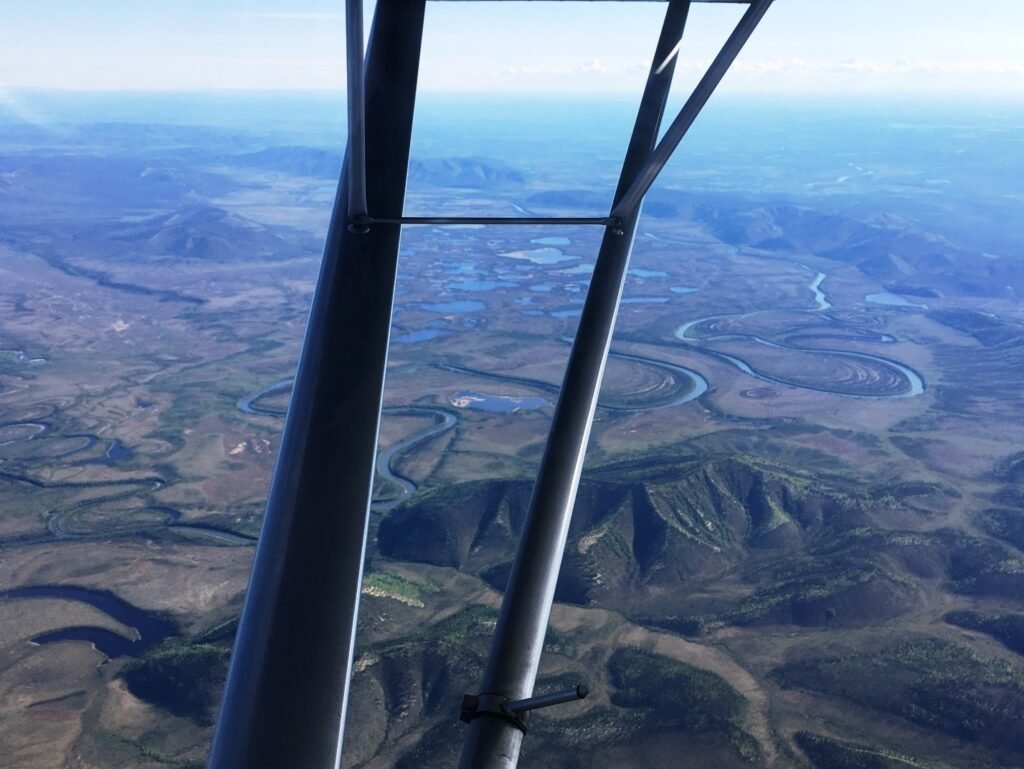
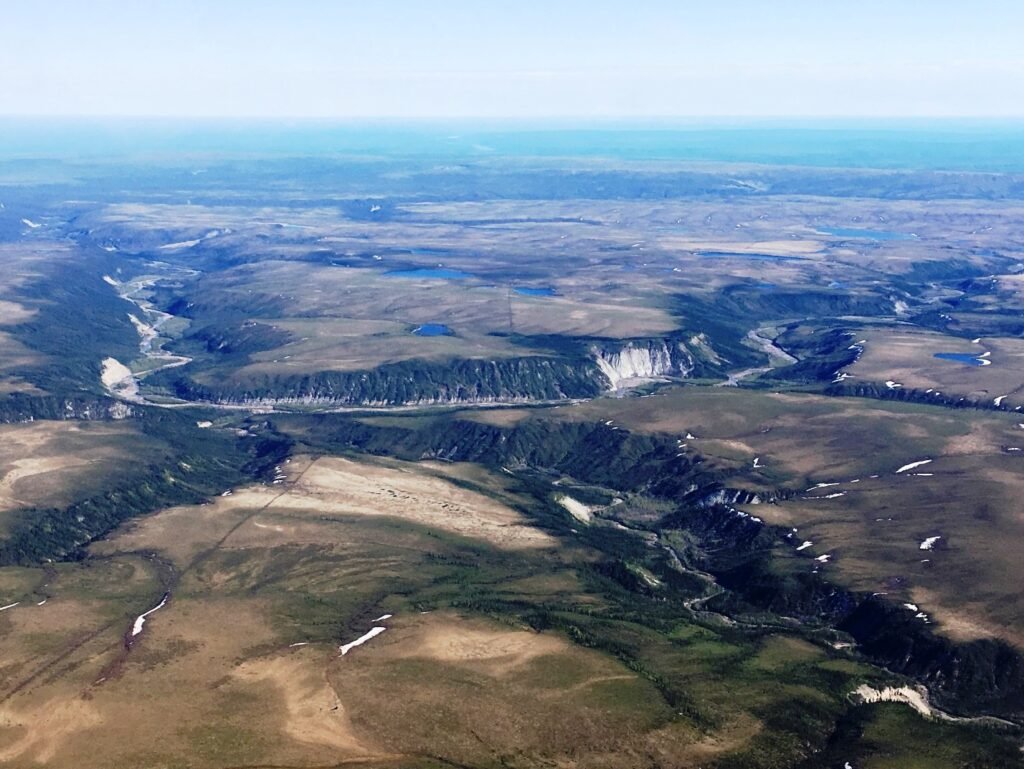
    The scenery transition over this 230 mile leg was tremendous, and now we are officially North of the Arctic Circle. And also North of the tree line. There is a “tree line” going up in the altitude, and there’s a tree line going up North. In this area, the ground has too little nutrition and frozen most of the time, so no vegetation bigger than shrubs has a chance of growing full size here.

    On final, the airport advisory reminded that the winds (and everything else) is now in True rather than Magnetic.

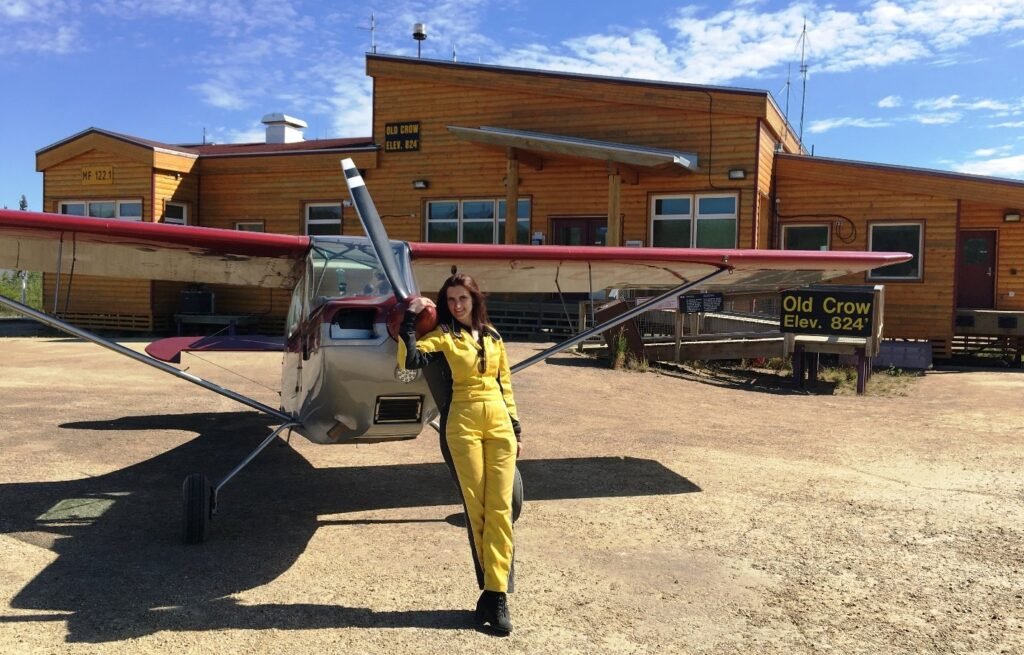
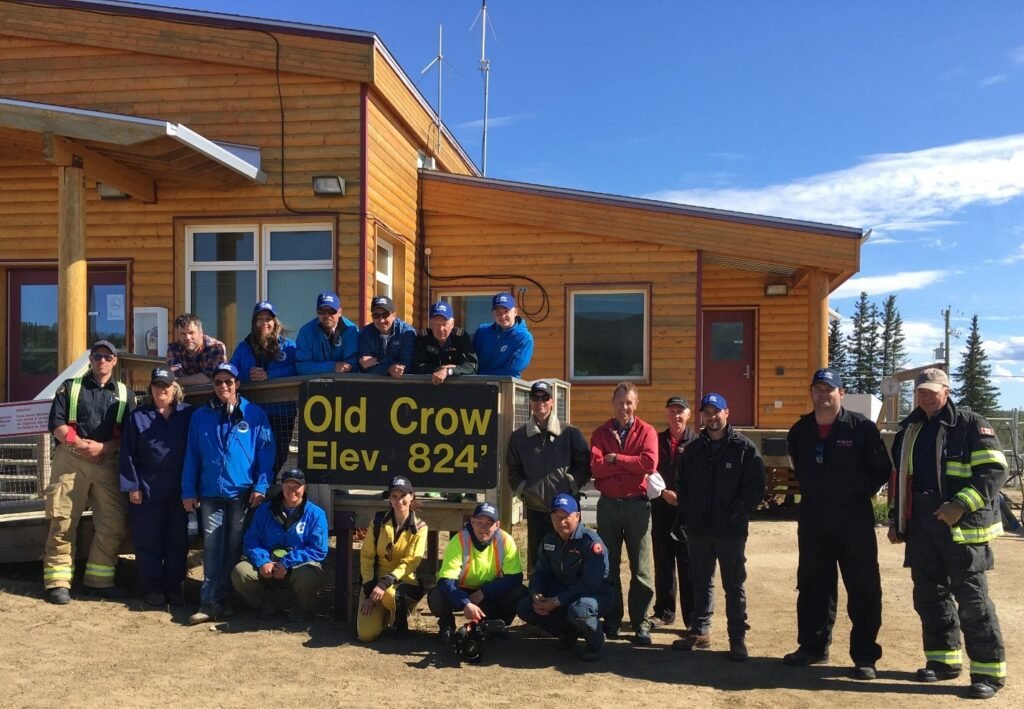
    Old Crow is the most Northwestern community in Canada. This is our 17th airshow, but it is the first one in a community without a road access. The lifeline of the 250 people living in the community relies entirely on the access by air.

    After we landed, the airport radio advisor lady came out and jokingly with a smile pointed to her grey hair “You gave me this! This is the biggest airport traffic I have ever seen in here”. The fuel guy was in tune when I asked for fuel and found out he already left for the day. When we called him and asked for gas, he said “How come? I already fueled one plane today.”

    The airport building interior had a native touch to it:

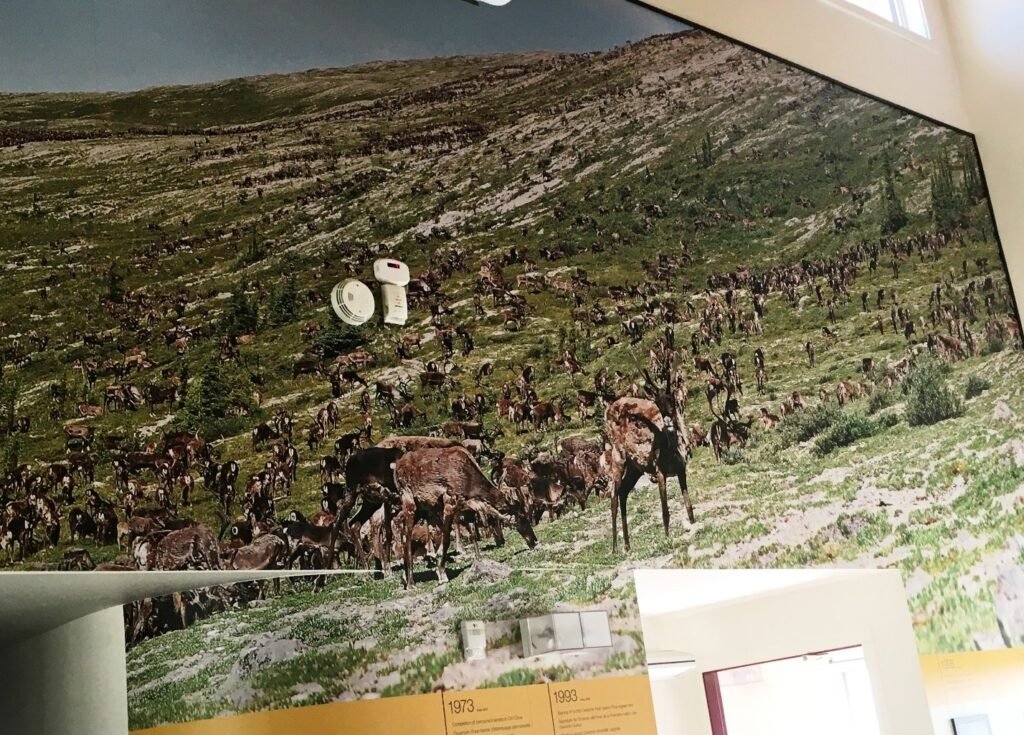
    and spectacular view of the Porcupine Cariboo Heard migration.

    The airshow went great and was received with the greatest excitement. This is the first airshow ever in Old Crow. The entire community closed the stores, court, school and all other activities for the airshow. We totally had 100% attendance!

    It started with the National Anthem – and it felt so special that I was singing it in the cockpit too while orbiting. Then Anna Sky Dancer had the privilege of opening the show with the maiden airshow of the citabria.

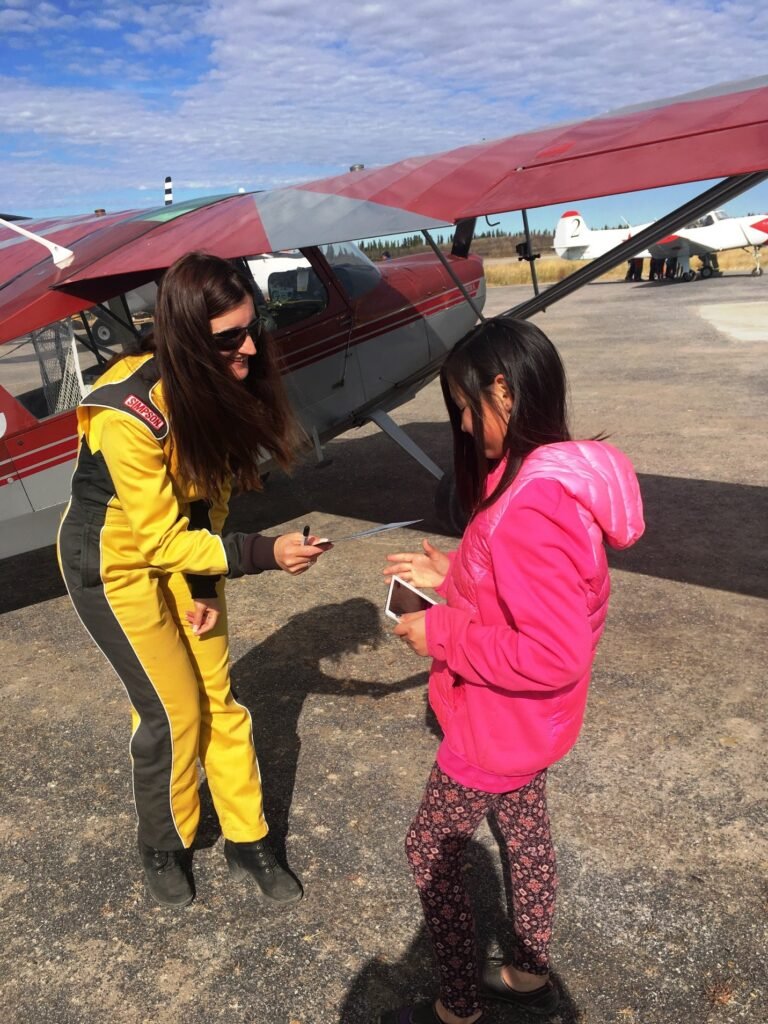
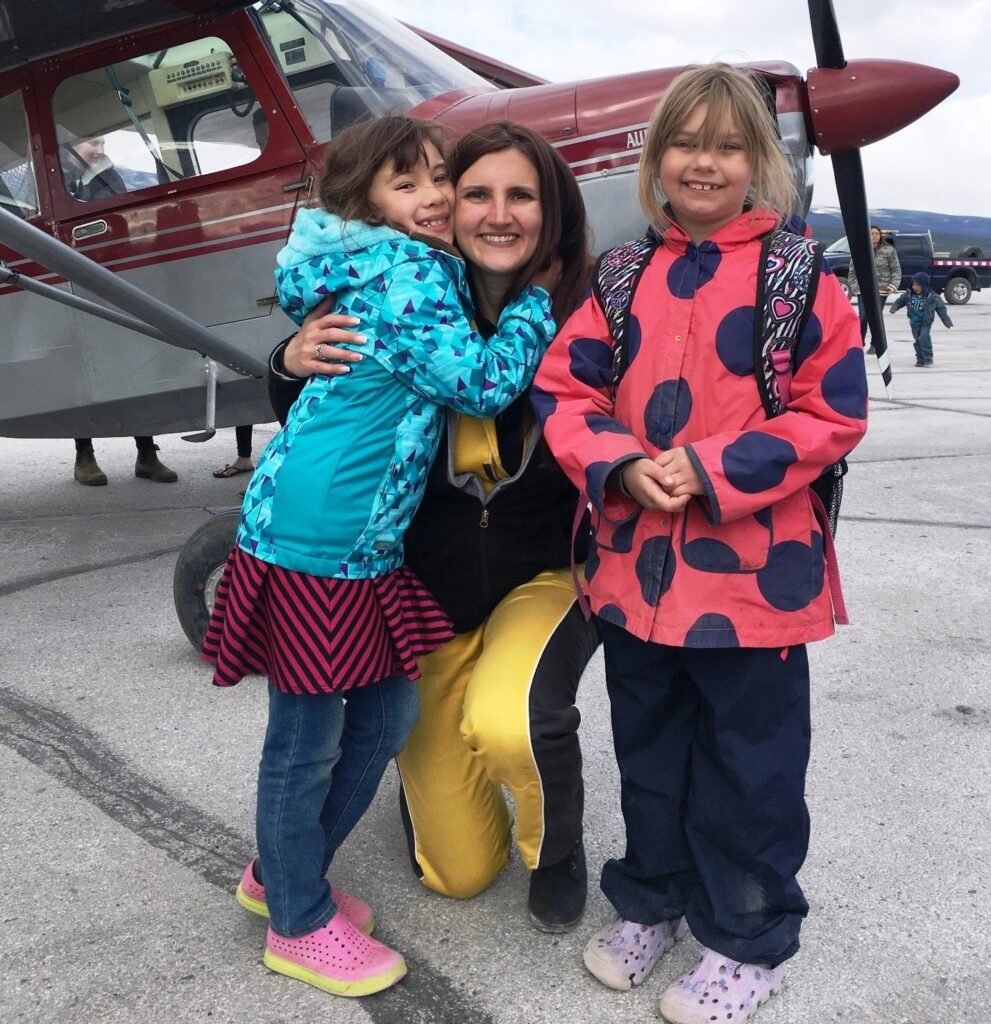
    After the show, the spectators had a chance to check out the planes up close. Kyle’s “banana plane” was one of the kids’ favorites. And a few curious future aviators were asking a lot of questions.

    With the Chief of Band (on the right):

    So somewhere through the static display I chatted with the local girls about the native art that I am very interested in. They said that a very traditional item to get would be a pair of moccasins, preferably made by a local artist. I asked if I can find some of those in Inuvik, one of our next stops. “Yes, – they said, – but not as nice as here in Old Crow”. (Yes, Old Crow did not in the past cross my mind as a primary place for shoe shopping, but I can change my mind) Ok, can I find some here? “Usually you need to order them, and then they make them to size to fit… But let us see what we can do!” About half an hour later they came back with a true masterpiece!

    This is a pair of moccasins the local famous artist made for the Duchess of York who was traveling and visiting here a little while ago. But the royal family made a firm “no gifts” policy, so these beauties stayed behind. This is rabbit fur and moose hide – and still smells smoked from the hand-made finishing of the hide. But the most amazing part is the beading ornaments, the beauty, the precision and the incredible beauty put in it by the master.

    When the girls brought it for me, I was in owe. “But they are very tiny”, they said. It was a breathtaking moment. I put them on – and it was EXACTLY my size!

    We left Old Crow in love with the place and very much connected with the people of it.

    We left Old Crow in love with the place and very much connected with the people of it.

    The short trip to Fort McPherson was uneventful, other than the reminder from the Flight Services that any trip North of the 67th parallel (which we are), even a circuit, requires a fight plan.

    And we were right away welcomed by a few of the local 600 excited citizens:

    The community welcomed us in their community center with a wonderful home-made dinner.

    Canadian Arctic Aviation Tour so far:

    Distance flown: 1773 nm (3284 km)

    Airshows flown: 17

  • Days 5 and 6. Whitehorse and Dawson City, YT

    Days 5 and 6. Whitehorse and Dawson City, YT

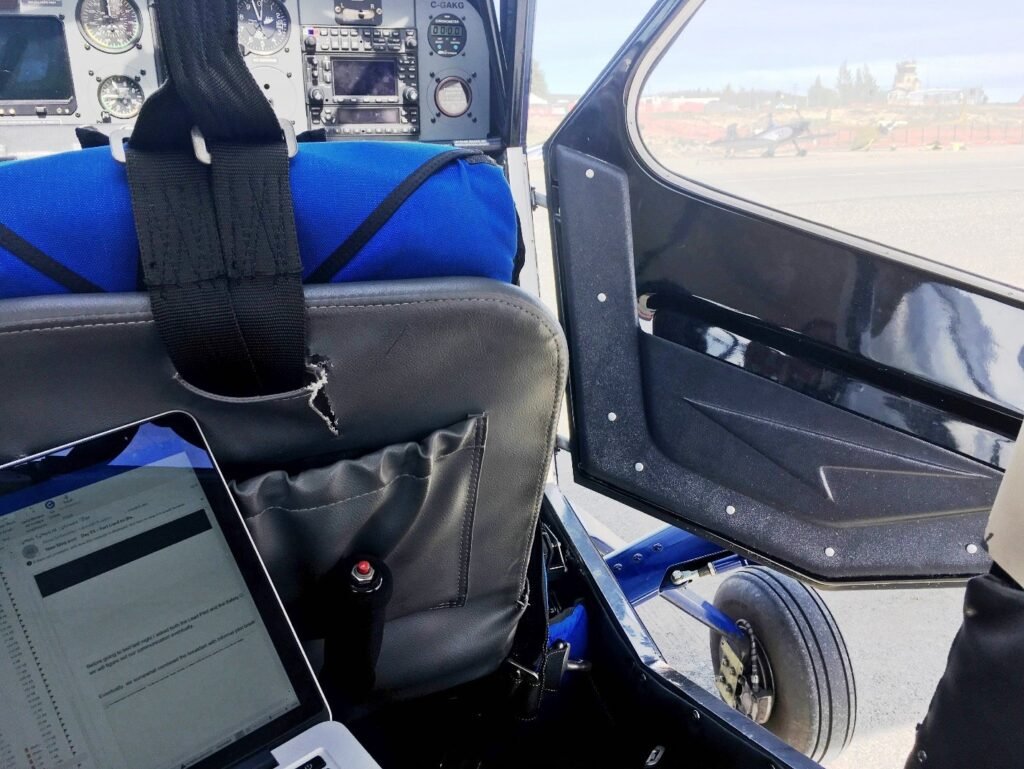
    Whitehorse airshow day started as usual, incl. the weather briefing that did not include anything special – blue skies and winds below 10 kts. Just the way we want it for an airshow! While waiting for my turn to fuel, I spent some time in my “office”.

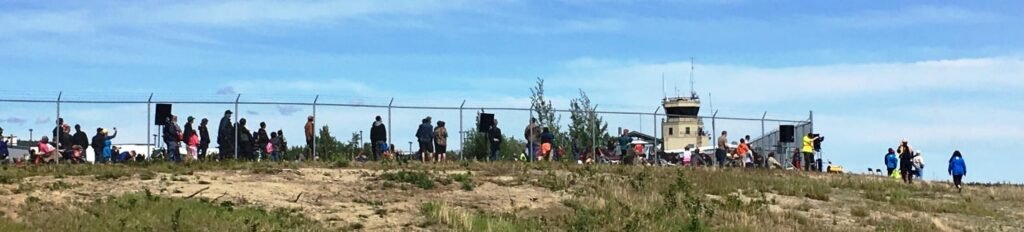
    The attendance was good and people were excited. I think at this airshow we’ll get most of the population of Yukon Territory: out of 40 thousand people living in Yukon, 37 thousand are in Whitehorse.

    Unfortunately, the day did not continue as planned. Brent had an oil leak and had to abort the take off on his performance. My decathlon went mechanical after the show was completed. My first thought was that my Tour was over, and I will never swim in the Arctic ocean. But that have a chance to experience the true support of the team, Northern hospitality and the people who are in it with you together. The local AME Justin came right away see me, and took my blue baby in his hangar. After having done research, we now estimate the decathlon back online in a couple of weeks. I couple of local people supporting the Tour offered me to drive, eat or stay with them if I had to stay longer.

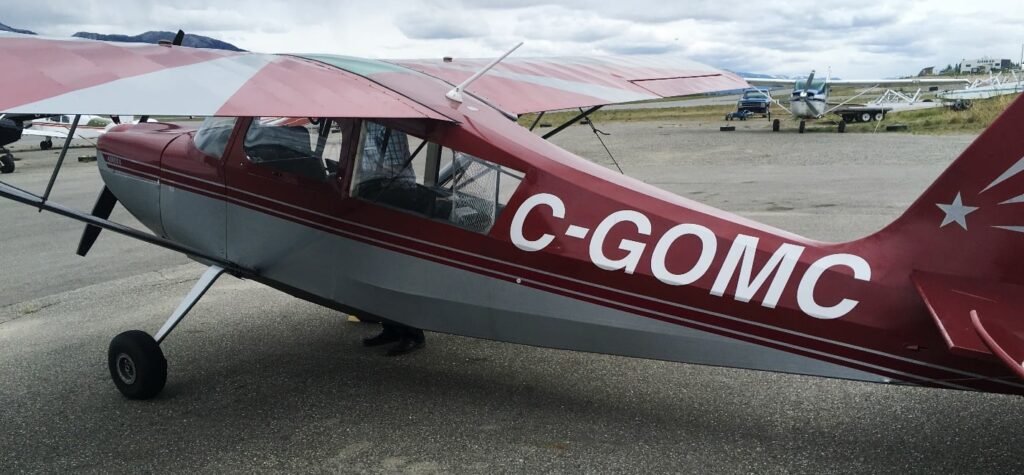
    The entire Arctic Tour team was extremely helpful and proactive. With citabria as a backup plane, all paperwork for it was done quickly. Our home mechanics worked until 11pm on Sunday to get it ready, and the pilot was airborne Whitehorse-bound with the sunrise on Monday morning (which is around 5am these days). Interesting fact is that despite the decathlon cruising faster, citabria can actually travel about 100nm further without having to refuel. Anyway, twenty-four hours later I was back in the Tour with a faithful 125 horsepower little red citabria.

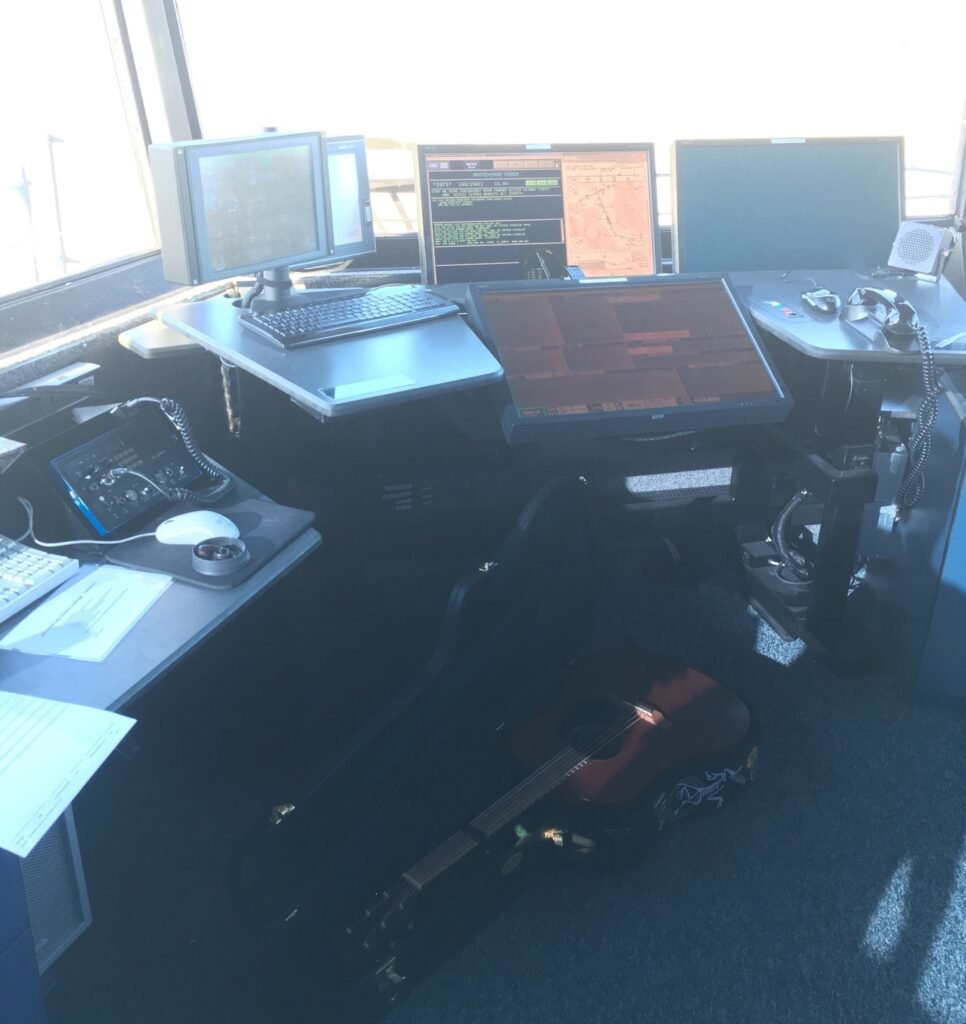
    A quick visit to the Nav Canada tower for weather briefing (that guitar is there literally “under the radar”)

    and two hours later, I reunited with the CAAT team in Dawson City, YT.

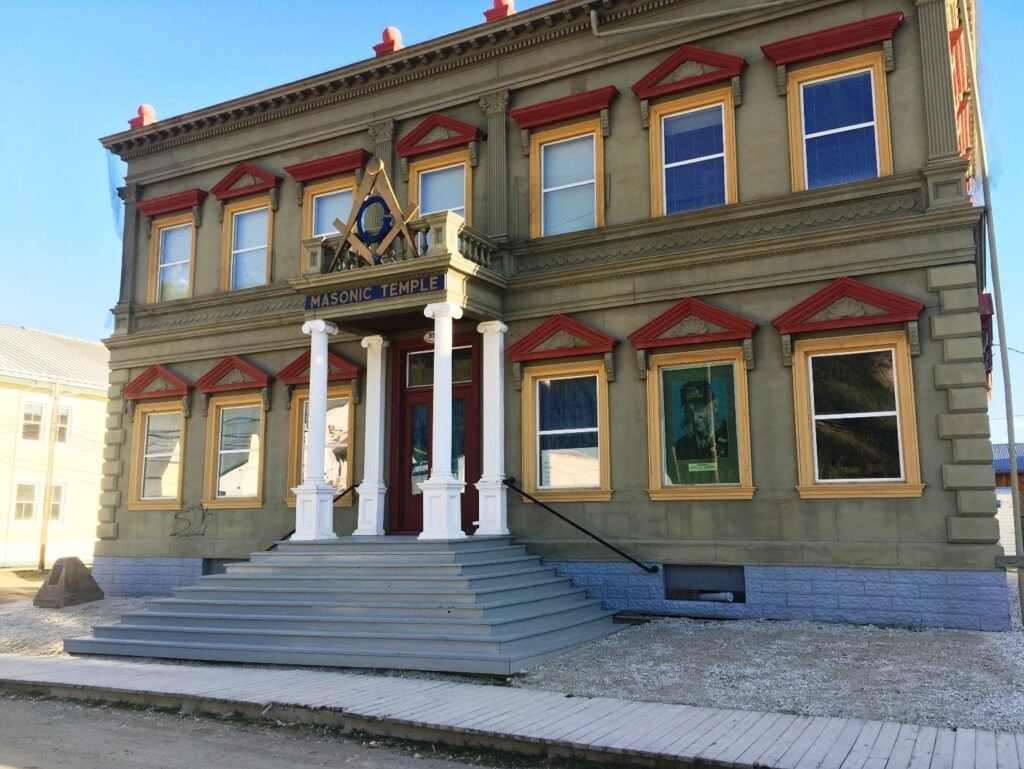
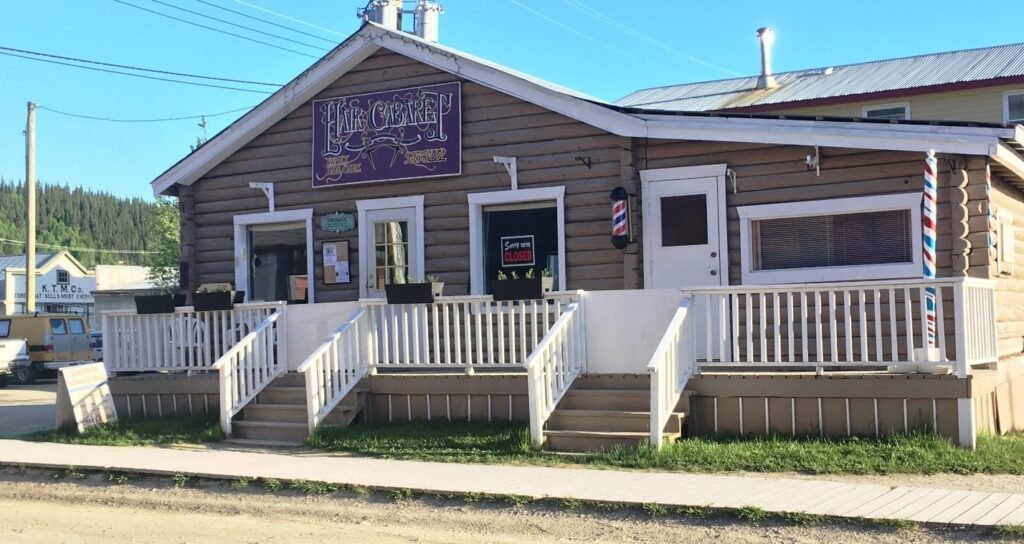
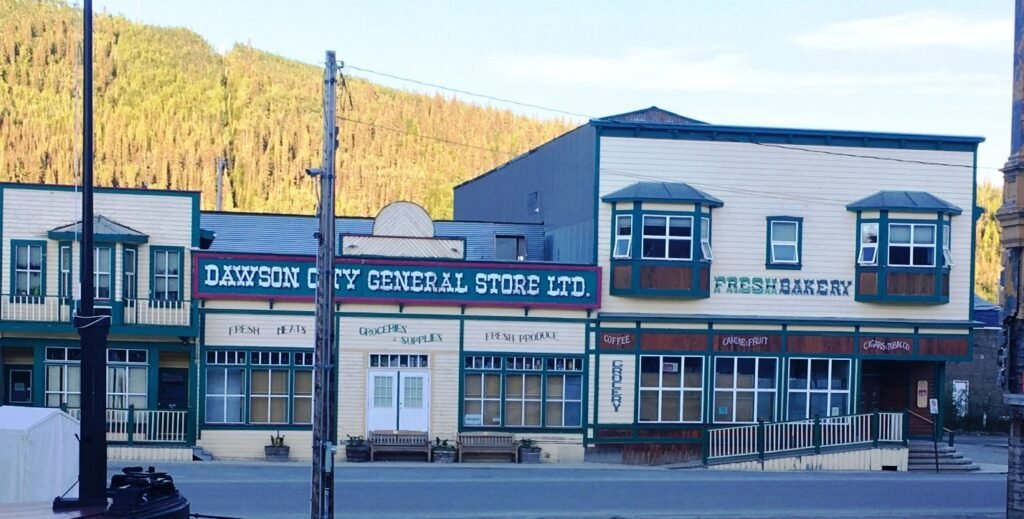
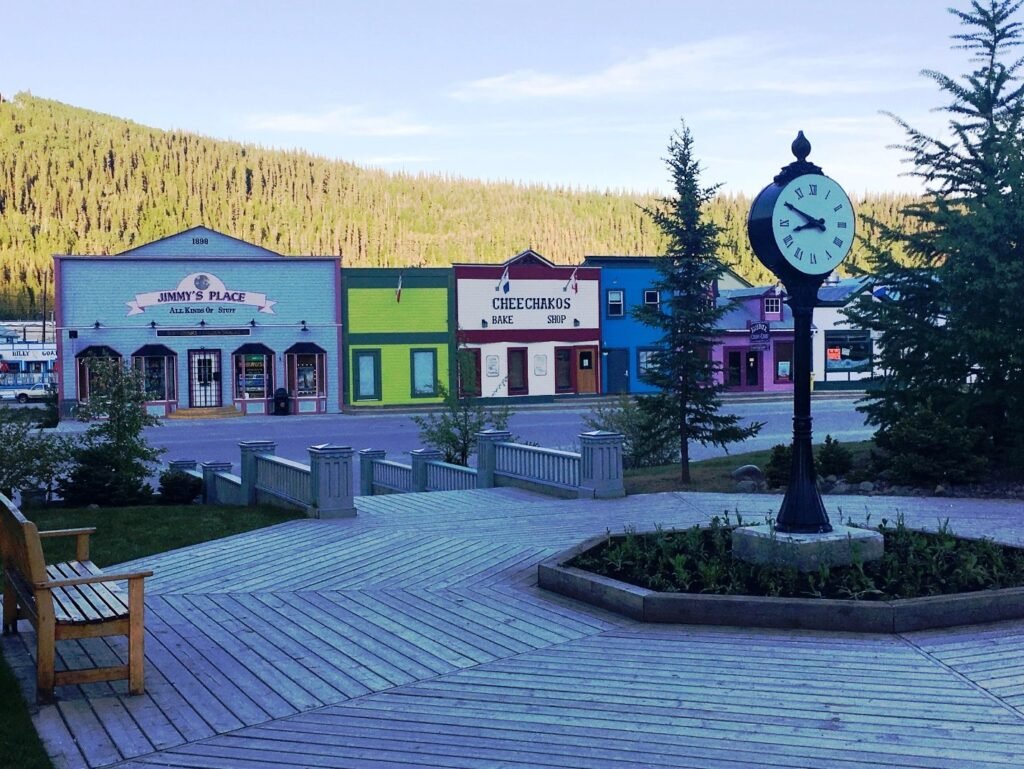
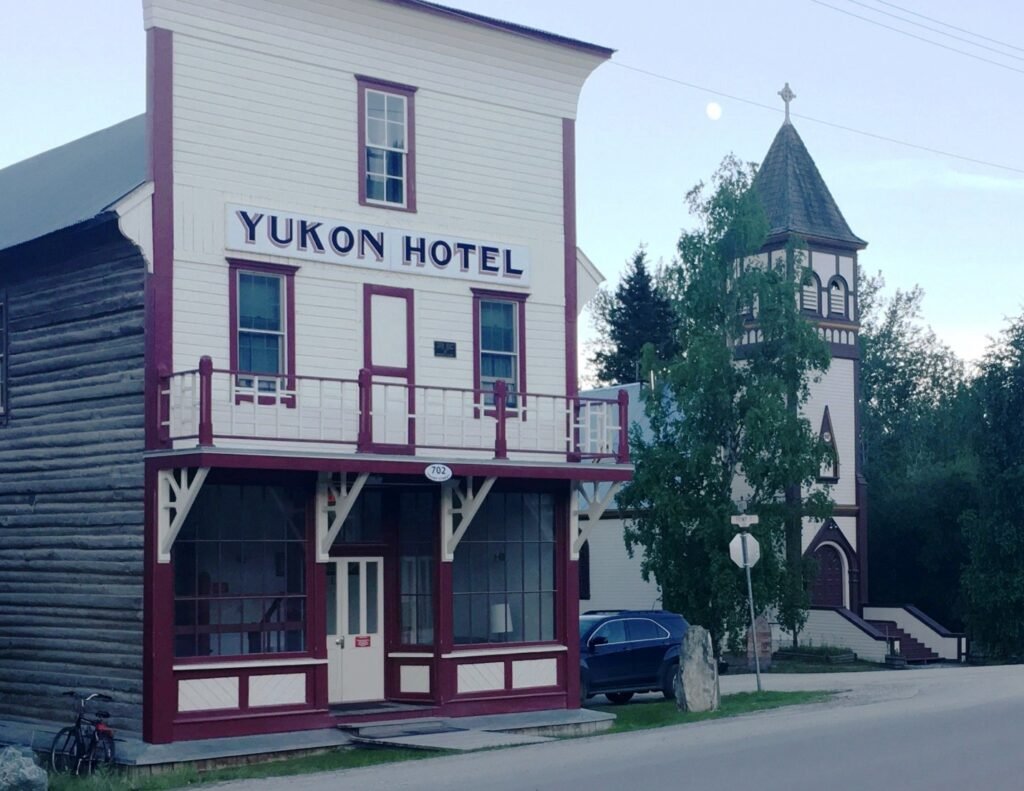
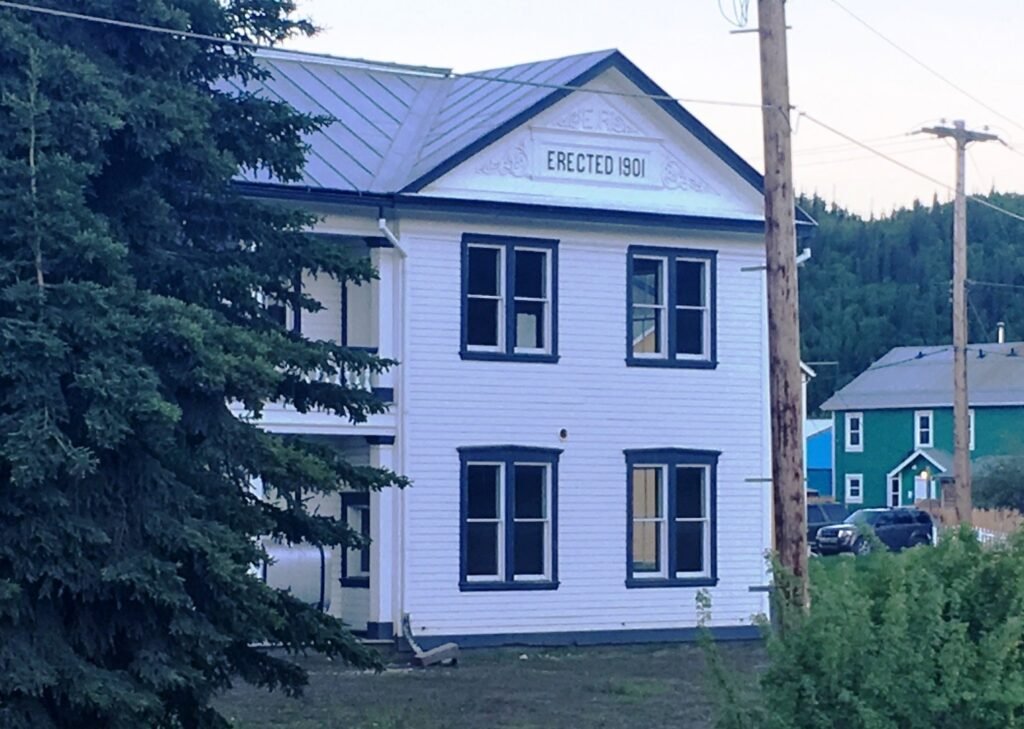
    Dawson today is a small town, very old fashioned. After dinner, we took a long walk through the streets that took us about a century back in time. Wooden sidewalks and antique bakeries and barber shops.

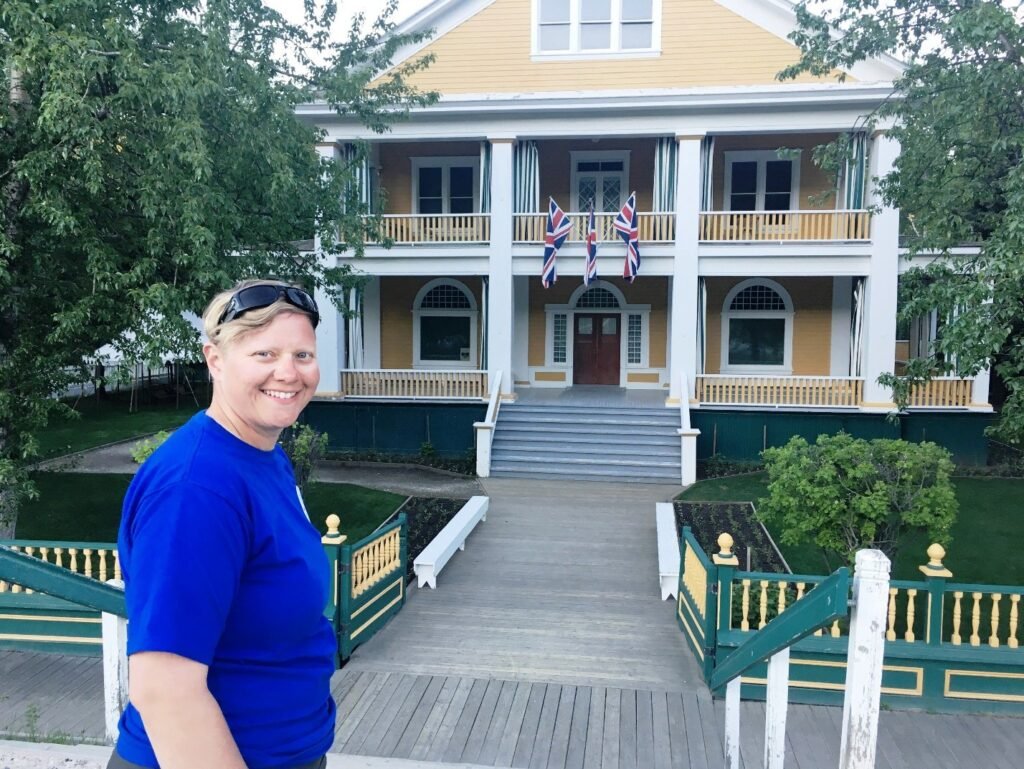
    Tanya is in front of the Commissioner’s house. If you were a property owner in Dawson City, and wanted to build a new house, you must get an approval of your design which has to match the existing architectural style.

    Local saloon was a good dinner place with buffalo lasagna.

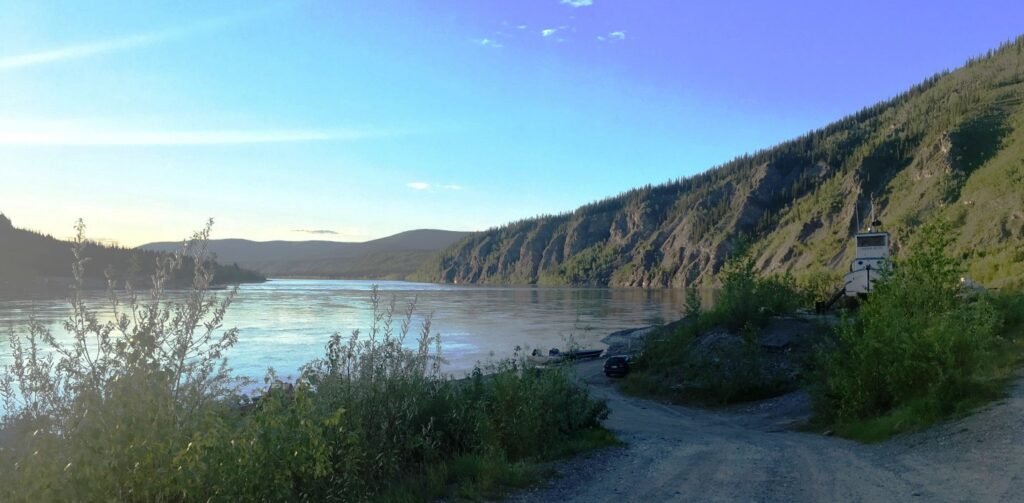
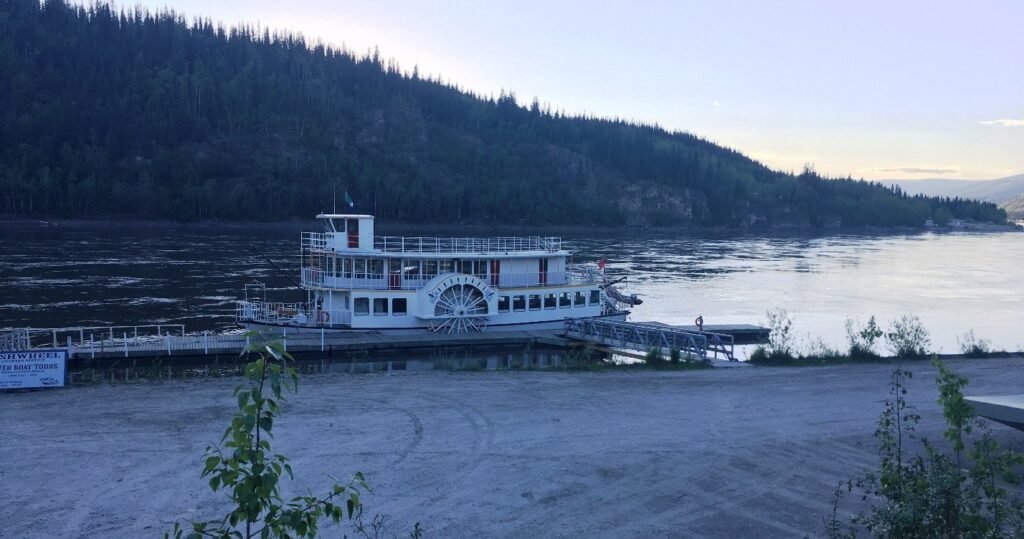
    And the river banks were quietly resting after the excitement of the airshow just a few hours ago

    By the way, all these pictures were taken about 11 o’clock at night – can’t you tell?

    It had only about 1400 people living here year-round, more in summer. But it has seen its – literally! – golden days during the gold rush. About 45 thousand people lived there 100 years ago. Gold was abundant and readily available. Mining was happening at all seasons, and in winter to be able to dig the next foot or so, miners were burning trees to melt the frozen ground. Pieces of potential gold smaller than an inch in diameter were simply thrown away! But it did not last. Price of gold dropped, and the down went in decay.

    But still today, anyone who wants to put a claim for a piece of land they believe has value, can do that. To do that, they need to go to the first nations office and check the existing claims. Then put theirs, and pay $10 per year for it. You will get something like a 1000 yards by 500 yards piece of land in your care. From now on, you must do at least $200 worth of work on it every year. This work can be banked. So if you invested about $1000 worth of work in the first year, you don’t need to do any in the next four. You also have the right to hunt and fish on your claim, even without fishing or hunting license. You can even build a cabin on it. After you completed the work, you must “reclaim” – put the gravel back in the ground, level the surface. Basically clean up after yourself.

    Seems too good to be true? Location, location, location! Getting a claim is easy. The trick is getting there! Often enough these parcels of land are very remote and inaccessible. Sometimes require building a road there or getting other creative ways of reaching it (like a float plane?).

    There is still a large number of existing active claims, and active mining happening on them. Unlike in Southern BC where gold mining is associated with lots of chemicals, incl. acids and arsenic, gold mining in Dawson is done with simple water. Not only it’s ecologically clean, it has a very unexpected environmental effect. During the gold mining, there’s a number of plant seeds that come from the permafrost to the surface. Many of them are seeds of plants that were extinct! So if you get to remote mines, watch for plants that you have never seen in your life.

    We went to sleep under the midnight sun, around midnight, in bright daylight.

    The Arctic Tour so far:

    Distance flown: 1445 nm

    Shows flown: 16